The Telegraph
 
 
ARCHIVES
Since 1st March, 1999
 
THE TELEGRAPH
 
 
Email This Page
Studyabroad
From Russia, with love

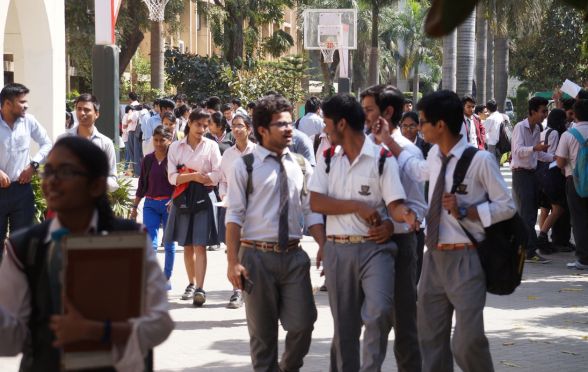
The iron curtain has long been drawn aside and the days of political uncertainty are a thing of the past. Shedding its reputation as a destination of chokers, 21st century Russia is emerging as a land of opportunity for students eyeing a medical or an engineering degree. Comparing them to the Ivy League institutes of west Europe or North America may be exaggerating their potential, but Russian colleges are making their presence felt, thanks to easier entry norms, less expensive courses and recognition in India. At present, more than 5,000 Indian students are enrolled in Russian universities and the number is expected to rise by 15 per cent this year.

Traditionally seen as the last resort for aspiring medics, Russian medical schools are now comparable to the best in terms of facilities and teaching standards, according to the International Foundation for Studies and Culture (IFSC), a body under the consulate general of the Russian federation. 'Russian medical and engineering schools are much sought after in east Europe and Asia. And it is a misconception that undeserving candidates pay their way through,' says IFSC counsellor Amit Roy. 'Last year, we had students with more than 80 per cent marks in 10+2 applying for the courses. Average students with less than 60 per cent marks definitely won't make it to the leading schools,' he adds.

A big draw for students is the fact that unlike England, the US or most other countries, there is no pre-qualifying test for gaining admission into a Russian institute. Admissions to graduate courses are based on the higher secondary score while those to postgraduate disciplines depend on the marks obtained in graduation. And contrary to popular notion, knowledge of the local language is not a prerequisite. For medical studies, for instance, the first three years consist of pre-clinical training and are more lecture-oriented. Lectures are given in English.

You cannot, however, get around the Russian language altogether. The local language is part of the curriculum from the very first year. You need to attend these classes, for when the clinical training starts and you begin interacting with locals in clinics and hospitals, the lingua franca would of course be Russian.

Gaining admission into a Russian medical school is fairly simple. The local criteria, obviously, have to be met. Then, as per the Indian Medical Act, 1956, any Indian student who wishes to study medicine abroad must obtain an eligibility certificate prior to joining the course and appear for a screening examination conducted by the National Board of Examinations to register with the Medical Council of India (MCI). The eligibility criterion for the certificate is 50 per cent marks in physics/chemistry/biology in higher secondary. This satisfied, admission into Russian institutes would be based purely on the grades. Seats are limited for international students and admission is on first-come-first-served basis.

Leading the pack of state-of-the-art institutes is the I.M. Scehenov Moscow Medical Academy, followed closely by the Russian State Medical University, St Petersburg State Paediatric Medical Academy and I.P. Pavlov State Medical Academy. Admissions to these institutes, once again, are on merit. The students endorse the institutes' claims of excellence. As an Indian student of I.P. Pavlov Medical University, Aniruddha Bhattacharya, says, 'There is a lot of emphasis on self-study. Every other day, we have exams that keep us on our toes. The course is very intensive.'

However, only those below 27 can apply for graduation disciplines. The age limit for postgraduate courses is more relaxed, though. For that you should not be more than 35 years, should have obtained a bachelors degree from a recognised university and completed one year of internship. There is a wide range of specialisations to choose from ' anatomy, general surgery, ophthalmology, dermatology, forensic medicine, psychiatry, pathology and nuclear medicine being the primary ones.

Engineering is another field where Russia can be an attractive option. The leading engineering schools are Moscow Power Engineering Institute, Moscow Aviation Institute of Technology, Vladimir State University and St Petersburg State Electro University. A 60 per cent score in physics, chemistry and mathematics is the qualifying bar. It could even be a bit lower for the lesser-known universities. 'Foreign students are made to feel at home and the teaching method brings the best out of every individual,' says Arvind Prabhu, a student of St Petersburg University.

Studying in Russia used to be cheap, but no longer. Scholarships are few and though the state schools are subsidised by the government, the total cost still amounts to around Rs 12 lakh per year, including tuition fees, living expenses, medical insurance and airfare. Engineering courses are marginally cheaper at Rs 8 ' Rs 10 lakh per annum.

Foreign Fundas
Arjun Jindal
CEO, Ready to Go magazine,replies to your queries


I want to know about the fee structure of some foreign universities from where I can pursue an MSc in biochemistry. I would also like to know about the scholarship system of those universities and the eligibility criteria for applying to these universities.

Santanu Halder

As the US and the UK are the most popular destinations, I will provide you with the names and fee structures of universities in these countries. In the US, you can pursue your masters from Boston University (http://bu.edu), Iowa State University of Science and Technology (http://bb.iastate.edu), Michigan State University and North Carolina State University. The fee for an MSc in the US will vary from $4,500 to $8,000 per semester.
In the UK, you can pursue postgraduation (MSc or research) from the University of Oxford (http://bioch.ox.ac.uk), University of Edinburgh, University of Bristol (http://bris.ac.uk/biochemistry) and University of Cambridge (http://bioc.cam.ac.uk). The approximate tuition fees will be £11,000 per year.


WRITE IN
Send your queries to Foreign Fundas Careergraph, The Telegraph,
6 Prafulla Sarkar Street, Calcutta 700 001. Fax: 22253142; e-mail: career@abpmail.com
Top
Email This Page