TT Epaper LHS
The Telegraph
TT Mobile
 
 
IN TODAY'S PAPER
WEEKLY FEATURES
CITY NEWSLINES
FEEDS
  RSS
  My Yahoo!
SEARCH
 
Archives Web
 
ARCHIVES
Since 1st March, 1999
 
THE TELEGRAPH
 
CIMA Gallary
 
Email This Page
UNDER THE SIGN OF SIX

To think that the man responsible for the invasion of Iraq is now responsible for the recognition of India as a nuclear weapons power is somewhat difficult. The assault on our senses from the murder and mayhem in one of the world?s oldest civilizations continues unabated.

We watch, helplessly, as suicide bombers blow up children and adults, variously in the name of freedom, democracy and religion. (We momentarily stop to think, oh! yes, we know that no religion can ever condone this ugly violence.) And then we turn, a roiling mass of emotions, to face the other emerging truth. Or as that quintessential mouthpiece of the conservative world, The Economist magazine put it best with an editorial this week, ?Now we are six?.

The truth is that George Walker Bush decided last week that America must help India climb down from the dismal petard of Third Worldism ? a state of mind too many Indians have become comfortable with ? on which it had been hoist for far too long and offer us a real opportunity to claim our place, right up there, among the best and brightest.

That?s the real meaning of the nuclear deal unveiled in Washington on July 18. Alongside the Fab Five ? the United States of America, Russia, China, France and Britain ? who have since the end of World War II self-circumscribed the super privileges of power, pelf and prestige, there?s now India to reckon with. Now we are Six.

The many direct benefits of acknowledging India as a nuclear weapons power are clear. There is the sale of nuclear energy for civilian nuclear power plants, for a start, for the made-by-America Tarapur nuclear plant outside Mumbai and other such plants in the country.

No longer will India have to put its imagination to deft use in the manufacture of 21st century illusions that in the past sought to weave and sidestep discriminatory treaties ? like the Missile Technology Control Regime and the Nuclear Suppliers Group ? by pulling in disgruntled nations like Russia, still dreaming of their once-superpower status, to help with the job.

Clearly, New Delhi will never forget those dark and dismal days in 1993, when America?s Bill Clinton put pressure on Russia?s seldom-sober president, Boris Yeltsin, to cancel an agreement for the sale of cryogenic engines and space technology from Russia to India. Yeltsin had just broken up the Soviet Union barely a year ago and all he wanted to do was stand shoulder-to-shoulder with his newfound American friends. Cancelling a contract with New Delhi was worth a bottle of top-class Stolichnaya. At stake for New Delhi was the budding space research programme of the Indian Space Research Organization, that the Soviets had so recently prom- ised to help their old Indian friends to build.

So here?s the real story, finally being told. In the space of the few months that it took for the Kremlin to issue orders and see that it was being implemented by a bunch of ordinary scientists still reeling from the dissolution of the Soviet Union, India went to work. It persuaded the selfsame scientists to part with the technology they had once promised ISRO. It worked. Planeloads of documents were flown into Bangalore, on the basis of which the ISRO continued to piece together its geostationary launch vehicle programme. By the time Yeltsin and his American masters found out, it was far too late.

Then, only three years ago in the summer of 2002, Russia once again went behind America?s back to supply ?nuclear pellets? to the Tarapur nuclear plant. This time, Vladimir Putin knowingly used the space between meetings of the NSG (of which the US was the headmaster) to transfer the fuel so that Tarapur could work for yet another year.

The moral of the above story, clearly, is that Russia has more than once broken all the rules of the game to bail out India ? something New Delhi is not likely to ever forget. But what happens when Big Brother America changes the game itself? What happens when George W. Bush, knowing full well that the nuclear ayatollahs in his own administration were completely against giving India ?special club? status ? including John Wolf, the assistant secretary of state for non-proliferation affairs in the first Bush administration ? led them by the nose in exactly the opposite direction?

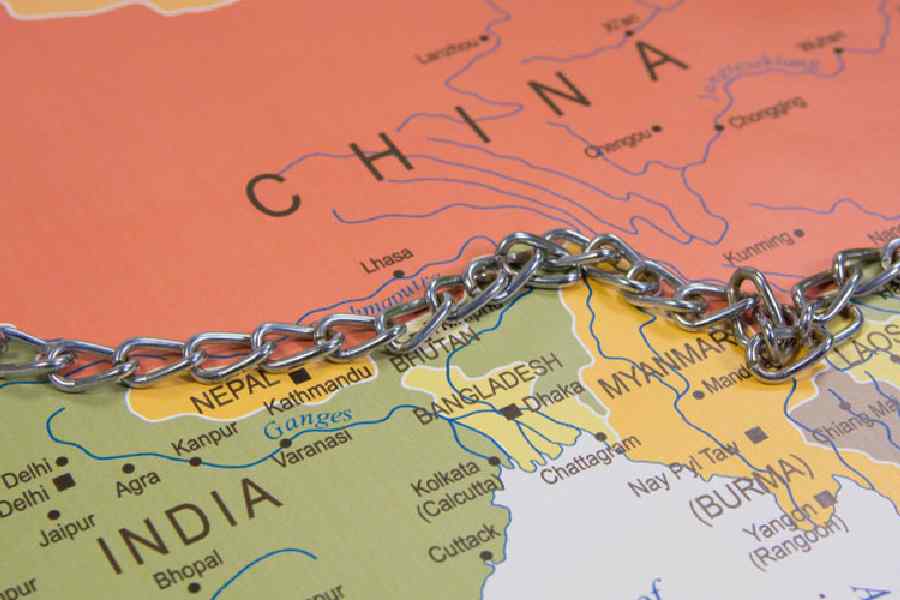
The question is, why was Bush willing to go so far to back India? Many in the Washington beltway point at a rising China that is beginning to have the nerve to challenge Number One America. The point is, in an extraordinary concatenation of circumstances, India?s instinctive mistrust of China since 1962 has found an empathic chord in the Bush-Condi-Burns triumvirate. So when the archetypal Nehruvian, K. Natwar Singh, told Condoleezza Rice, only half-jokingly, that she couldn?t smile at the Chinese president, Hu Jintao, more cheerily than at him, it looked like something was seriously up.

Then there was the Osama bin Laden factor. Pervez Musharraf, as Bush?s big ally in the war against terror after 9/11, had failed to fully deliver. Even as the neo-taliban, trained on both sides of the Durand Line, attacked the US ambassador to Afghanistan, Zalmay Khalilzad, and brought down an American plane. Here, on the other hand, was ?democratic? India, as Bush couldn?t stop telling his wife, Laura, with 150 million Muslims as citizens and not one of them in al Qaida.

Now as the world ponders over the new Nuclear Six, this might actually be a good time to help introduce a few shades of grey into the black-and-white personality of George Walker Bush Jr. So far both colours have dominated the Indian summer. But in a reinvented post-Cold War world order, New Delhi may well be able to assert responsibility over ?its? part of the world, which includes both Afghanistan and Iraq. And point out the easy similiarities between fixing the ?bijli, paani, sadak? in the Euphrates valley and an eastern Uttar Pradesh constituency dominated by the likes of Mukhtar Ansari.

Perhaps as the prime minister, Manmohan Singh, goes to Afghanistan in the end of August, his message to Karzai and Condi should be phrased something like this: The road to Baghdad must begin in the outsourcing of both Kandahar and Kabul.

Top
Email This Page