|
|
|
Making the most of it
|
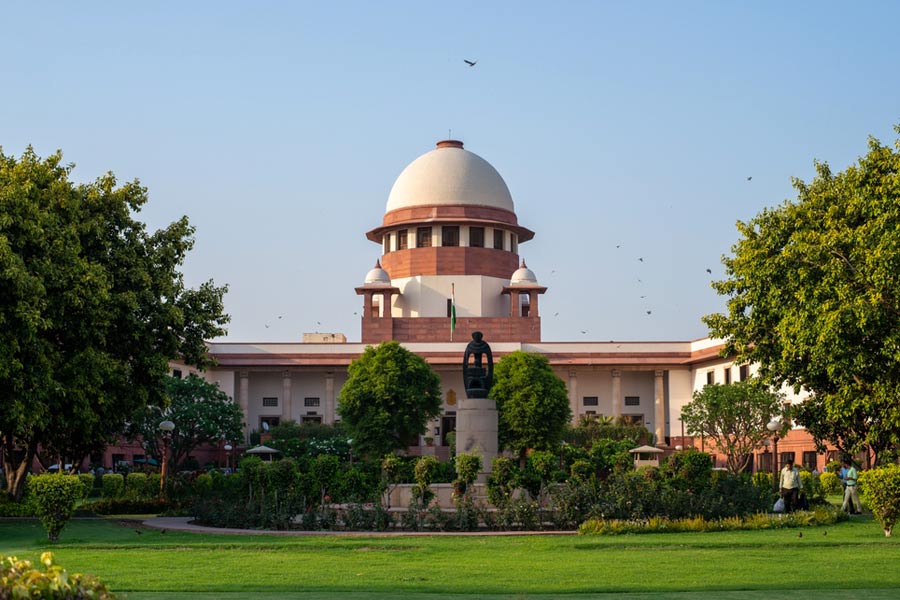
No one need regret the repeal of the Illegal Migrants (Determination by Tribunals) Act. The apex court rightly decided that it was not serving to check the problem. That the law was faulty was clear to any observer when it came into effect in the Eighties. Not only was the process of identification cumbersome, the tribunals were seen as a cause for harassment of the minority community. The latter, of course, saw it as the best of a bad deal, in that it provided a semblance of protection from those who would have all minorities leave the country. However, in the context of a general concern over illegal immigration, the act had become meaningless in Assam.
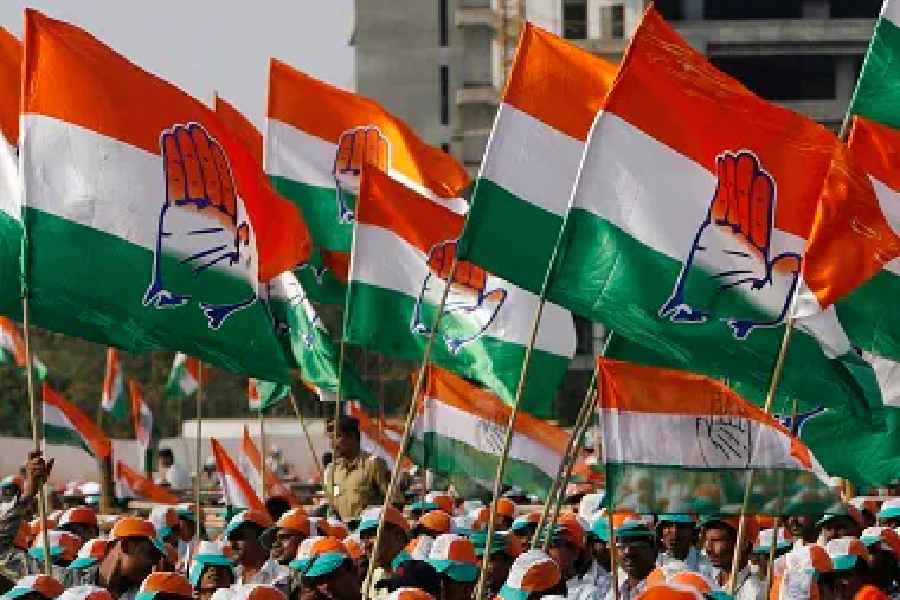
The question is, now what? If one law is done away with, then it is only natural to expect that another will take its place. Here there is a problem. Assam is going to the polls next year and on such a sensitive issue, the Congress obviously wants to tread carefully. It has decided neither to challenge the apex court?s decision, nor to bring about any suitable amendment to the Foreigners? Registration Act. The party has to keep both the majority and minority communities happy and so, the Union government has set up a ministerial body to examine the issue. In other words, for the time being it has been put into cold storage. The party hopes this will also satisfy the minorities.
But will it? The minorities fear that in the absence of any legal provision, the onus of disproving the charge of being an illegal entrant will again fall on the accused, rather than on the accuser. They also fear that if the rightist opposition comes into office next year, it may go in for the push-back method resorted to earlier by it in Mumbai and New Delhi. For the time being, parties like the Asom Gana Parishad and the Bharatiya Janata Party are expressing their jubilation at the death of the act in a manner which is clearly aimed at rousing communal sentiments. The Centre has been warned not to introduce any legislation which may have the effect of creating bases for al Qaida. The suggestion is clear: Muslims, per se, are terrorists. Hence, the minorities ? and they are a sizeable number ? cannot be blamed for any misgivings that they may have at the collapse of the act. The act was not an effective means of tackling illegal immigration, but the euphoria at its scrapping arouses the fears of the entire community.
The cut-off year for immigration from our eastern neighbour is 1971, the year the republic of Bangladesh was born. One would have expected that this cut-off year would apply to Hindus and Muslims alike, but that has never happened. In the last 34 years, many Hindu have illegally crossed over from Bangladesh but the tendency has always been to welcome them with open arms as they are seen as victims of religious oppression. Muslims obviously never enjoyed such consideration; the existence of another kind of oppression ? economic ? never being taken into account. The West Bengal government under Jyoti Basu had always stressed on this whenever the issue came up. The present dispensation in the state, however, seems to think otherwise.
In Assam, the problem is more complex. The state has the unenviable record of seeing many ?Bangal Kheda? agitations directed against the Bengali-speaking people, irrespective of the number of generations they have lived in the state. Even within Assam, the residents of the Brahmaputra valley find it difficult to accept those of the Barak Valley as citizens of the state too. The furore over Silchar having a Central university cannot have been forgotten. The agitation against ?foreigners? had forced many Bengalis, settled in the rural areas for ages, to flee their homes and take shelter in camps in north Bengal. So, when political parties there talk of illegal immigrants, in their heart of hearts, they do not see any reason to take the cut-off year into account. If a person is a Bengali-speaking Muslim, he must be an illegal entrant from Bangladesh, even though his forefathers may have been encouraged by the British to leave districts like Sylhet and settle in Assam. Such encouragement was needed to raise agricultural produce in Assam and thereby, the revenue yield.
Hence any law that comes into force in the state to deal with the issue must be prepared to keep this background in mind. The ordinary Assamese may not be parochial but politics in the state is, to a large part, tinged with parochialism. So is the case in other regions of the North-east. The slogan, ?Assam oil belongs to Assam?, is not much different from that of Greater Nagaland or the Manipuri Meiteis? running battle with the Nagas of Ukhrul and Senapati districts in the state.
Thus in Assam, the demand for the ouster of illegal immigrants arises from a suspicion of all minorities, even those with whom the ethnic population shares a common language and religion. Incidentally, though Islam may be a strong binding force the world over, in Assam, the ethnic believers of the faith do not seem to have much love lost for their Bengali speaking co-religionists. In such a situation, one can imagine that any accused who has to prove his bona fides will again be up against a mountain.
How does a person, particularly in the rural areas, prove that he is a genuine citizen? He is hardly likely to have any certificate for the simple reason that, in this country, it is very difficult getting hold of any sarkari document, unless he is helped by the powers-that-be. How does a poor villager secure that help? Things like ration cards are meaningless as it can always be claimed that they were secured wrongfully. Hence, how can he, in all fairness, expect justice from the majority community?
Yet, immigration through the many unwatched points along the border needs to be checked ? it can never be stopped completely. One way out would be speedy completion of the border fence, ignoring all protests from Dhaka. That will be a safeguard for the future. As for the present, there is perhaps little that can be done even with any new law because identifying illegal entrants is too much of a problem. The Shiv Sena-BJP combine perhaps also realizes this and hence prefers to just send the whole lot packing. But, surely, that cannot be a part of any state policy?
Meanwhile, when Assam goes to the polls in less than a year, this is going to be a major issue. Sentiments will be aroused and attempts made to cool them down. But, sadly, neither the Congress nor the AGP and the BJP can be expected to come up with any sensible solution to the problem.
|