TT Epaper LHS
The Telegraph
TT Mobile
 
 
IN TODAY'S PAPER
WEEKLY FEATURES
CITY NEWSLINES
FEEDS
  RSS
  My Yahoo!
SEARCH
 
Archives Web
 
ARCHIVES
Since 1st March, 1999
 
THE TELEGRAPH
 
CIMA Gallary
 
Email This Page
Letters to Editor

Faith accompli

Sir ? In his provocative article, ?Gandhi?s bad faith? (June 26), Mukul Kesavan anachronistically describes the Gandhi who spent more than two decades in South Africa fighting racism as an ?NRI?, a term which cannot be applied to Indians fighting for Indian and universal causes during the British rule, when India was a territorial part, merely, of a far-flung British Empire that included South Africa. Indentured labourers, not IT whizkids, were compelled to find work in the dark corners of the Empire. Slaves, no green-card-holding migrants to paradise.

Kesavan forgets that Gandhi?s leadership of India?s struggle for swaraj was always most fundamentally a battle against the racism implicit in the British occupation and governance of India. Racism was the issue underlying Gandhi?s support for the Khilafat movement, the presumption that the world-dominating white race, represented in India by the British, could break solemn promises made to non-white peoples or races with impunity: the promise, for example, made to Turkey that the Caliphate would be restored after World War I.

Gandhi?s hope of winning the support of the Muslim masses of India in the battle for swaraj by his principled (the principle being that racism was wrong) support of the Khilafat movement is not, as Kesavan suggests, a cheap way of bringing Muslims on board the Congress bandwagon (the phrase is mine, the meaning Kesavan?s, I think) and gain control of the Congress ? the sort of political chicanery caste-exploiting modern Indian politicians resort today.

Incidentally, Kesavan, while expressing his qualms about Gandhi not even being a member of the Congress during Khilafat and Chauri Chaura, again anachronistically confuses the contemporary political party with the organizational trusteeship of the freedom struggle, which was its identifying role at that time and for years until independence. Trusteeship is not membership. But to return to Khilafat.

If British racism could break a solemn promise made to non-white Turkey, it would also break the promise of independence to non-white India after the end of World War II. And so it did. Jinnah saw no racist impropriety in this or in the vivisection of the living body of subcontinental India by a vengeful, retreating, power. And of course, he would not have seen the issue of racism implicit in the Khilafat movement. I would urge Mukul Kesavan to reconsider his judgment that here, at least, Jinnah was right and Gandhi wrong.

It is likely that even Britain, in its fight for survival against the racism of Hitler, might have realized the debt it owed to Gandhi in being awakened by him to the horror of racism. ?Gandhi?s bad faith? doesn?t see this contribution of Gandhi to our age, resting content with hurling uncharitable epithets against a man who, with all his imperfections, cannot be accused of insincerity (a synonym for ?bad faith?) without more argument and reflection than what its author brings to his critique of an NRI, that is a ?non-racist individual?.

Yours faithfully,
Ramchandra Gandhi, New Delhi

Little learning

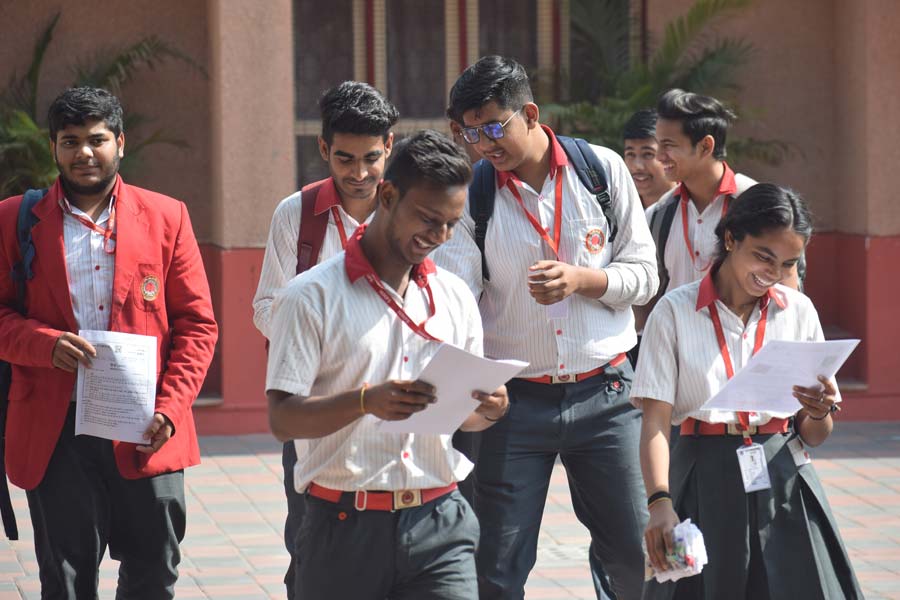
Sir ? I often wondered what had made the Indian Certificate for Secondary Education grant affiliation to so many undeserving schools in north Bengal. The report, ?ICSE chief suspended? (July 21), which refers to Francis Fanthome?s ?generosity?, is a possible explanation. The ICSE grants affiliation to schools run by registered societies or trusts. Yet, council officials are often heard talking of schools? ?owners?. Obviously, this perception is encouraged by powerful people within the council, as Fanthome had been.

The malaise runs deep and is reflected in the manner the ICSE schools are run by the so-called ?owners? on a profit-making basis. In north Bengal, unlike in the plains, there are no associations to speak up for the teaching and non-teaching staff, who find themselves at the receiving end, even denied of provident fund contributions. These schools have no proper infrastructure and fleece parents and guardians in the name of development fund, admission fees or the sale of school stationery, ties, badges, socks, shoes, games, diaries and so on ? all in the name of ?good? education. The profits made from the sale of these items invariably find their way into the pockets of the owners. And since board members have a finger in the pie, the school authorities are not accountable either. The government should look into workings of these schools.

Yours faithfully,
Chandan Gupta, Siliguri


Sir ? Kurseong in Darjeeling district has 16 schools affiliated to the ICSE board. Most of the schools have less than 100 students. Except for a few, most of the schools take children from Bangladesh and rural West Bengal, Bihar and Uttar Pradesh. Children are forced to take tuitions, some for three subjects. The annual fees here go up to about Rs 80,000 to Rs 90,000. As is obvious, the schools are run for purely commercial reasons.

During the time of affiliation, the schools usually fill laboratories with borrowed apparatus. They are even known to hire qualified teachers on the day of inspection. Even some renowned schools lack teachers for science subjects. Another is known to have asked students to leave after class XI because of the lack of adequate teachers.

Thankfully, the council is trying to rid itself of corruption.

Yours faithfully,
Peter North, Kurseong

Top
Letters to the editor should be sent to : ttedit@abpmail.com
Email This Page