The Telegraph
TT Epaper
 
 
IN TODAY'S PAPER
WEEKLY FEATURES
CITY NEWSLINES
FEEDS
  RSS
  My Yahoo!
SEARCH
 
Archives Web
 
ARCHIVES
Since 1st March, 1999
 
THE TELEGRAPH
 
 
Email This Page
Delhi migrant panel

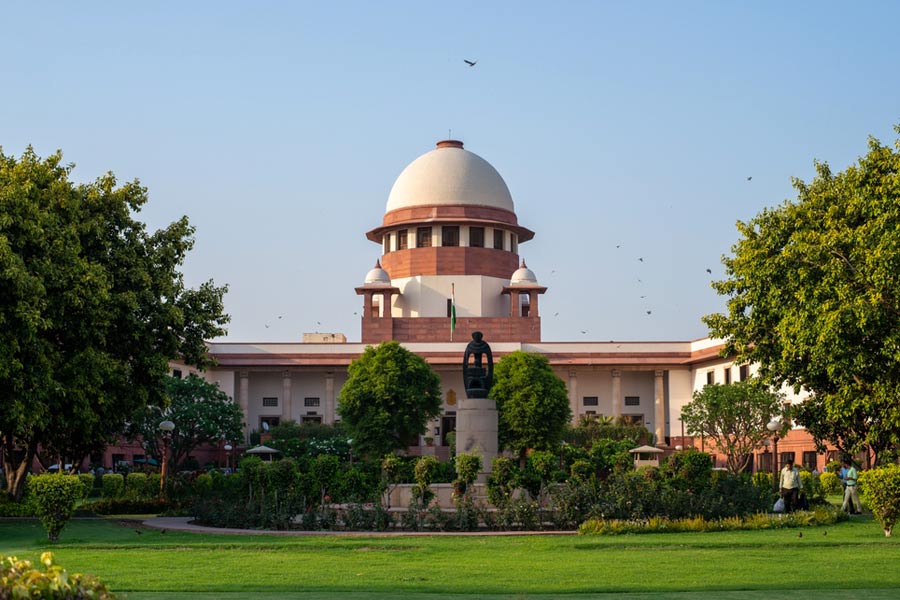
New Delhi, July 14: Swimming against the tide of popular sentiment in Assam, Prime Minister Manmohan Singh today decided to form a ministerial group to identify legal grounds for a review of the Supreme Court’s verdict on the Illegal Migrants (Determination by Tribunals) Act.

Union home minister Shivraj Patil made the announcement after a meeting of the cabinet committee on political affairs, chaired by the Prime Minister. “The group of ministers will hear the views of various parties and advise the government on further action,” he said.

The home minister is likely to head the group.

The Prime Minister’s decision followed Assam chief minister Tarun Gogoi’s meeting earlier in the day with Union law and justice minister Hansraj Bhardwaj. Gogoi, whose government has been a staunch advocate of the IM(DT) Act, arrived here yesterday in the wake of a minority backlash against the apex court’s ruling.

Gogoi will meet senior Congress leaders to impress upon them the need to approach the apex court immediately. He is primarily worried about the likelihood of the verdict on the IM(DT) Act affecting his party’s prospects in the Assembly elections next year.

The Congress high command appears to agree with Gogoi. The decision to form a group of ministers is seen as a manifestation of the high command’s endorsement of the chief minister’s approach.

The Congress today went beyond its guarded response on Tuesday to the court order, when party spokesperson Anand Sharma had confined himself to saying that the leadership would have to study the order in detail before taking a “considered view” on it.

Digvijay Singh, the AICC general secretary in charge of Assam, was caustic in his comment on the apex court’s ruling. “We don’t throw the baby away with the bath water,” he said.

The former Madhya Pradesh chief minister described the legislation, enacted in 1983, as “effective and sufficient” to tackle the problem of migrant influx. He said there was “always enough scope for improvement” if the act suffered from any deficiency.

The most important aspect of the act, he said, was that it protected “genuine citizens” from harassment.

Singh accused the BJP and the Asom Gana Parishad of making an issue out of the act and “communalising” the issue of illegal migration. “Many illegal migrants are, in fact, Hindus,” he said, dismissing the Opposition’s allegations that the Congress was indulging in vote-bank politics by supporting the IM (DT) Act.

The apex court’s ruling on the IM(DT) Act included a set of six directives. It ordered the transfer of all cases pending with the tribunals established under the legislation to those under the Foreigners Act, which governs the rest of the country.

The court asked the state and Union governments to constitute “sufficient number of tribunals under the Foreigners (Tribunals) Order to deal with cases of foreigners who have illegally come from Bangladesh or are illegally residing in Assam”.


Top
Email This Page
 
 
Biz2Credit Bizsense