The Telegraph
 
 
IN TODAY'S PAPER
WEEKLY FEATURES
CITY NEWSLINES
FEEDS
  RSS
  My Yahoo!
SEARCH
 
Archives Web
 
ARCHIVES
Since 1st March, 1999
 
THE TELEGRAPH
 
 
Email This Page
Classact
Succour on the web

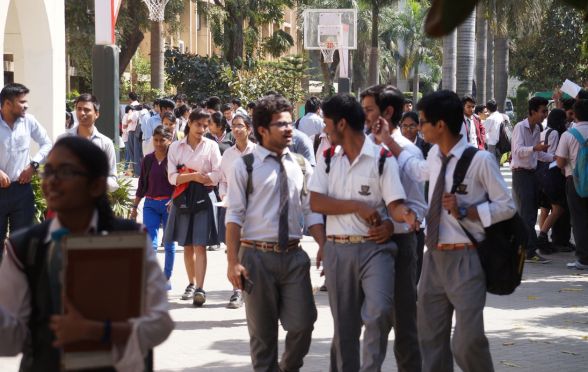
So you didn?t get into an Indian Institute of Technology (IIT) but are still pursuing engineering in a college less endowed in terms of faculty and course calibre. Don?t despair. The IITs are about to reach out to you via video and the web.

More than 200 video and web-based courses in engineering, designed by the faculty at the IITs and the Indian Institute of Science (IIS) in Bangalore will be available to engineering colleges and technical universities across India sometime next year.

The IITs and the IIS plan to share their way of education with the rest of the country under the National Programme of Technology Enhanced Learning (NPTEL). It?s an effort to improve the standards of engineering education across India through curriculum-based web and video courses.

The programme is aimed at providing learning material through digital taped classroom lectures and supplementary materials accessible via the web or as video lectures. Students and faculty in other institutions would be able to access the material though the Internet, intranets, a TV channel or CD-ROMs.

The IIT-IIS faculty is designing the courses only after detailed consultations with engineering colleges and technical universities and will cover a common syllabus. ?We see this as a social responsibility,? says Dr M.S. Ananth, professor at IIT Madras and chairman of NPTEL programme implementation committee.

Some 250 faculty from all the IITs and the IISc are currently developing web courses and video courses that would cover five basic engineering subjects: civil engineering, computer science and engineering, electrical engineering, electronics and communication engineering, and mechanical engineering. In all, about 120 video courses and 114 web-based courses are expected to be ready by June 2006. The programme was conceived as a strategy to tackle the great disparity that exists in educational standards in engineering colleges across the country today. Over the past few decades, the number of colleges and institutions that offer undergraduate engineering education has burgeoned. India has about 4,00,000 undergraduates in engineering.

But perhaps up to a half of these students, says a senior IIT faculty member, receive poor quality education either due to a lack of experienced faculty or poor course content or a combination of both. The faculty shortage in engineering colleges stems from India?s skewed ratio between undergraduate and postgraduate engineering students. The number of students who continue postgraduate education in India drops to 60,000.

The NPTEL effort plans to use technology to disseminate learning material to other institutions. The goal is to supplement and not to replace classroom teaching. ?It?s not substitution, but enrichment,? says Dr Kushal Sen, professor of textile engineering at IIT Delhi who is the video coordinator for NPTEL. Typically, a video course will have 40 hours of video recordings of actual classroom lectures delivered by the IIT faculty to their own students.

?We?re using a three-camera system and a PC and significant editing to allow the video course to capture everything that students will see in classroom as well as question-and-answer sessions," says Sen. The video courses can be accessed by other institutions through the Eklavya TV channel, a free to air dedicated technology channel that has been operating for several years, delivering a small number of video courses developed by the IITs in Delhi, Kanpur, Kharagpur, and Madras.

Sen estimates that about 80 engineering colleges and institutions across India are already accessing Eklavya through local dish antennas. In addition to using Eklavya, the NPTEL effort may also use the Internet, CD-ROMS, and local networks in the target institutions to distribute the learning material.

?There?s a sense of involvement from these institutions,? says Ananth. In some ways, the effort may be comparable to the opencourseware initiative by the Massachusetts Institute of Technology that has made available MIT course material on the web for educators and students. For India, NPTEL is ?an absolute necessity? to address the ?near-emergency? situation in engineering education,? says Ananth.

Top
 
Email This Page