|
|
|
Games politicians play
|
The past month has witnessed a resurgence of the ethnic turmoil in Meghalaya. Bandhs and picketing have returned to hound the long-suffering residents, vehicles have been torched and xenophobic bloodletting has resurfaced.
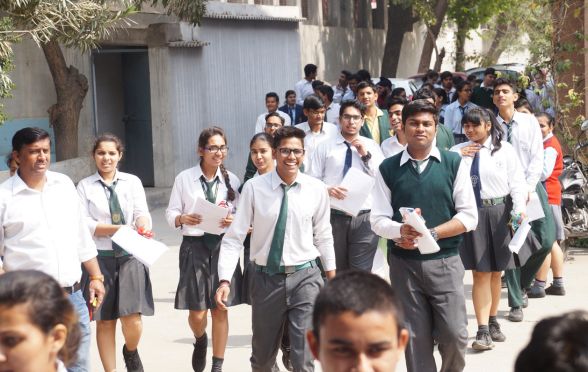
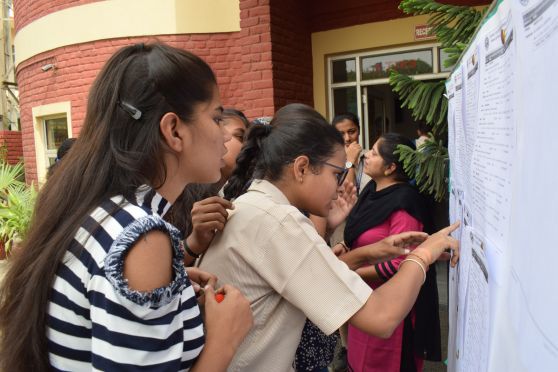
It all began with a demand by the Khasi Students? Union to relocate the Meghalaya Board of Secondary Education from Tura in the Garo hills to Shillong, the state capital in the Khasi hills, and also to revamp its present malfunctioning machinery. The tug-of-war that resulted between the Garo and Khasi tribals over this demand underlined the rift which had already been festering owing to the existing reservation policy in the state.
The tribes were brought together on the demand for statehood when the Khasi evangelist-leader, Reverend J.J.M. Nichols Roy, was campaigning for the Sixth Schedule in 1946, 25 years before the birth of Meghalaya. He wrote that the Garos? destiny was linked to the Khasi and Jaintia Hills, which were a contiguous area. To separate the Garo Hills, he said, ?will set back the hand of the clock of progress?. So, when Meghalaya was carved out of Assam, it comprised the Khasi and Jaintia hills, as also the Garo hills.
Meghalaya?s ?quota system? defies this logic, however, and is the cause of much inter-tribal heartburn. The Khasi-Jaintias have a 40 per cent allocation, the Garos another 40, while 15 per cent is reserved for other backward classes and five for the general category. The imbalance arises from the fact that the Garo population is only half that of the Khasi-Jaintia and yet, despite the ?quota advantage?, there are hardly any Garo IAS officers. In the 60-member assembly, the Garo hills, considered a Congress bastion, has only 24 representatives.
Against this backdrop, it is hardly surprising that the Khasis contend they emerge taller on merit, while the Garos attribute their plight to apathy and negligence. Only in Tura, the capital of West Garo Hills district, would one find a woman with a post-graduate degree from Delhi?s Jawaharlal Nehru University running a road-side tea stall for want of any better opportunities. Yet the longest-serving chief ministers have been Garo ? from the first, Captain Williamson Sangma, to Purno Sangma, certainly the state?s best-known face in the national arena (for whatever reasons), and Salseng Marak, who completed his five-year term effortlessly in 1998.
Since 1998, Meghalaya?s coalition politics has seen cobbled-together permutations in which appeasement and corruption have overshadowed any attempts at development and progress. Khasi regional politics over the past decade has led to a power struggle, with governments in a scramble to break the record for being in power for the shortest duration, with one lasting less than a month.
From the outside, the ?abode of clouds? may appear to be a tourist?s idyll. The reality is different for the residents. They are caught for days in bandhs, with the accompanying insecurity and inconvenience of coping with disruptions in education, inadequate water supply (despite recording the highest rainfall), erratic power distribution (in a zone of tremendous hydroelectric capacity) and rudimentary healthcare. Not to mention escalated costs. Every renewed spurt of agitation can prove traumatic.
If it was tribal versus non-tribal in the previous decade, today?s politics is governed by the divide between Khasi (of Mon-Khmer stock) and Garo (of Tibeto-Burman descent). Effectively sidelining his Garo predecessor, Salseng Marak, the present Congress chief minister, D.D. Lapang, is a Khasi who has two deputies, Mukul Sangma and Donkupar Roy, one from each tribe.
The chain of protests in the Khasi and Garo hills over bifurcating or relocating the education board has resulted in the two tribes voicing demands for separate states, a plank that politicians like Sangma and leaders of the Khasi political party, Khun Hynniewtrep National Awakening Movement, a partner in the ruling Meghalaya Democratic Alliance, were quick to pounce upon. Manipulating group identity is easy when leaders exaggerate needs and anxieties.
It is at these times that a leader?s role can be crucial. As Vamik Volkan, emeritus professor of psychology at the University of Virginia, explains, ?A strong leader reinforces a group?s symptoms and may encourage the followers to make attempts at progression.? With Sangma championing the statehood crusade, long-suffering citizens of Meghalaya are now speaking of the dearth of statesmen and visionaries who can steer them out of the crisis.
The demand for a separate state springs from a desire for recognition. Sociologists and behavioural scientists agree on the hypothesis that the central motive behind such action is self-gratification. Feelings of inadequacy are invariably channelled into an exercise in scapegoating ? blaming others for one?s real or imagined shortcomings. As a result, the Khasi and Garo hills have become a divided world of ?us? and ?them?. Scapegoating is a convenient tool for most politicians, especially those in the wilderness. In the past decade, the scapegoat was the non-tribal, most of whom have now left the state.
There were exceptions, though. Even a few years ago, our octogenarian Khasi landlady delighted in singing Rabindrasangeet, while a pinecone-fed fire crackled in the hearth not too far from the site where Tagore had penned Sesher Kabita. She even took it upon herself to ?protect? me from those she considered disreputable, often startling tribal couriers by asserting: ?Give me the press releases, I am her mother.? This at a time the anti-outsider campaign was on in full swing. Senior Khasi citizens like the freedom fighters, Helimon Diengdoh and Hipshon Roy, among others, were capable of providing a healing touch that is rare today.
The scenario has shifted to tribal versus tribal now. The rumblings can be felt in the Khasi hills already. A veteran resident planning to sell his home has been directed by the local headman not only to sell to a tribal at a price dictated by the latter, as is the rule, but to a Khasi of that particular neighbourhood only.
It is time younger, dynamic politicians stepped forward. A welcome move was made last week by the Congress legislator, Robert G. Lyngdoh, when he said, ?It is time to build bridges, not walls. Meghalaya is not an economically viable state. How much more viable will it be after we separate?? The other silver lining was the constitution of a peace committee on Friday by Garo churches in order to defuse the tension between the tribes. Reverend T.G. Momin, convenor of the panel, has appealed to all churches in Meghalaya to step in and broker peace. And on Sunday, the Union minister of state for programme implementation, Oscar Fernandes, on a visit to Shillong to look into the crisis, virtually ruled out the possibility of a bifurcation of Meghalaya. The demand, he said, ?did not reflect the aspirations of the people?.
The need of the hour is to bridge the great divide. According to the Harvard Medical School psychiatrist, James Gilligan, ?The higher the degree of economic inequity in a society, the lower its produc- tivity.? The solution, he says, is to focus on areas that have been neglected. ?The German word for attention, achtung, also means respect. And that makes sense: the way you truly respect someone is to pay attention to them.?
So, instead of moving the education board out of the boondocks (read Garo hills) just because no one wants to leave the comforts of the developed zone to work there, politicians should stop trying to pull the carpet from under each other?s feet in order to stay in power and give the electorate a modicum of what is its due. Student bodies and NGOs, instead of paralysing life with bandh calls and pickets, should come up with feasible solutions before they veto every move the government makes. It is, after all, a government they elected, and it is upto the electorate to hold the ministers accountable, instead of holding the people to ransom.
|