TT Epaper LHS
The Telegraph
TT Mobile
 
 
IN TODAY'S PAPER
WEEKLY FEATURES
CITY NEWSLINES
FEEDS
  RSS
  My Yahoo!
SEARCH
 
Archives Web
 
ARCHIVES
Since 1st March, 1999
 
THE TELEGRAPH
 
CIMA Gallary
 
Email This Page
THOSE WERE THE DAYS

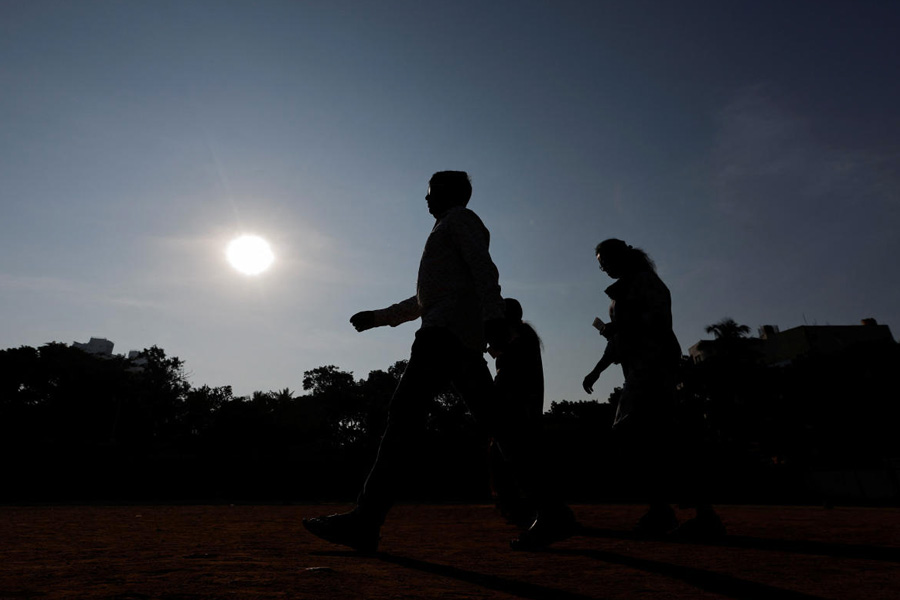
People who are grumbling about temperatures soaring above 45 degrees should know that summers of bygone years were much more trying than they are nowadays. I recall the days of my childhood when we spent our summer vacations either with my chacha in Mian Channun or with my nana in Jaranwala (both towns now in Pakistan). We had no air coolers, air conditioners or ceiling fans and yet managed to survive in good health.

Summers were more scorching with hot winds (loo) than they are now and brought with them pests unknown to the present generation. Among the most feared were massive armies of locusts (tiddee dal). They came like thick black clouds blotting the sun, ate up all vegetation stripping trees of their leaves. While we took shelter behind closed doors, our Muslim brethren were out on their roof-tops and roads, armed with large sheets to trap as many as they could. They then winged them and made pakoras, which they consumed with as much relish as their Biblical forefathers did locusts dipped in wild honey. I haven?t seen a locust around for ages.

Following locust invasion came dust storms, the likes of which we see no more. They came with a blind fury, uprooting trees and filling peoples? eyes, nostrils and ears with dust. Now dust simply hangs in the air doing nothing besides making life unpleasant.

Most of us wore turbans which covered the napes of our necks; casualties from sunstrokes were noticeably lower among Sardars. We spent hot afternoons indoors, used khas khas tatties on which bhishties periodically sprinkled water from their mashaks, while young mundoos sat outside pulling ropes which moved the canvas pankhas under which we slept in the afternoons.

Our nights were spent on roof-tops with or without mosquito nets. We could make out the time by looking at the great bear (Saptrishi) and were familiar with the phases of the moon from the moonless to the full moon. Now we city-dwellers rarely, if ever, get to see stars or the moon. We woke early to the baad-e-naseem ? gentle morning breeze.

The monsoon also kept its date and came with greater gusto than it does these days. We celebrated its advent running out in the open to be drenched shouting ho, ho, ho, ho. With the rain came myriads of moths, colourful beatles and fireflies (jugnoos). Frogs croaked throughout the night. Gone are the moths beetles, frogs and fireflies.

The big difference between the summers of days gone by and the summers of today is peoples? attitudes in the past and the present. In the olden times, we took them in our stride; in the present we grumble about heat, dust, the electricity going off and taps running dry.

In praise of the motherland

While trying to translate selections of Urdu poetry, which I am doing in collaboration with Kamana Prasad, I thought I should include Allama Iqbal?s ?Taraana-e-Hind? which at one time was regarded by many as our national anthem. I did not have Iqbal?s Kulliyat with me in Kasauli and could not recall all the lines. I consulted everyone who dropped in on me: Arjun Singh and R.K. Taneja from Chandigarh, Dr N. Magon and his wife Sheena, Ashvini Kumar retired inspector general, Punjab Police. No one remembered all the lines. Ultimately it was my secretary, Jatoi (Multan) ? born Lachhman Dass ? who gave me the complete version. This is how it goes:

Saarey jahaan say achhaa

Hindostaan hamaara

Hum bulbulein hain iskee,

yeh gulistaan hamaara.

Gairat mein hon agar hum,

rehtaa hai dil vatan mein

Samjho vaheen hameen bhi, dil ho

jahaan hamaara,

Parbat voh sab say ooncha

humsaaya aasmaan ka

Voh santaree hamaara, voh

paasbaan hamaara;

Godee mein kheyltee hain iski

hazaaron nadiyaan

Gulshan hai jinke dam say rushk-e-

jahaan hamaara

Ai aab-e-rod-e-Ganga, voh din hain

yaad tujhko

Utra terey kinaarey jab kaarvan

hamaara,

Mazhalenahin sikaata aapas mein

bair rakhna

Hindi hain hum, Vatan hai Hin-

dostaan hammaara.

Yunaan-o-Misr-o-Roma sab mit gaye

jahaan sey

Ab tak magar hai baaqi naam-o-

nishaan hamaara.

Kuchh baat hai key hasti mit-tee

nahin hamaari

Sadion raha hai dushman daur-e-za-

maan hamaara.

Iqbal, koi mehram apna nahin ja-

haan mein,

Maloom kya kisi ko dard-e-nihaan

hamaara.

(Of all the countries of the world,

the best is Hindustan of ours

We are its song birds, we sing in its

bowers

If we happen to be abroad, our

hearts remain in our homeland

We too live where lives this heart of

ours.

The mountain highest of the high

neighbour of the sky,

It is our sentinel, it is also our

protector

In its lap thousands of streams play

with glee

By its breath our garden blooms and

make us the world?s envy.

O Ye fast running waters of the

Ganga remember you the day

When our caravan stopped by your

banks and forever came to stay?

Religion does not teach us to hate

each other, you must understand

All of us belong to Hind, Hindustan

is our Motherland.

While glories of Greece, Egypt and

Rome have faded into the background

Our name and deeds in the world?s

corridors still resound

There is something that has given us

immortality

For centuries we have survived the

world?s hostility

Iqbal know to look for sympathizers

will be in vain

Nobody will gauge our sorrow, no

one knows our hearts? pain.)

I am not happy with my translation and will be grateful to readers for suggestions on how to improve it.

Come rain or sunshine

Banta went to purchase an umbrella. He selected an umbrella and asked the shopkeeper ? ?Will it last two or three years??

Shopkeeper: ?Yes, provided you save it from sunshine and rain.?

(Contributed by J.P. Singh Kaka, Bhopal)

Top
Email This Page