The Telegraph
 
 
ARCHIVES
Since 1st March, 1999
 
THE TELEGRAPH
 
 
Email This Page
Labour pains

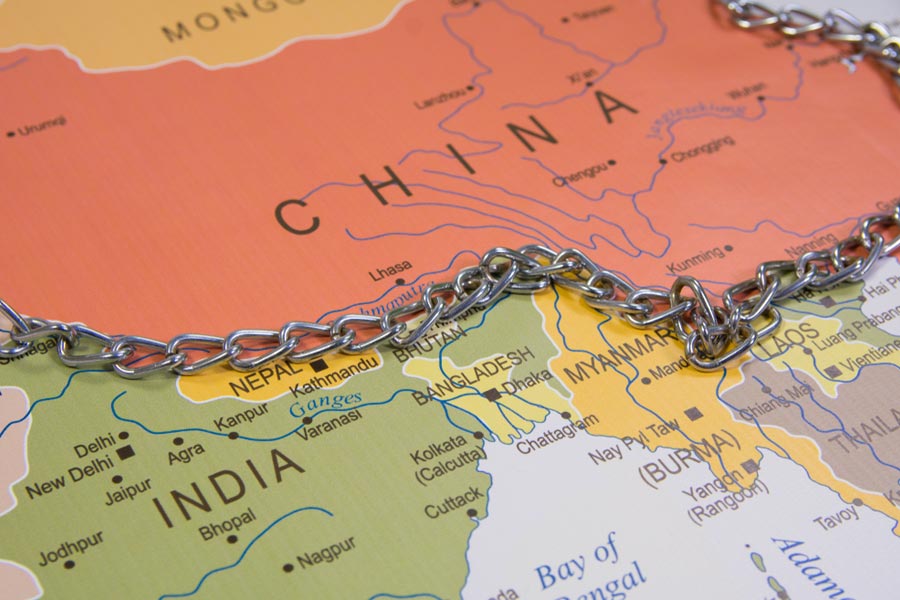
In April, Union commerce and industries minister Kamal Nath told the BBC that the central government would not come in the way of states enacting their own laws in special economic zones (SEZs). The objective was to give Indian SEZs the flexibility that has allowed China to grow at such a rapid pace.

In May, Nath was singing a different tune. Buckling to the pressure from the Left parties, the SEZ Bill was passed in the Lok Sabha without the clause on labour law reform. The controversial clause stated that any state government could enact a law “directing that any Act relating to trade unions, industrial and labour disputes, welfare of labour, including conditions of work, provident fund, employers’ liability, workmen’s compensation, invalidity, old age pension and maternity benefits, shall not apply to SEZs”.

There is some amount of confusion about what could happen on this front. According to the government, the states can amend labour laws to allow for a new regime in the SEZs. At the same time, the government will not allow violation of labour laws.

“It is surprising that Communist China has liberal laws that allow companies to hire and fire workers without excessive restrictions, while India has rules that make it virtually impossible for companies to terminate workers, even when the company is sick and unviable, or when the worker is guilty of indiscipline and violence,” says a white paper by HR staffing solutions company TeamLease Services. “In this respect, Communist China is closer to “capitalist” states like the US and Britain than to “welfare” states like France and Germany. Sadly, while China has succeeded in attracting large foreign investments, creating millions of high-paying jobs and boosting its exports, Indian business is constrained by outdated laws that destroy companies’ ability to operate freely and compete in global markets.”

THE UNFOLDING SCENARIO
How effective will the new environment be' While the new law should improve the operational environment for SEZs further, we (Morgan Stanley) believe it is unlikely to lead to a major improvement in the competitiveness of the manufacturing sector.
• The labour law environment is likely to remain restrictive.
• Past problems of EPZs (export processing zones) will continue. Some of these are: inadequate infrastructure, location disadvantages, stringent labour laws, etc.
• The size of SEZs may still not be big enough. The largest is the Kandla SEZ in Gandhidham,
Gujarat and is spread over 750 acres (1.2 square miles). The top three SEZs in China cover 126, 51 and 47 square miles.
Source: Morgan Stanley research report

The centre’s move has hit the Indore SEZ, the first operational SEZ in the country. The fear is that, in the absence of pragmatism on labour issues, companies in the SEZs will never be able to compete in the international markets. “The new SEZ law is unlikely to address this critical issue of labour flexibility,” says a Morgan Stanley report. “A restrictive labour law environment has been one of the major hurdles to the development of the Indian manufacturing sector.”

It is worth noting in this context that the Left parties are taking their cues not from their counterparts in China but from the trade unions in the West. The latter have their own agenda, principally the protection of the jobs of their constituents.

Is there anything to be said for the other side ' the argument that India does not have a social security system and, thus, jobs have to be protected' There is some logic on the face of it. But the protection is being granted to a minor fraction of the population ' the organised sector workforce. In welfare societies, it applies to the entire population.

So is the SEZ bill going to lead to a huge jump in foreign direct investment, exports and growth' Not in the short term. Though trade unions have been somewhat defanged these days, they can still act as roadblocks. “We are getting to where we want to go,” says an economist. “But at the Hindu rate of growth. That, thankfully, is no longer 4 per cent, but half of what we can easily achieve.”

Top
Email This Page