BW Issue
The Telegraph
BW Issue
 
 
IN TODAY'S PAPER
WEEKLY FEATURES
CITY NEWSLINES
FEEDS
  RSS
  My Yahoo!
SEARCH
 
Archives Web
 
ARCHIVES
Since 1st March, 1999
 
THE TELEGRAPH
 
 
Email This Page
Cops go with Nepal guerrilla angle

Patna, June 26: Bihar police are not ruling out a Nepal Maoist role in Thursday’s attack on the border hamlet of Madhubani despite scepticism in Delhi.

Senior intelligence officials in Delhi had yesterday dismissed claims that the raid on the East Champaran village was carried out jointly by guerrillas from India and Nepal.

But the Bihar director-general of police, Ashish Ranjan Sinha, pointed to “persons with Mongoloid features” among the attackers and said the state police would soon contact Nepal officially.

“We have no clear evidence yet to show that it was a joint operation, but it cannot be ruled out. We are probing it,” Sinha said.

“A year ago, Maoists of the two countries had formed a Bihar-Nepal Border Co-ordination Committee. It may have had a role in this attack,” a local police source suggested.

“The well-coordinated and precise military-style attack on Madhuban is proof that the united Maoists have made huge advances in their capacity to strike with a greater design,” a senior intelligence official said in Patna after returning from the spot.

“Three of the bodies recovered so far seem to be of Nepalis. Witnesses, too, have suggested the presence of Nepali-looking men and women in the guerrilla squads,” Sinha said.

Some in the force, however, believe these guerrillas could have been tribals from the Northeast or Paharias from Uttaranchal.

A local police source claimed Indian and Nepali Maoists have been working closely, sheltering each other and sharing expertise. Arms from across the border could be coming to north Bihar.

Nearly 500 heavily armed guerrillas simultaneously attacked nine places in the village on Thursday afternoon: the police station, block office, post office, two banks and a petrol pump, besides the homes of Rashtriya Janata Dal MP from Sheohar, Sitaram Singh, and two of his supporters.

“The raid, named Operation Dhamakka, lasted 20-25 minutes. They hit the target with precision and without much resistance. But apparently, when their chief Moinuddin Mian got shot during the attack on the police station, the message was circulated through their walkie-talkies and all the squads retreated simultaneously,” a source said.

When the CRPF camp at a nearby village was alerted, the guerrillas had already retreated 4 km and were apparently resting at Banjharia village.

Firing from mortars, the police and the CRPF chased the Naxalites and fought pitched battles with them at four villages over a stretch of about 12 km from Madhuban towards Sheohar.

The police have so far recovered only seven bodies but claim to have found bloodstains in more than 20 places and say they believe more guerrillas were killed.

Officials in Delhi have cited several reasons why they believe Nepal Maoists were not involved. First, all the posters found were in Hindi. Second, the literature seized was either in Maithili or Bhojpuri, which indicates the raid was carried out by the CPI (Maoist). Third, most of the attackers headed west after the raid and not north for Nepal.

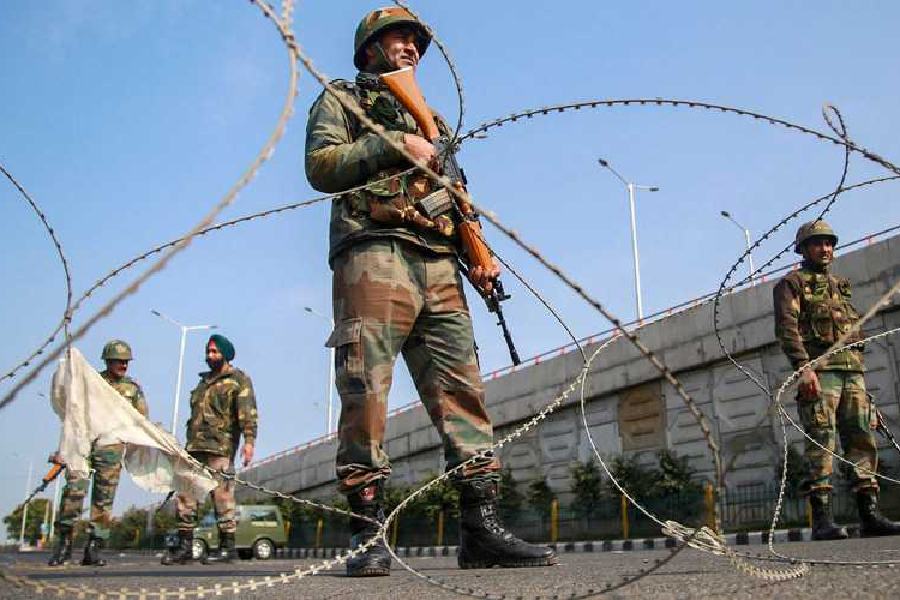
The police have sealed the border area. Three CRPF and four Bihar Military Police companies are carrying out searches. Four persons were arrested today from Sitamarhi.

Top
Email This Page