|
|
Exemplary modulation: Arghya Sen on stage at the Star Theatre (Pictures by Sanat K. Sinha)
|
The natmandir of Sovabazar Rajbari was the setting for a Rabindrasangeet concert on May 8. Hosted by Sutanuti Parishad (Shyampukur) and Shyampukur Durgotsav Committee, the evening soiree got going with a half-hearted recital by Sushanta Mukhopadhyay. The singer was more focused on the photocopied pages from Swarabitan than the song per se. Afterwards, Subir Nandy joined forces with dhrupadiya Kaberi Kar. What followed was highly stimulating.
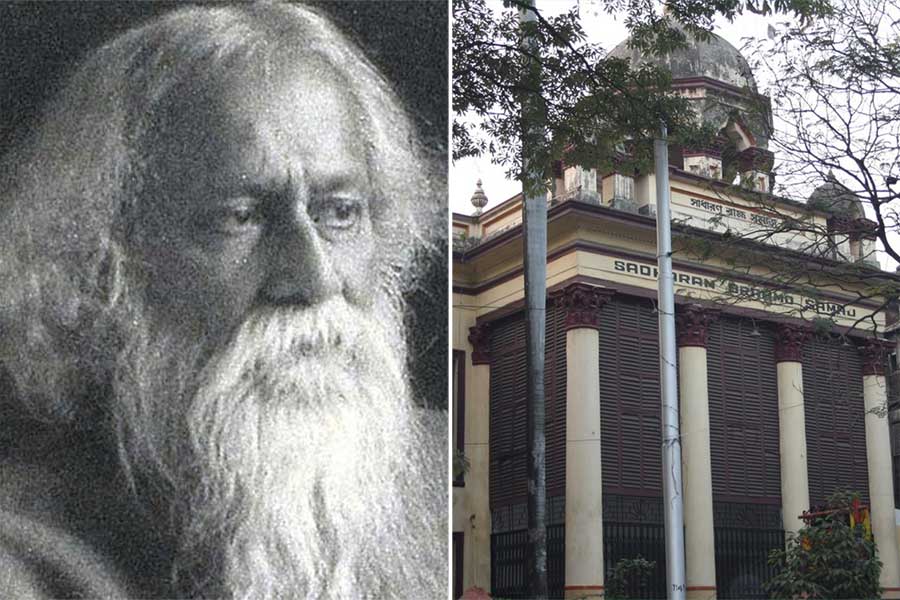
Nandys neat rendition of Jagate tumi raja was preceded by a brief deep-throated alaap in Darbari Kanada by Kar. Composed 117 years ago for the Maghotsav congregations at the Adi Bramho Samaj Mandir, the song stands testimony to an era and a class of people that held spiritual ideals high. Now that the sea of faith has receded and the general audience has remained more or less insensitive to the lofty Bramho ideals, performing such numbers in regular concerts does not make much sense. It, however, worked that evening.
Tagores birthday this year coincided with the 60th anniversary of the fall of the Reichstag. Thus listening to veteran Amiya Chattopadhyays rendering of the poem Prayaschitta at Anandadharas programme (May 9) at the newly renovated Star Theatre, one was reminded of Tagores sharp reaction to fascism. Here mostly commonplace songs were sung between hurried entries and exits. Laudable performances came from Suchhanda Ghosh, Shampa Roy Chowdhury, Kumkum Chattopadhyay, Sutapa Chowdhury, Bhaswati Mukhopadhyay, Swati Das, Sanghamitra Chakraborty, Ananyabrata Das and Shyamasri Dasgupta. Swapna Ghosals sincere treatment of Shudhu tomar bani noy go, placing divinity and the beloved on the same level, was one of the high notes. Veteran Arghya Sen sounded as good as the song in Chhinna patar sajai tarani. His involvement with the song, coupled with exemplary tonal modulation and control over the tempo, stood out.
But the Star audience appeared unperturbed when the tabla player played the wrong rhythm to Madhabi Duttas rendition of Ki sur baje, and slew the song altogether. Were people listening at all?
On Rabindrajanmotsab, it is usually a free-for-all of sorts these days. In this common mans day to pay homage to the poet, one does not actually look for razor-sharp finesse in the music or elocution rendered. And even less so at the early morning roadside programme on May 9 ? Rabindra Smaran ? organised by the Nava Nalanda school. The tautness and neatness of the programme ? in stark contrast to the unwieldy, mixed bag ladled out on Tagores birth anniversary by some of the leading and veteran institutions ? was a pleasant surprise in this case.
Sanghamitra Guptas inaugural Aami kemon koriya, set in a refreshing tone ? had the soft nuances of a morning raga. And her third rendition in rich tappa (Ke boshiley) was among the best that one got to hear that morning.
Pramita Mallicks Jethaye tomaar looth, Swagatalakshmi Dasguptas less-heard Aalo je aaj and Shudhu tomaar bani, Saikat Mitras Aamar hriday, Debarati Soms Brahmasangeet Tumi aamader pita ? inspired by church choir music ? left lasting traces. Indranil Sen could probably do without a song book, staring, as he did, indiscreetly at the audience.
|