|
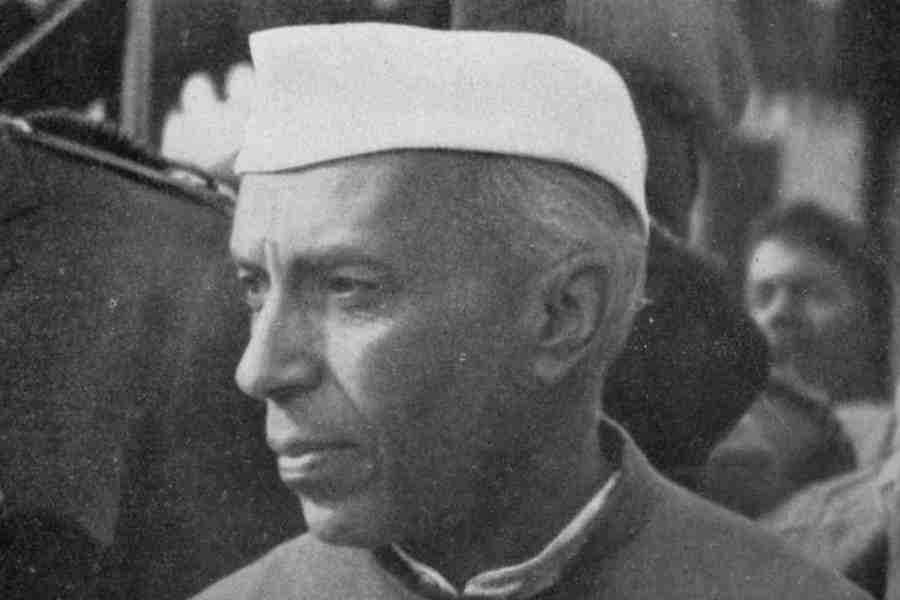
| Dust to dust: Late O.V. Vijayan, novelist
and cartoonist, at a function in New Delhi (Photo: PTI) |
Death, as Gabriel Garcia Marquez once wrote, is ?an
unavoidable professional hazard?. Unavoidable, yes. Professional... well, that?s
subjective. But as for the ?hazard? bit, no one perhaps knows better than Madhu
Vijayan, though passively so.
Two weeks after the death of his father, the renowned
cartoonist and litterateur O.V. Vijayan, Madhu is awaiting justice in a case that
has questioned the concept of social legacy in the country. And while the litigation
comes up for hearing at the Delhi High Court on April 14, few can conclusively
say whether the only son of the deceased artist will eventually stand vindicated.
The 35-year-old himself doesn?t know when he will be able to return to Los Angeles
? where he has resided for the past 20 years ? to get back to running his private
equity fund. ?Legal procedures take time, after all,? he says with a sigh.
It was in Madhu?s absence that Vijayan?s funeral was
conducted by Ravi Shankar, the artist?s nephew, in the family?s native district
of Palakkad in Kerala. Madhu holds that Shankar, also a cartoonist by profession,
took charge of the ashes after the funeral. And he stresses that Vijayan?s family
has not been on talking terms with Shankar for long.
?I was too overcome by my emotions to attend my father?s
funeral, and thus chose to stay back in Hyderabad and let Ravi Shankar oversee
the proceedings,? explains Madhu, who had flown in the day before his father?s
death. But that doesn?t make him any less of his being his father?s son, Madhu
argues. ?And by virtue of being his heir, there?s no question of forfeiting my
rights to his mortal remains.?
Ravi Shankar doesn?t wish to speak to the press on
this any more. He points out that the matter is subjudice. The law, the two sides
would hope, will take its own course. But what remains unsaid is, is there a proper
course that can be taken?
Several Delhi-based lawyers admit that the petition
filed by Madhu at the Delhi High Court could well be unprecedented in Indian legal
history. ?To the best of my knowledge, such a case has never come up before the
court in the past,? says lawyer Vrinda Grover. ?And since this is more of a social
dispute, there isn?t any legal statute specifically laid down to deal with it,?
she says. The only option the jury has in such a situation is to perhaps go through
documents that Vijayan has left behind, such as a will, in order to find out if
the right to his ashes has been accorded to a particular person, says Grover.
?But it has to be a just and fair hearing, and the court has to ensure that it
doesn?t lead to a confrontation between the parties,? she says.
Clearly, it?s an indication that the law is partly
restrained in dealing with a case that transcends legal borders to dwell in the
realm of social customs. ?A social dispute needs to be solved socially, and legal
right to things such as one?s ashes can only be ascertained if established by
custom,? says lawyer Rajeev Dhawan. ?Hence, in the Vijayan case, the legal course
of action would possibly be grounded in social custom,? he adds.
And social customs are debatable. Dhawan cites the
controversy that was generated a few years ago when Lakshmi Parvati, widow of
former Andhra Pradesh chief minister N.T. Rama Rao, was prohibited from participating
in the politician?s funeral by her step-sons. ?It was like stretching a social
dispute too far,? says Dhawan. ?And had it come to court, it could have sparked
its own set of critically poised questions.?
So by opting to stay out of his father?s last rites,
Madhu may have socially put himself at a disadvantage, Dhawan wonders aloud. ?The
equity may not entirely be in his favour now, unless the will says otherwise.
Social responsibility may have a part to play in solving the dispute,? he says.
Besides, one could also argue if mortal remains were
a part of a person?s estate, which could be willed, Dhawan points out. An affirmative
answer to that question could then help veer the issue back into the legal framework.
On the other hand, ?hijacking one?s ashes without notice could amount to stretching
a customary practice too far,? he says. ?And steps should be taken to see that
it doesn?t become common practice in the future.?
These are perhaps a few of the many things for the
bench to consider. But even as the litigation goes under the gavel, it appears
that the battle is being fought out on a wholly unbecoming pitch. ?Family matters
are best solved within the family,? Grover concludes.
Dhawan seems to agree. ?It?s a very private matter
that has been blown out of proportion,? he says, all the while hoping that the
litigation sees a decent and quick settlement in the form of a fair and congenial
understanding between the warring parties. ?Finally, one also wishes that disputes
such as these were never dragged into the court again!? the lawyer in him exclaims.
So much for the ?professional? aspect of Marquez?s
philosophy.
|