|
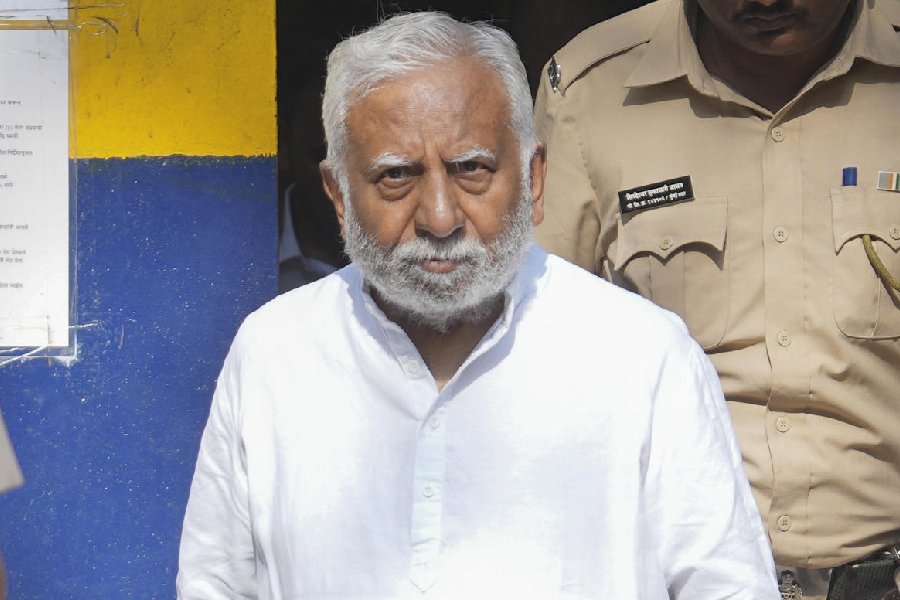
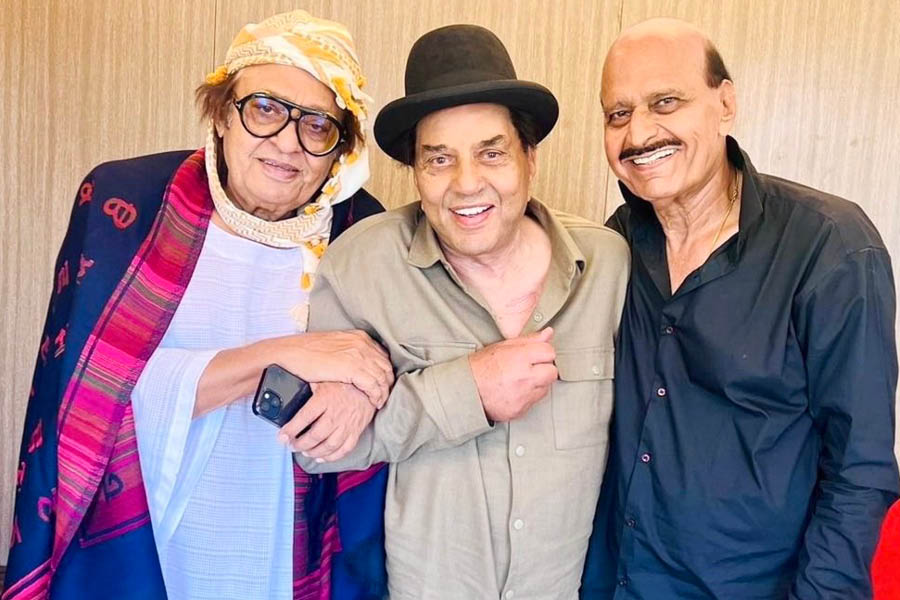
| Cardinals Francis
Arinze of Nigeria (left) and Giovanni Batista Re of
Italy attend mass in St. Peter?s Basilica at the Vatican.
(AFP) |
Rome, April 10: The Roman
Catholic Cardinals will take an oath of secrecy when they
enter the conclave to elect the next Pope, but in the week
since John Paul II?s death many have been publicly dropping
hints about what kind of man the church now needs.
The enormous outpouring of affection
for John Paul has clearly had an impact on their thinking.
Many of the prelates said in noticeably similar language
that while the next Pope may have a very different style
than John Paul, he must above all be an effective communicator
of the faith who can sustain the grass-roots enthusiasm,
especially among youth, that John Paul generated.
With all but three of the 117
cardinal electors selected by John Paul, it is highly unlikely
that the new Pope will depart from his conservatism on contraception,
divorce, women as priests or the range of what the church
considers to be ?sanctity of life? issues, from stem-cell
research to abortion and euthanasia.
Before the Pope?s death, many
cardinals and commentators said a decisive factor could
be geography ? whether the next Pope should come from Europe,
where the church is shrinking, or from Latin America, Africa
or parts of Asia, where the church is experiencing rapid
growth.
But since the Pope?s death, the
cardinals have said they are looking for someone who can
project universal appeal with a personal humility and pastoral
presence that embodies the message of the gospel, as they
say John Paul did. It is not, many cardinals said in interviews,
that they must choose a great orator.
?He doesn?t have to be John Paul
II and have the same fingerprints,? said Cardinal J. Francis
Stafford, formerly the archbishop of Denver and now a high-ranking
Vatican official. ?He just has to be his authentic self,?
Cardinal Stafford added. ?He will lead them to Christ, and
that?s all that?s necessary.?
Cardinal Stafford and others spoke
before yesterday, when the Vatican spokesperson, Joaqu?Navarro-Valls,
announced that the cardinals had decided unanimously at
their daily meeting ?to avoid interviews and contact with
the media,? whose members were ?invited to abstain? from
seeking out comment.
?The cardinals have begun a period
of more intense silence and prayer in the face of the conclave,?
he said. Two cardinals cannot attend for health reasons,
bringing the total count of electors to 115, the Vatican
said.
The men who will elect one of
their own to be the leader of a church of more than a billion
people are the most ethnically and geographically diverse
college of cardinals in history, thanks to the effort by
John Paul to increase the number of non-Italians.
Many cardinals emphasized last
week the need for increased dialogue with Muslim leaders.
?You don?t want a clash of religions,? said Cardinal Avery
Dulles, a theology professor at Fordham University and a
non-voter. He identified ecumenism as one of two priorities
for the next Pope along with pushing forward with John Paul?s
effort to evangelise in the West.
More than at any past conclave
this one has an unusually large number of papabili,
the Italian word to describe those with Pope potential.
Several cardinals have indicated
a strong desire for someone with the pastoral qualities
of cardinals who are also archbishops. Perhaps none of this
matters, some cardinals suggested, returning to the charisma
issue.
?He has to be able to communicate
with rich, young people in countries like the United States
and France,? said Cardinal Philippe Barbarin of France.
?Then he needs to be able to relate to the poor when he
goes to places like Brazil or Morocco or Burkina Faso. He
has to be a person who can explain the Gospels to every
type of audience. He has to really love his flock; he has
to understand their sufferings, their difficulties,? he
said. ?John Paul II was that kind of Pope.?
|