TT Epaper LHS
The Telegraph
TT Mobile
 
 
IN TODAY'S PAPER
WEEKLY FEATURES
CITY NEWSLINES
FEEDS
  RSS
  My Yahoo!
ARCHIVES
Since 1st March, 1999
 
THE TELEGRAPH
 
CIMA Gallary
 
Email This Page
Dilemma of the pre-1940 Bengali
- Enterprise but a lack of effort, resources

The recent past usually remains outside the area of study of historians because it is difficult to examine such a period of time within close proximity of oneself with any degree of objectivity.

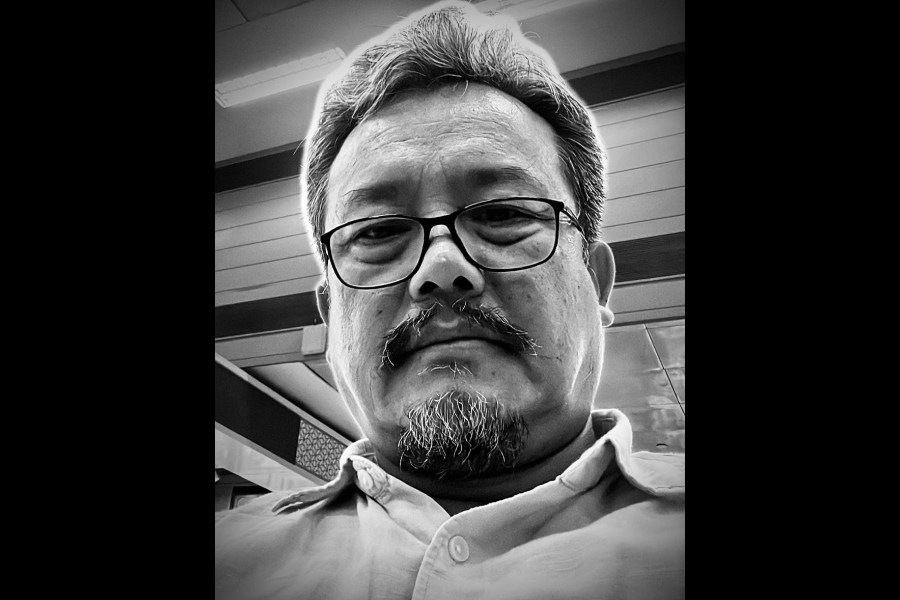
Prof Pradip Sinha had taken upon himself the task of speaking on Calcutta in the early 20th century, when the city ?reached a climax? in the fields of science and literature, that gave it a place in the world.

The lecture that focused on the period between 1910 and 1940 was organised at Asiatic Society on Monday and will be published as a book.

Deploring the lack of serious research in the city at the present time, except by NRIs, Prof Sinha quoted CV Raman as saying that scientific research had reached such a point here that it was comparable to the best work done in the West. Fortunately, because of its backward economy, Calcutta did not feel the impact of either World War I or the Great Depression.

The middle class worked in ?reasonable poverty? but despite the lack of resources, it turned Calcutta into a truly cultural capital of the country.

Prof Sinha traced both the positive and negative aspects as Calcutta flourished into a metropolis. While its metropolitan development was very real, at another level it was already becoming a Third World phenomenon, as migration from the rural belts increased. Calcutta and not Bombay was still the financial capital of the country. with its concentration of trade in jute, coal and tea.

Calcutta developed a bourgeois (though not in the Western sense) character and yet retained a feudal element because the patronage of zamindars still mattered.

According to the Thackers Directory, the largest occupational group of the upper class was in the legal profession. The second largest was people in trade and business, the majority of whom were not Marwaris or Gujaratis but Bengalis. In spite of their numbers, their establishments were small. The third largest was people in the teaching profession. The upper-class Bengalis did not feel a bond with the lower class.

Prof Sinha then went on to the writings of Benoy Kumar Sarkar. ?Bengali capital was still at the kindergarten stage,? Prof Sinha commented, as it is till today. He regretted the fact that nobody here writes about the development of capitalism in Europe and America, even after visiting those countries.

He spoke about the organisational abilities of Ashutosh Mukherjee, under whom Calcutta University reached its apogee. The Bengali educated middle-class was still basically poor, yet shared the aspirations of the Western bourgeoisie. ?There was an awareness of poverty, yet they were optimistic,? he said.

In spite of the swelling wealth of the city, such riches bypassed the Bengalis. The gentry still prided itself on its cultural and literary achievements.

There were hundreds of Bengali entrepreneurs but their enterprises collapsed because of the lack of resources, ?causing a deep dilemma and pain?.

The new realism in Calcutta was an antidote to the swadeshi movement. Writers like Pramatha Choudhury spoke of ?tel, nun, lakdi? (basically rations) and PC Roy was the first scientist to apply the knowledge of science to industry. Capital was highly fragmented in Bengal and except for Martin Burn, there were few large companies owned by Bengalis.

Unlike the British, the Bengalis lacked sustained effort and the institutional base to exist for a long period, stressed Prof Sinha. He cited the example of the rise of the Anglo-Bengali schools in the 1930s and 1940s, and their subsequent marginalisation.

He was critical of our obsession with learning English at the cost of the vernacular, and rounded off saying that this has happened nowhere else. Not even in the smallest nations of Western Europe.

Top
Email This Page