The Telegraph
 
 
ARCHIVES
Since 1st March, 1999
 
THE TELEGRAPH
 
 
Email This Page
Career Hotline

Macro options with microbiology

Q: I am appearing for the Class XII (science) board exams this year. Please tell me about the prospects in microbiology.

Shailee Rohatgi

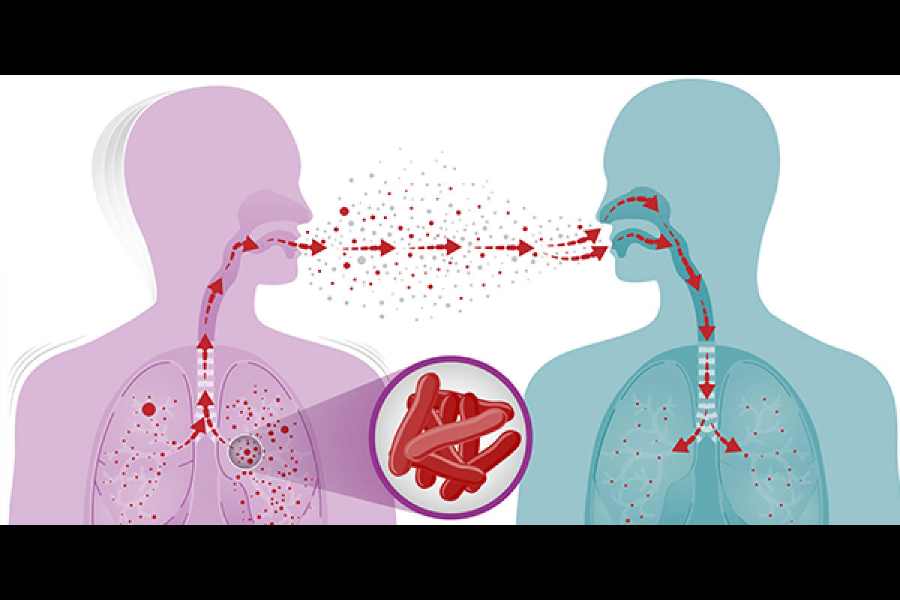
A: Microbiology is the study of micro-organisms, including bacteria and viruses and fungi. It includes the study of ecological behaviour of micro-organisms, their anatomy and physiology, evolution and mutation. One of the frontier fields in life sciences, microbiology has varied applications in research and industry. While some research-based jobs abound for postgraduates in this subject, those with a doctorate are obviously in greater demand.

In medicine, microbiologists work in hospitals and pathological laboratories. The pharmaceutical, cosmetic, food & beverage, water processing and bottling industries, and hotels also employ microbiologists.

In the pharmaceutical sector, microbiologists study microbes and organisms that cause diseases, evaluating antibiotics and developing vaccines, manufacturing drugs by fermentation, etc. Agricultural microbiologists work in the area of plant development, plant disease and tissue culture.

You could also work with manufacturers of medical disposable goods, cosmetics and antiseptics. Some openings can be found in the sales and marketing departments of manufacturing companies in these fields as well.

In municipal or public water departments, you will undertake routine testing of water supplied to industrial and domestic users. Other destinations include university departments, research councils and government-funded research institutes.

Similarly, openings for microbiologists exist in the R&D and scientific departments in industry, public sector labs like CDRL, hospitals and universities. You can also take up teaching jobs. The civil services is another option. MSc microbiology is offered at over 50 universities in India.

Vital link in ad agencies

Q: What is the job of an accounts executive (AE)' How can I become one' Please advise.

Vandna

A: The client servicing department in a typical ad agency is manned by several AEs, working under an account planner. After receiving a detailed brief from the client, the AE works out a strategy based on the brand's positioning, its USP and its communication objective. Then the creative and media departments are briefed and a creative strategy is hammered out. The AE's job also involves co-ordinating with the art department and also with the production department.

Though the work is a high-pressure one, you will be adequately compensated if you are resourceful, ambitious and diplomatic in handling people. While the better agencies require an MBA, some others will be satisfied with a BA in economics or a diploma in marketing or mass communication.

Be a detective for the state

Q: I will be giving my Plus Two exams under NIOS. Am I eligible to join the CID' Please tell me about the selection procedure.

B.D.Gupta

A: The NIOS is recognised on par with CBSE by a large number of Indian universities. The Association of Indian Universities has issued a circular to all Indian universities stating the equivalence of qualifications of students passing out of the NIOS with those from other recognised boards. So, you are eligible to join the CID which is the investigative wing of the state police.

In general, police personnel are recruited at three levels ' by the UPSC through the Civil Services examination (IPS cadre), State Public Service Commissions and by the District Police Headquarters. Some of the police personnel selected via either of these routes are appointed on a regular CID posting if they have the requisite aptitude.

No separate notifications are issued for recruitment to the CID. The eligibility for jobs of the level of sub-inspector and above is a bachelors degree.

Q: Which universities offer a three-year LLB course through correspondence'

Sanju Singh

A: No university offers a full-fledged three-year LLB degree through correspondence. However, the following law courses can be done through correspondence:

• Annamalai University, Directorate of Distance Education, Annamalinagar 608002. Courses: Bachelor of academic laws and bachelor of general laws.

• Guru Nanak Dev University, Centre of Distance Education, Amritsar. Course: LLB (academic laws). Eligibility: Bachelors degree with 50 per cent.

• University of Jammu, Directorate of Distance Education, New Campus, Jammu 180006. Course: LLB (academic laws).

• Kakatiya University, School of Distance Learning & Continuing Education, Warangal 506009. Course: Bachelor of general laws. n University of Kashmir, Department of Distance Education, Hazratbal Srinagar 190006. Course: LLB (academic laws). Elgibility: Bachelors degree with 40 per cent.

• Madurai Kamraj University, Directorate of Distance Education, Palkalainagar, Madurai 625021. Course: Bachelors of general law. However, due to statutory requirements, the courses are not recognised by the Bar Council of India and you will not be able to practice. But the knowledge of law will always prove useful in any field.


WRITE IN Send your queries to Career Hotline, Careergraph, The Telegraph, 6 Prafulla Sarkar Street, Calcutta 700 001. Fax: 2225 3142; e-mail: career@abpmail.com
Top
 
Email This Page