Bharat Matrimony
The Telegraph
 
 
IN TODAY'S PAPER
WEEKLY FEATURES
CITY NEWSLINES
FEEDS
  RSS
  My Yahoo!
ARCHIVES
Since 1st March, 1999
 
THE TELEGRAPH
 
 
Email This Page
Family ties

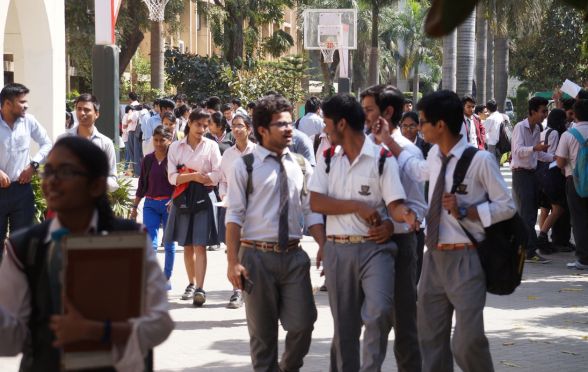
Does the region you come from determine what sort of job you will be best at? It is well known, for instance, that the lion?s share of IAS officers is made up from Uttar Pradesh and Bihar. Bengal lacks entrepreneurship. Gujarat is just the opposite and people from that state know how to make money (and keep it).

Or take Asok, the familiar figure from the Dilbert comic strip. He is a brilliant IIT graduate who completed five years as an intern in 2004. But he will not get a regular job as he is so easily conned. And that?s the stereotype for one sort of Indian immigrant in the US: brilliant but socially dumb.

Many people in the US believe that Asok represents most IITians. At the other end of the spectrum are the Potels (motels run by Patels, which are all over the place in the US).

Consider another example. V.P. Shetty was recently appointed chairman of IDBI. Amid the gushing praise for his earlier achievements at the Calcutta-based United Commercial Bank, some newspapers had a throwaway paragraph: ?A career banker, Shetty is from South Canara (now Udipi) ? a place that nurtured the Shenoys, Pais, Shettys, Poonjs and Naiks who headed a lot of Indian banks. This is also the birthplace of five community-based banks ? Syndicate Bank, Canara Bank, Vijaya Bank, Corporation Bank and Karnataka Bank.? Is there any particular reason that Udipi produces idlis and bankers with equal ease?

NEW PURPOSE
Today’s new guilds can:

Provide independent workers with tangible benefits.
Provide a point of connection for informal peer groups and networks of practitioners.
Act as a simple convening mechanism for connecting individuals who are members of
networks.
Facilitate “introductions” that might allow new workers to tap into existing networks, as well as make connections across peer groups.
Offer new subject content — supplied via the Web, through partnerships with third-party providers.

Source: Guilds and the Future of Learning, Robert Laubacher

?It?s a throwback,? says Mumbai-based HR consultant D. Singh. ?A century ago, a farmer?s children became farmers, a cobbler handed down his skills to his son.?

But is there any logic to it? Are people, because of their genes and environment, suited for particular jobs?

In today?s world, the attitude that certain people are cut out only for particular jobs is considered to have racist undertones and is not acceptable to the majority. But the truth is that a math teacher?s son is unlikely to be scared of numbers. A surgeon?s daughter sees the scalpel as an instrument of hope.

What is more politically correct is the idea of guilds. ?Medieval guilds grew out of tradesmen?s fraternities and mutual assistance clubs. Guilds trained apprentices and helped them find work,? says Robert Laubacher of MIT?s Sloan School of Management. He says that guilds are definitely the future as more and more of the workforce gets into temp or freelancing mode.

Singh says the new guild is a diplomatic way of acknowledging the idea that job preferences can be family or community biased. ?You are building up communities,? he explains. Look closely, and it is all over the place. The referral system is becoming big in recruitment; surely the persons you recommend are guys you know. And at BPOs, if you are good, they will welcome with open arms your brothers, sisters, cousins and even parents. The need to build work-related families and communities is getting stronger as the formal organisation retreats into history.

Top
 
Email This Page