|
Hans Albrecht Bethe, who discovered the violent force behind sunlight, helped devise the atom bomb and eventually cried out against the military excesses of the Cold War, died on March 6. He was 98, the last of the giants who inaugurated the nuclear age. His death was announced by Cornell University, where he worked and taught for 70 years. A spokesman said he died quietly at home. Except for the World War II years at Los Alamos, New Mexico, Bethe lived in Ithaca, New York, an unpretentious man of uncommon gifts. His students called him Hans and admired his muddy shoes as much as his explaining how certain kinds of stars shine. For number crunching, in lieu of calculators, he relied on a slide rule, its case battered. 'For the things I do,' he remarked a few years ago, 'it's accurate enough.' For nearly eight decades, Bethe (pronounced BAY-tah) pioneered some of the most esoteric realms of physics and astrophysics, politics and armaments, long advising the federal government and in time emerging as the science community's liberal conscience. During the war, he led the theoreticians who devised the atom bomb and for decades afterwards fought against many new arms proposals. His wife, Rose, often discussed moral questions with him and, by all accounts, helped him decide what was right and wrong. Bethe fled Europe for the US in the 1930s and quickly became a star of science. As a physicist, he made discoveries in the world of tiny particles described by quantum mechanics and the whorls of time and space envisioned by relativity theory. He did so into his mid-90s, astonishing colleagues with his continuing vigour and insight. In a 1938 paper, Bethe explained how stars like the sun fuse hydrogen into helium, releasing energy and, ultimately, light. That work helped establish his reputation as the father of nuclear astrophysics, and nearly 30 years later, in 1967, earned him the Nobel Prize in physics. He published more than 300 scientific and technical papers, many of them originally classified secret. Politically, Bethe was the liberal counterpoint (and proud of it) to Edward Teller, the physicist and conservative who played a dominant role in developing the hydrogen bomb. That weapon brought to earth a more furious kind of solar fusion, and Bethe opposed its development as immoral. For more than half a century, he championed many forms of arms control and nuclear disarmament, becoming a hero of the liberal intelligentsia. In a 1997 interview in his Cornell office, at age 90, Bethe said he had no regrets about his role in inventing the atom bomb, done amid worries about the Nazis' getting it first and conquering the world. But as the most senior of the living scientists who initiated the Atomic Age, he urged the US to renounce all research on nuclear arms and called on scientists everywhere to do likewise. Throughout life, he remained a staunch advocate of nuclear power, defending it as an answer to inevitable fossil-fuel shortages. Bethe was the last of the scientific greats who initiated the nuclear era, outliving not only Teller but Enrico Fermi and Robert Oppenheimer, the scientific head of wartime Los Alamos. Mary Palevsky, who interviewed Bethe for a book on the nuclear age, recalled him as so remarkably 'intellectually open that he was always a pleasure to talk to.' His warmth, his modesty, his integrity, won the respect of all who knew him, friend and foe alike. He was not a tragic figure wracked by guilt ' the fate of some who came to regret their bomb labours ' but a man famous for his indefatigable appetite. His lean body could boom with laughter. He loved to ski and climb mountains with colleagues. Students learned to rely on his patience and readiness to help, be it with research or personal problems. His door, they found, was always open. Bethe was born on July 2, 1906, in Strasbourg, Alsace-Lorraine, to a family of modest means. His father, a physiologist at the University of Strasbourg, was a Protestant and his mother Jewish. He was their only child. The frail youth showed an early genius for mathematics, which his father discouraged, not wanting his son to get ahead of his peers. The precocious boy took to secretly reading his father's books on trigonometry and calculus. At the University of Munich, Bethe studied with Arnold Sommerfeld, one of the day's leading theoretical physicists. In 1928, Bethe received his doctorate, graduating summa cum laude, having already made contributions to the fledgling science of quantum mechanics. The next year he worked for Paul P. Ewald, a noted physicist in Stuttgart, and befriended his family, often visiting and having dinner.
|
|
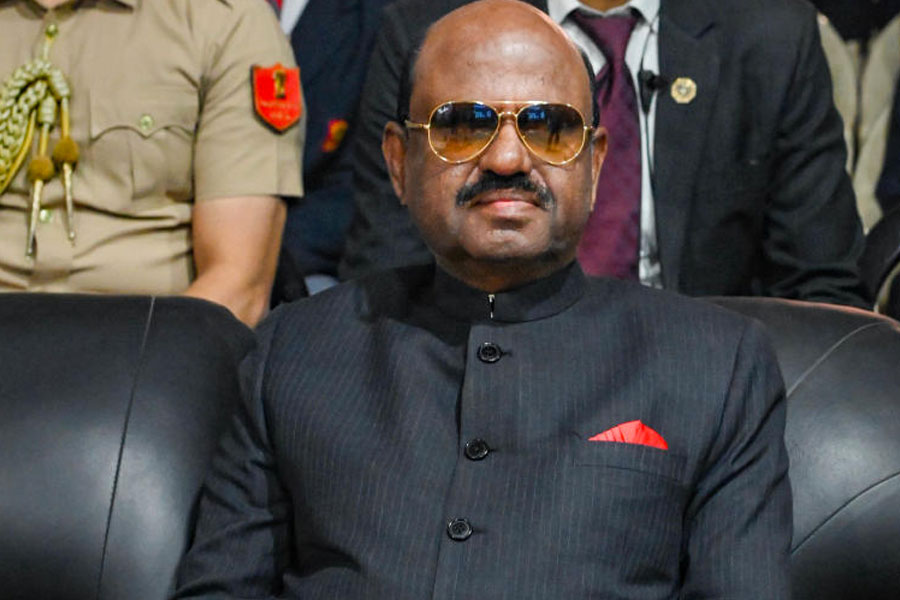
Friend and foe: Robert Oppenheimer (top) and Edward Teller were Bethe’s colleagues at Los Alamos |
At times, Bethe took the older Ewald children on Sunday walks, including Rose, his future wife. After stints at several universities, he came into conflict with the new Nazi race la-ws and fled Germany in 1933. For two years he taught in England and then went to Cornell University, in Ithaca, where he remained the rest of his academic life. While lecturing at Du-ke University in 1937, he bumped into Rose Ewald, who had emigrated and was going to the school. The two fell in love. At Cornell, Bethe wrote a series of brilliant papers that culminated in the 1938 treatise, Energy Production in Stars. It set forth the first and only explanation of stellar energy that explained all the known facts ' essentially why stars like the sun burn for billions of years. The world ' and his world, in particular ' changed forever in 1938, when German scientists discovered that the atom could be split in a burst of atomic energy, starting quiet deliberations around the globe into the practicality of chain reactions and a bomb. In America, Bethe discussed the matter with Teller, another refugee from the Nazis. The two were close friends. In New Rochelle, New York, the Hungarian physicist was one of the few guests invited when Bethe and Rose got married in September 1939. In addition to his wife, Bethe is survived by two children, Henry, of Ithaca, and Monica, who lives near Kyoto, Japan, and three grandchildren. Bethe's reputation grew with the war effort. In 1940, Time magazine called him 'one of Nazi Germany's greatest gifts to the US.' He was helping to advance radar at the Massachusetts Institute of Technology when an atomic recruiter came to call, meeting him conspiratorially in the Harvard Yard. In 1942, during a walk in the mountains of Yosemite, his wife as-ked him 'to consider carefully' if he wanted to continue assessing the feasibility of nuclear arms, Bethe told Jeremy Bernstein, author of Hans Bethe, Prophet of Energy. Worried that Nazi Germany wanted such weapons, he decided that he did. In 1943, he was named the first director of the theoretical division at Los Alamos, the secret laboratory in the mountains of New Mexico where thousands of scientists, technicians and military personnel were gathering to see if a nuclear bomb was indeed possible. Behind rows of barbed wire, he coaxed some of world's brightest and most idiosyncratic experts to work hard on how to unlock the atom. Colleagues often balked. 'No, no, you're crazy!' Richard Feynman, a young scientist who eventually gained fame as an eccentric genius, protested one day. But Bethe plowed ahead, proving his idea exactly right. At Los Alamos, Bethe's group calculated such things as how much plutonium it would take to build an atom bomb, and whether the detonation would ignite the atmosphere and destroy the earth. The bomb's horrors became a turning point for Bethe. After the destruction of Hiroshima and Nagasaki, he devoted himself to trying to stop the weapon's 'own impulse,' as he put it. While retaining links to the government and Los Alamos, he helped lead the corps of atomic scientists who, in an unprecedented wave, left secluded laboratories to plead before Congress and the American public for nuclear restraint. He also plunged back into academic life at Cornell, educating a new generation of physicists. He recruited Feynman, his Los Alamos protege, and helped him develop quantum electrodynamics, an advanced theory for which Feynman eventually shared the Nobel Prize. In April 1950, Bethe wrote a provocative article in Scientific American arguing against development of the hydrogen bomb, an advance then looming. He had concluded, after discussions with his wife and colleagues, that it had little military use and was primarily a weapon for incinerating civilians in large cities. 'We must save humanity from this ultimate disaster,' he wrote. 'And we must break the habit, which seems to have taken hold of this nation, of considering every weapon as just another piece of machinery and a fair means to win our struggle with the USSR.' By contrast, Teller lobbied hard for the superbomb, as it was called. Bethe worked on it too, hoping to prove the idea impossible and considering his work a hedge against the possibility that the Soviets might get it first. In 1952, a blinding flash of light marked the detonation of the world's first hydrogen bomb, its power roughly one thousand times greater than the weapon that destroyed Hiroshima. During the Cold War, Bethe and Teller went from increasingly cool friends to bitter foes. The denouement came in 1954 ' at the height of the McCarthy era ' over the government's push to remove the security clearance of Oppenheimer, then the top scientific adviser to the Atomic Energy Commission and a man who probably held more nuclear secrets in his head than any other American. One charge was that Oppenheimer had argued against a crash program for H-bomb development. Another was that he had Communist ties. In Washington, Bethe and his wife spent an evening trying to persuade Teller to testify in favour of Oppenheimer ' to no avail. At a secret hearing, Bethe defended his former boss and Teller strongly faulted Oppenheimer's judgment. The clearance was eventually revoked, and Oppenheimer quickly fell from power. Afterward, Bethe wrote a long article charging that Teller, not Oppenheimer, had hindered the nation's pursuit of the superbomb for years due to a series of mathematical errors. It was only after the size of Teller's mistakes became apparent, Bethe wrote, that Teller and his colleagues were forced to find the right way to go about solving the problem. The article, written in 1954, was quickly stamped top secret and only declassified three decades later. Despite his fears of an unfettered arms race, Bethe continued to consult for the government and on occasion to help make weapons. As a member of the President's Science Advisory Committee, starting in 1956, he became a driving force behind the world's first and most successful arms control pact ' the 1963 Limited Test Ban Treaty, which confined nuclear tests to beneath the earth. In the late 1960s and early 1970s, Bethe lent his growing prestige to fight the government's plans to deploy anti-missile weapons. Having studied the issue for President Dwight Eisenhower, he was convinced that all such systems could be easily defeated. In the 1970s, after the Arab oil embargo started a global economic crisis, Bethe threw himself into championing new ways to produce energy. In articles, speeches and congressional hearings, he argued that the dangers of nuclear reactors were small compared with many other risks judged to be socially acceptable. During this period, Bethe and Teller, both firm advocates of nuclear power, became somewhat closer, 'although not with the intimacy of the old days,' Bethe recalled. He formally retired from Cornell in the summer of 1975. But that did little to slow his activity. In the 1980s, he fought President Reagan's proposed shield against enemy missiles, known popularly as 'Star Wars.' Alan Lightman, a physicist and author at the Massachusetts Institute of Technology, recalled attending a meeting with Bethe in October 1997, after the celebrated physicist had turned 91. He expected reminiscences. But Bethe, after tottering up to the podium, surprised him. 'It was a paper on astrophysics that he had just published,' Lightman recalled. 'And it was good.' NYTNS |