TT Epaper LHS
The Telegraph
TT Mobile
 
 
IN TODAY'S PAPER
WEEKLY FEATURES
CITY NEWSLINES
FEEDS
  RSS
  My Yahoo!
ARCHIVES
Since 1st March, 1999
 
THE TELEGRAPH
 
CIMA Gallary
 
Email This Page
Swing to the south

Murmurs of discontent with the hallowed shrine of Bengali group theatre are spreading through the community. Some of the leading younger directors have all but vowed never to perform again inside the Academy of Fine Arts. The future of Bengali theatre appears to be headed south.

Suman Mukherjee of Chetana and Saoli Mitra?s Pancham Vaidik have got together to stage their present repertoires in Uttam Mancha, on Manoharpukur Road, near the Hazra crossing. Just one block away, on Hazra Road itself, Kaushik Sen?s Swapna Sandhani and Manish Mitra?s Arghya have joined hands to revive Sujata Sadan, where they will present productions henceforth. Even young Hindi-language directors have confided in me their rejection of Academy.

The grapevine offers many reasons for this growing disaffection, but we should not indulge in rumour-mongering. Frankly, I have never understood theatre workers? fascination with the Academy auditorium.

Architecturally, it has too wide and high a proscenium arch, very poor sight lines from the best seats and spondylitis guaranteed for front-row regulars, cramped knee-room and limited backstage space. Its curtain is frayed and its wings tattered. If you go to visit the greenroom, the toilet greets you. The Cathedral Road pavement is a mess, cars triple parked, Calcuttans snacking away at the south end and relieving themselves at the north end. The stench reeks to high heaven; if not, at least to St Paul?s Cathedral.

So, I am all in favour of the exodus. If Bengali theatre has to survive, it must do so away from the Academy. Uttam Mancha is a decent small hall, but Sujata Sadan needs major renovations to come up to par, which its owner now promises to undertake. The first full-length new play at either venue is Arghya?s Simar, which director Mitra pledges to do only at Sujata Sadan (excepting for invitations elsewhere). He seems to be throwing down the gauntlet at the Bengali theatregoer.

Let us hope he succeeds, for it is a brave play. The author of the source text, Abul Bashar, attacks the backwardness of orthodox members of his own community, specially the patriarchal subjugation, abuse and exploitation of rural women.

When the victimised heroine leaves for the anonymous security and freedom of the big city to earn a living there, the oppressors follow her and attempt to drag her back. Her fight for individual rights and dignity sounds the clarion call.

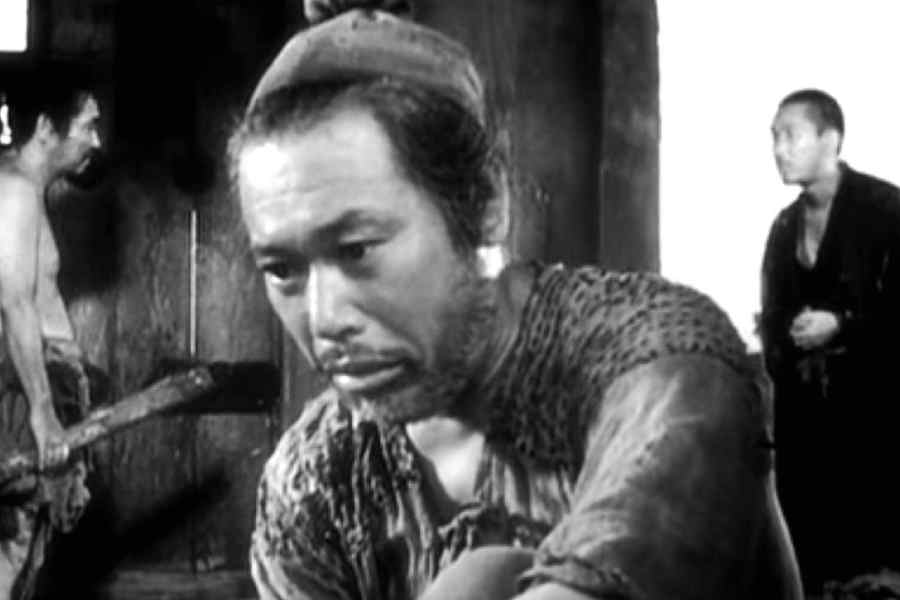
After the premiere, Bashar addressed the gathering and sounded pleased with Mitra?s dramatisation of his work. Mitra applies his usual graphic visual style and shock effects to good effect in the production. The acting, too, is uniform ? particularly that of the autocratic husband (Siddhartha Karmakar), his daughter (Sima Ghosh) and his junior wife (Abanti Chakrabartti).

Arghya must face the fact that it should reach out to audiences in the villages that encounter the problem of Simar on a day-to-day basis. Ironically, only if it ventures out of Sujata Sadan will Simar really succeed.

Sima Ghosh (left) and Abanti Chakrabartti in Simar in picture above

Top
Email This Page