TT Epaper LHS
The Telegraph
TT Mobile
 
 
IN TODAY'S PAPER
WEEKLY FEATURES
CITY NEWSLINES
FEEDS
  RSS
  My Yahoo!
ARCHIVES
Since 1st March, 1999
 
THE TELEGRAPH
 
CIMA Gallary
 
Email This Page
Classact
Cambridge in schools

A UK school degree could soon be yours for the taking without having to enrol at any of the exclusive international or public schools. If the Cambridge International Examinations (CIE) ? one of the two major school boards in the UK ? has its way, then more than 150 CBSE schools could be offering their courses by the end of this year. Mark Bartholomew, CIE?s regional manager, south Asia, spoke to Prithvijit Mitra on what a CIE qualification could mean to the Indian student. Excerpts from the interview.

Q: What do the Cambridge courses emphasise on?

A: The CIE curricula encourage students to actively participate in their learning. Instead of spending long hours memorising passages from textbooks, students are encouraged to think for themselves ? the very thing that is going to get them ahead in later life.

Q: Would it be difficult for Indian students to prepare for their board and the CIE exams simultaneously?

A: Yes. The CIE curricula and assessments are not the same as that of the state or the national Indian boards. So they cannot be seen as an add-on.

Q: How many subjects do you need to clear? At the Plus Two or the A levels, do students have to choose a particular stream?

A: No subject is compulsory under CIE. The Association of Indian Universities has set a minimum of two A-level passes (in Class XII) and 5 international GCSE grades A to C (in Class X) as an entry qualification to Indian universities. Engineering and medical colleges require three B grades at A-level for students to sit for their entrance tests.

Q: What kind of a tie-up do you have with CBSE? Are CBSE schools already using your programmes?

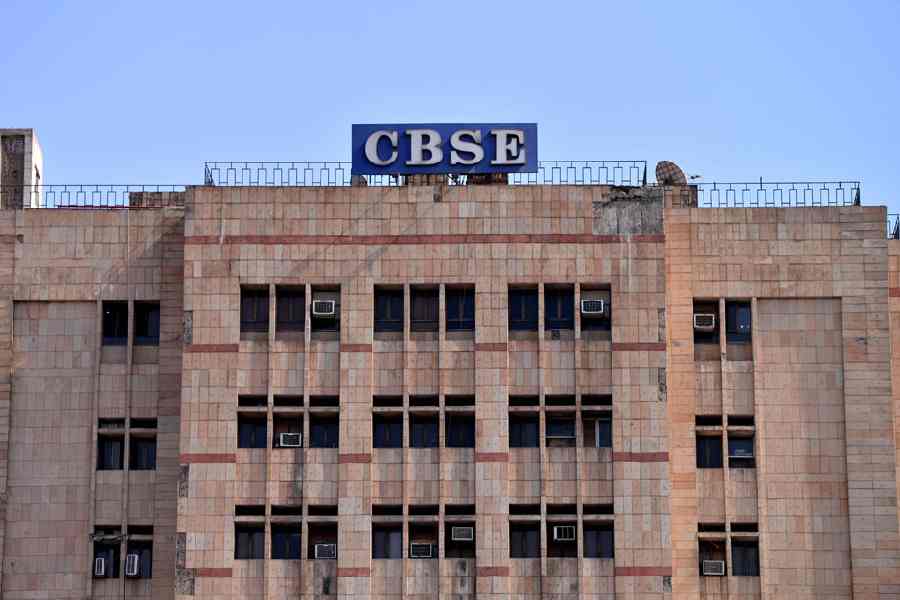
A: We have been an associate member of CBSE since 1993. Over the past year, we have cemented our ties with the organisation. We also organised a conference of Indian school principals in Trivandrum from 27 to 29 January 2005. CIE is interested in learning from CBSE just as we hope that CBSE and state boards would like to take advantage of our own expertise in some areas. CIE has plans of taking the number of CBSE schools with which it has a tie-up from the current 75 to 150 by the end of 2005. It aims to have 500 schools as associates by 2009.

Q: Tell me about your marking system?

A:We use grades rather than marks. That is because markings can never be a wholly objective process. So it is unfair that students are rejected on the basis of a hundredth of a percentage point when even the best boards have to allow for a 2 per cent discrepancy.

Q: How can the Cambridge progra- mmes help our students?

A:Our programmes are known for their excellence and are accepted by universities in the UK, Europe, Australia, New Zealand, Canada, South East Asia, and the Gulf. CIE qualifications stress the importance of applying facts to real life and practical situations, thereby making students independent learners. This enables them to hit the ground running when they enter the first year of university and of work.

Q: Describe the programmes that you have. What kind of a project are you planning for schools in India?

A: CIE provides IGCSE for class X students and AS and A levels for those in classes XI and XII. No other international qualification for school students has the same degree of recognition. Students in more than 150 countries take the CIE exam. CIE also offers vocational qualifications in a wide variety of subjects. Cambridge International diplomas are available in areas like travel and tourism, management, project management, business and teaching.

For schools in India, CIE offers specially designed teacher support programmes to train teachers who are new to CIE?s syllabi and assessment standards.

Q: How would you compare CIE to its European counterpart, the International Bacca- laureate?

A: I think IB is a very well thought out diploma. It has a really careful, well- coordinated response to the demands of the international community. However, I do not think that it suits everybody. Besides, IB and the schools that offer it are only open to a tiny minority of the Indian population, because IB is an expensive qualification and is available at schools which attract a large number of foreign students.

Top
Email This Page