|
Patna, Feb. 8: A day on the road from Patna to Muzaffarpur and back reveals one thing for sure. The campaign is slowly gathering steam but the only parties out in the field gearing up machinery for battle are led by Laloo Prasad Yadav and Ram Vilas Paswan.
The poor are the key to the electoral outcome as the former partners of the United Progressive Alliance go their separate ways.
Paswan has a strong following among Dalits but he has also given tickets to many upper caste candidates, mostly Rajputs. Laloo Prasad too is wooing the very feudal elements he once denounced. The fraying at the edges of what has been a core base of the NDA can, however, only be the icing on the cake.
The major battle is for the core communities that have so far been in the Laloo Prasad camp for the last 15 years. Paswan?s great achievement is providing a platform that cuts across the communal divide but yet challenges the claims of empowerment and change.
Dr Anwar Alam?s clinic in Hajipur is an open house and there is considerable anger towards the ruling party. The doctor who heads the Mommin Conference points to a string of unfulfilled promises. Reservation for Muslims is a non-starter though in the LJP he does not see manifesto as practical but he welcomes the focus on jobs and education.
In a state where every literate person speaks in terms of voting blocks and tactical alliances, no one doubts how crucial Muslims are to the ruling party. It is still unclear if the bulk of 65-75 per cent who voted for the RJD over the last decade will shift preferences. What is clear is the anger of an educated and articulate section of the Muslims.
This sentiment runs deeper and Laloo Prasad?s appeal as the man who kept Bihar riot-free shows sign of strain. Ali Ansari of the Muzaffarpur unit of the RJD asserts the poorer strata of Muslims will still stamp the lantern symbol.
Laloo Prasad still commands respect for Nandlal and Shivji Paswan, a father-son duo from rural Hajipur. They stand next to a field of a ripening crop of maize and a well-fed buffalo tied to a stake near a Sudha Dairy Milk Cooperative collection point. The father has a pucca house built under the Indira Awas Yojana; the son sells the milk to the cooperative.
Questions on price rise elicit anger but these are drowned in strong support for self-respect. There is little doubt that this sentiment is strongest among Yadavs.
?Awaaz, izzat and samman? (voice, respect and dignity) are what Lakhendra Pratap Singh of Kunhani, Muzaffarpur sees as Laloo Prasad?s great achievements.
This is not a phenomenon limited to one community. Jai Prakash Nishad recounts how even older low caste men were addressed with contempt by ?feudal elements?. A strident Laloo Prasad supporter, he is convinced the RJD will usher in development now that it has a friendly government in place in New Delhi.
What is clear is that this may well be the first post-Mandal election in Bihar in 15 years. There is no doubt that caste will continue to play a critical role and none of the three major blocs has undergone an image makeover. But there is little sign of active Hindutva, or of strong caste-based militancy among either the OBCs or the Dalits.
The RJD, though under pressure, may show more resilience than is evident at first glance. Anita Kumari is a graduate who runs a small anganwadi in rural Vaishali. She admits to an admiration for women in office naming Indira and Rabri as role models. ?They give us confidence we can try and succeed and earn a name for ourselves,? she says.
Nor is the formidable machine of the ruling party to be left out of the reckoning. Laloo Prasad, the lantern and Rabri Devi are inescapable with bicycles, vans and four-wheel driven vehicles sporting their pictures.
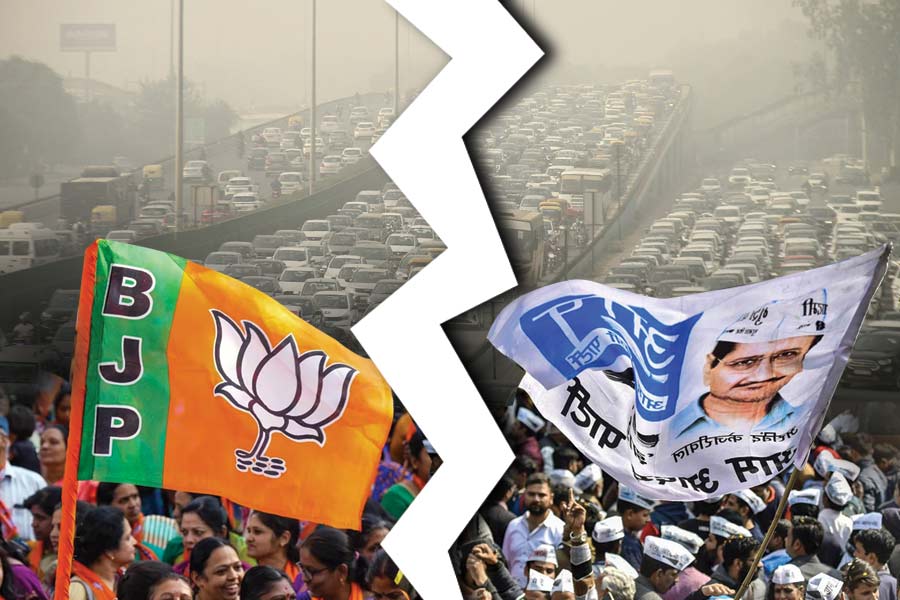
There is little sign of the BJP-JD (U) on the ground. The offices of the latter wear a deserted look. Posters, banners and even vans are conspicuous by their absence even in George Fernandes? own bastion of Muzaffarpur.
It is unclear if the NDA holds onto the 37 per cent it polled in the general elections and get ahead. Perhaps it is counting on its long record of opposition to Laloo Prasad and the distrust of its supporters for the Congress-Paswan alliance.
His vote may be untested but not the energy of his campaign; Paswan is a match for the RJD supremo. Congress has a fund of goodwill especially for Sonia. Her picture is reaching out into the rural hinterland courtesy the campaign machinery of the Lok Jan Shakti Party. But the party itself is thin on the ground and much hinges on vote transfers from allies.
A day in the field is too little to build a larger picture. Last summer, the UPA easily led in a hefty 159 of the 243 seats. This figure may well decline. On the face of it, the exit of Paswan and Congress should make things tougher for the ruling party.
Voting day may or may not spell change. But the unified vote banks of the UPA that spelt doom for the NDA 10 long months ago are broken down.
Under the deceptive calm of the green countryside, there are new alliances and partings at work. How the poor cast their vote and what they value the most will make or unmake many futures. The more things look the same, the more they change.
|