The Telegraph
 
 
IN TODAY'S PAPER
WEEKLY FEATURES
CITY NEWSLINES
FEEDS
  RSS
  My Yahoo!
ARCHIVES
Since 1st March, 1999
 
THE TELEGRAPH
 
 
Email This Page
Royal salute to Bhutan bond

New Delhi, Jan. 23: Bhutan?s 49-year old monarch, Jigme Singye Wangchuk, arrives in New Delhi this week as chief guest for the Republic Day celebrations. The occasion symbolises profound significance in terms of Bhutan-India relations.

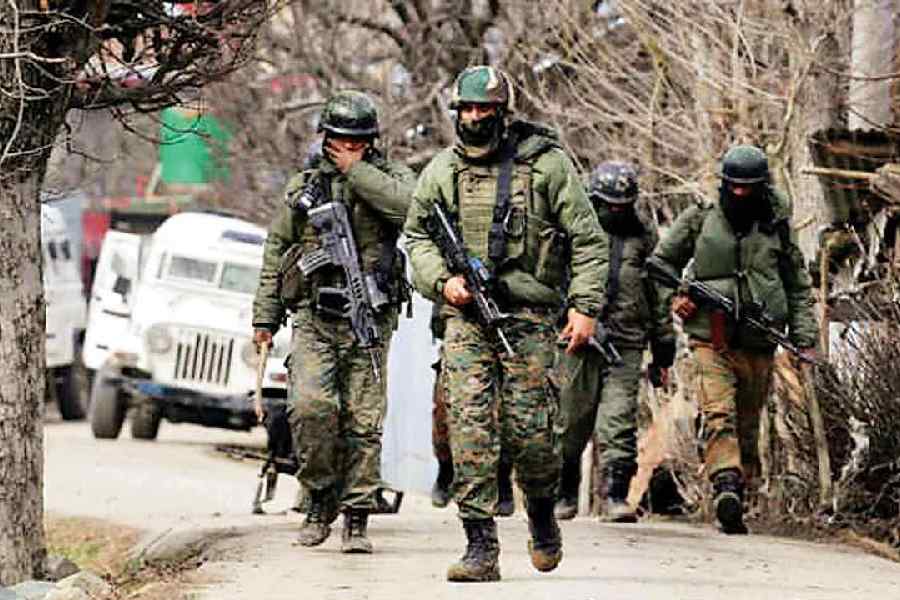
Analysts as well as foreign observers surmise that the government of India invited the King as an expression of appreciation for the military operations that Bhutan conducted in 2003 to flush out the three groups of militants who camped in the Bhutanese forests. The gesture, however, means much more.

In December, 2003, the Royal Bhutan Army resorted to military action after six years of negotiations with the militant leaders, having exhausted all peaceful options to solve the problem. The experience was a painful reminder of some of the realities of the region.

But militancy is just one of numerous issues that Bhutan and India have had to deal with as they forged a unique bilateral experience.

It is widely known that King Jigme Singye Wangchuk has enjoyed an extraordinary relationship with India?s leaders over the past four decades. As a young prince, he accompanied his father, King Jigme Dorji Wangchuk, to India and made many friends. It was Indira Gandhi who saw in the young prince the ?wisdom of centuries?. This was to be echoed over the years by numerous India leaders as the King evolved close personal and political rapport with Indian statesmen, politicians, diplomats, bureaucrats and journalists of diverse backgrounds and political leanings.

Bhutan-India friendship goes far beyond the poetic rhetoric and simplistic scepticism that we sometimes hear. In 1958, Prime Minister Jawaharlal Nehru travelled for one month to Bhutan and offered India?s support and friendship in a public address in Paro: ?Our only wish is that you should remain an independent country, choosing your own way of life and taking the path of progress according to your will. At the same time, our people should live with mutual goodwill. We are members of the same Himalayan family and should live as friendly neighbours, helping each other.?

The relationship was given depth and dimension as the political bond evolved into sound economic cooperation through planned activities. In King Jigme Singye Wangchuk?s own words Bhutan and India have demonstrated that a large country like India and a small neighbour like Bhutan can exist in peace, harmony, and friendship.

The unique rapport between the two countries was carefully nurtured into the maturity that we see today. Bhutan has consistently supported India at all international fora.

While critics have described this as the pressures of a large neighbour, Bhutanese intellectuals believe that it reflects the pragmatic wisdom of its rulers.

Meanwhile, it was with India?s financial and technical assistance that Bhutan achieved phenomenal socio-economic success. The first generation of Bhutanese professionals were educated in India and the Government of India helped Bhutan establish early infrastructure like hospitals and schools, the network of motor roads and bridges, a microwave link, an international airport, and major projects in all areas of development that opened new horizons for a small landlocked country.

Today, just 45 years after the kingdom shed centuries of self-imposed isolation and cautiously opened its doors to the world, Bhutan is talking about achieving economic self-reliance, a goal that remains a distant dream for many developing countries.

This has been achieved largely through the dynamic cooperation initiated in the field of hydropower, an ambitious bilateral economic initiative. Bhutan, with its pristine mountain environment and network of freshwater river systems, provides an ideal setting for the development of hydropower, an ecologically friendly source of energy. India, which has a large need for energy, has provided funding through loans and grants as well as the expertise to build massive power plants.

The Chukha Hydro Power Project, built at a cost of Rs 2,815.494 million, now produces 1,927 million units of power, the Kurichu project, which cost Rs 6,851.229 million, produces 345.36 million units, and Tala, which is expected to cost Rs 51,000 million, will produce 4,865 million units of power. In 2004, Chukha and Kurichu exported 1,920 million units of power to India.

When President R. Venkataraman inaugurated the Chukha project in 1988, he said: ?If India and Bhutan have embarked on the scheme costing crores and posing major engineering and ecological challenges, it is because we believe that developing countries must pool their resources in order to confer the benefits of modern technology on their people.?

After the completion of the Tala project in 2006, India will buy about 85 per cent of Bhutan?s total production of about 2,000 mw. Hydropower is expected to account for 90 per cent of Bhutan?s national revenue. The two countries will thus enter a new stage in development cooperation and, as the two governments draw up plans to tap more of the 30,000 mw that the Bhutanese rivers can produce, it will inject an even stronger sense of commercial professionalism in Indo-Bhutan relations.

Achieving economic self-reliance is not the end of the story but the beginning of a new era. Globalisation is a reality but the geo-strategic realities will not change. Indo-Bhutan relations will continue to evolve even as the entire world becomes more interdependent.

Bhutan appreciates and is comfortable with the cooperation provided by a large neighbour that has shown the magnanimity to help a small country grow at its own pace and on its own terms. And, just as the ties that bind Bhutan and India reach back into the mists of time, the enlightened vision of their leaders will continue to echo into the future.

Top
Email This Page
 
 
Biz2Credit Bizsense