TT Epaper LHS
The Telegraph
TT Mobile
 
 
IN TODAY'S PAPER
WEEKLY FEATURES
CITY NEWSLINES
FEEDS
  RSS
  My Yahoo!
ARCHIVES
Since 1st March, 1999
 
THE TELEGRAPH
 
CIMA Gallary
 
Email This Page
US-India struggle for control in disaster zone

Colombo, Jan. 3 (Reuters): Sri Lanka?s tsunami devastation has drawn a huge international aid response, but a geopolitical game of influence between India and the US is playing not too subtly in the background, analysts said today.

?There is no innocence in the politics of humanitarian assistance,? said Jayadeva Uyangoda, the head of the department of political science at Colombo University.

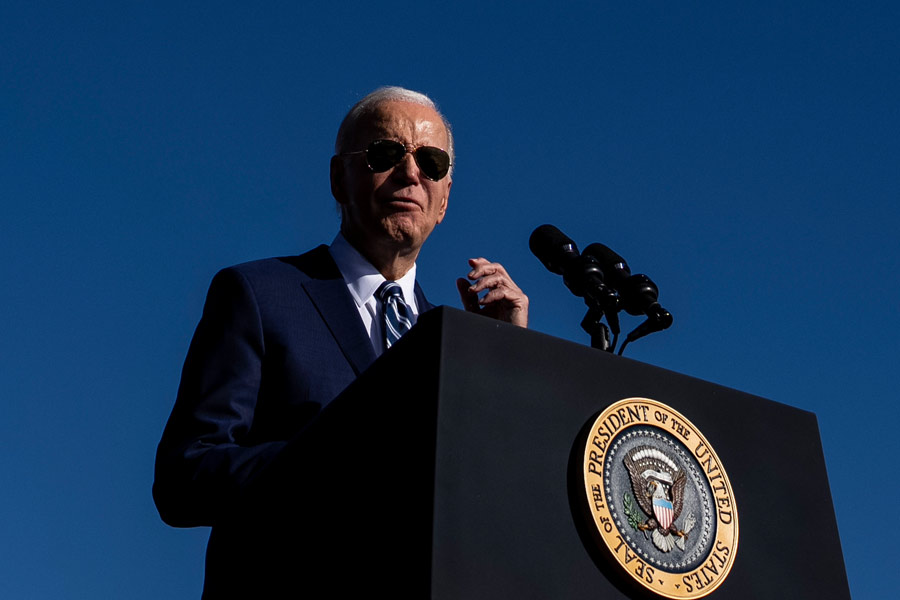
Uyangoda said Washington?s decision to send as many as 1,500 Marines and an amphibious assault ship to Sri Lanka was seen in New Delhi as not ?merely humanitarian?.

?It is a symbolic intrusion into India?s sphere of influence,? he said.

Nearly 30,000 Sri Lankans were killed in the tsunami and nearly a million have been made homeless.

India, determined not to be seen as just a victim after losing more than 15,000 people, moved quickly to send help to Sri Lanka and others.

Close to 1,000 Indian military personnel, five navy vessels, including a hospital ship, a field hospital, and six MI-17 air force helicopters have been deployed to Sri Lanka by its giant northern neighbour.

The ships were moored off Trincomalee on the east coast and Galle in the south, said Nagma Mallick, spokesperson for the Indian high commission in Colombo.

Both Uyangoda and Kethesh Loganathan, an analyst at the Centre for Policy Alternatives, an independent think tank, said it was natural for India, with its huge resources and regional ambitions, to come to the aid of its smaller neighbours.

Loganathan noted that in May 2003, when Sri Lanka?s south was hit by heavy rain and flash floods that displaced a quarter of a million people, India sent military personnel to help in the recovery effort.

?Over the past decade, there has been a sea change in Indo-Lankan relations,? he said.

India was seen as a party to the island?s civil war when it exploded in 1983, Loganathan said. Egged on by its own Tamil population, India provided the rebel Liberation Tigers of Tamil Eeelam (LTTE) with training and materiel.

But an Indian ?peace-keeping? foray into Sri Lanka?s Tamil-held areas in 1987 quickly turned into an open war with the LTTE until a humiliating Indian pullout in March 1990.

That debacle also helped restore India's credibility in the eyes of Sri Lanka?s Sinhalese majority, Loganathan said.

?India has always been helpful,? he said. ?It does have the capacity and it is most natural for them to help us.?

The US has termed the LTTE a terrorist organisation and the Marines ? a few dozen of whom have already arrived by air ? are likely to stay well away from the north and east where the Tigers control large swathes of territory.

?Both New Delhi and Kilinochchi (the LTTE stronghold) might view the US presence uncomfortably,? Uyangoda said.

But he said the US offer of assistance would certainly have ?raised eyebrows? in New Delhi.

?Are the Marines going to stay in Sri Lanka? Is this part of the US global design? Is this an opportunity for US President George W. Bush to get a foothold in Sri Lanka?? he asked rhetorically, adding: ?Humanitarian (aid) is not purely humanitarian.?

Top
Email This Page
Biz2Credit Bizsense