|
Move over, Bridget Jones
Making the cat laugh(Profile, Rs 195)
by Lynne Truss can give Bridget Jones a run for her money. Truss is a freelance
writer ? she would prefer it if you said ?she works at home? ? who?s arrived at
an age when ?women are supposed to hear the loud ticking of the biological clock?.
(But she thinks she must have bought the wrong battery for hers, and the only
things she wants to conceive are books.) And she has cats, for whom she cares
enough to buy them Valentine?s Day gifts and to wonder whether or not they would
read the Financial Times if they could read. This is the journal of a woman
who, like the woman in Jenny Joseph?s poem, ?Warning?, wears purple with a red
hat that doesn?t go, sits down on the pavement when she is tired, gobbles up samples
in shops and presses alarm bells and runs her stick along public railings ? perhaps
to make up for the sobriety of her youth.
The Islamic Boomerang in Saudi Arabia (Samskriti,
Rs 195) by M.H. Ansari, part of the Observer Research Foundation Studies
of Contemporary Muslim Societies series, is a short account of the society and
politics of the oil-rich desert kingdom. It begins by asking some questions: ?Why
has an Islamic state come under fire from Islamist quarters? Why is obedience
to the Ruler, and to God, viewed to be in conflict? Is there a crisis of governance?
What is its nature? What is its impact on the evolution of the country as a nation
state?? From the coming into being of Saudi Arabia after World War I to the new
millennium when the Islamist phenomenon arrived, the study pinpoints the delay
in initiating reforms as the root of all troubles.
The Yellow Rain (Vintage, ? 3.95) by
Julio Llamazares is a modern-day fable set in a real place ? Ainielle. The
characters, however, are imaginary, although, as the note at the beginning says,
?they might well be real.? Ainielle is a village in ruins, up in the Spanish Pyrenees,
whose last surviving resident ? he remains unnamed ? remembers the life he has
lived in the company of family and friends, who are now no more than ghosts. The
narrative is beautiful, the credit for which goes in a large part to the translator,
Margaret Jull Costa. Here?s a sample: ?November soon arrived with its pale breath
of dead moon and leaves. The days grew shorter still, and the endless nights by
the fire gradually began to plunge us into a profound sense of tedium, into a
stony, desolate indifference in the face of which words crumbled into sand and
memories almost always gave way to vast tracts of shadow and silence.?
|
Star Dust (Penguin, Rs 275) by Roopa
Swaminathan presents ?Vignettes from the Fringes of the Film Industry?. The
author looks at groups associated with the movie industry in India ? the fans,
the ?extras?, the assistants ? and devotes the final chapter to profile Vikram,
the star of Tamil films with an astonishing tale to tell. There are some valuable
insights into the lives and professions of people about whom few would spare a
thought. Swaminathan manages to figure out why there is such a craze to get into
the film industry. It is because ?movie guys feel that it is better to be a spot
boy or a light boy on a film set rather than be a boring clerk at a government
office. Better to be a cinematographer than a marketing director with a multinational.
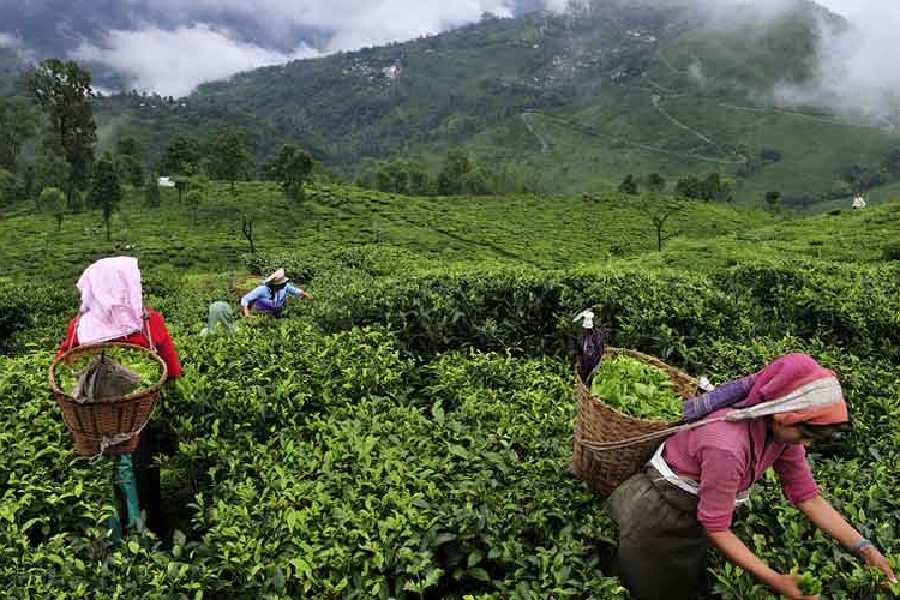
Better to be a producer of films than produce tea!?
Indian Folktales And Legends (Rupa, Rs
95) brings some popular stories from the Indian mythologies and fables ? such
as the story of the birth of Ganesh, the elephant-headed god, and of the encounter
of Hanuman with the sun-god. The story-tellers include Ruskin Bond, but no biographical
note is provided for the other two, namely, Debjani Chatterjee and Sudhin N. Ghose.
|