|
When they were first set up, there was euphoria all around. Private engineering colleges in West Bengal were meant to break the monopoly of Jadavpur University and B.E. College in the state. A few years down the line, what they have left behind is a trail of broken promises ? incomplete buildings, cramped campuses, inadequate laboratories and faculty. At most institutions, the placement scenario also leaves much to be desired, with campus recruitment hovering at a dismal 40 to 50 per cent.
So isn?t it high time private engineering colleges got their act together? We want 2005 to ring in the much-needed improvements to these institutes. In the coming year, let no student of private engineering colleges feel shortchanged, let him or her get what was promised ? the best.
Superior faculty
First of all, we want these colleges to put together a better faculty. As things stand, many of them are still falling back on teachers who are either retired or are on the verge of retirement. There aren?t enough teachers to fill the middle ranks (assistant professors) because salaries are anything but attractive. ?We are losing our teachers to the industry due to inadequate resources. Unless something is done about it, the standard of private engineering colleges will never improve,? says Dr B.B. Poira, director of the Heritage Institute of Technology (HIT).
Institutes like MCKV Engineering College are using teachers of one discipline for a related stream. Part-timers don?t help the situation either. College of Engineering and Management, Kolaghat, for instance, has a dozen part-time teachers out of a total strength of 58. Even Institute of Engineering and Management (IEM), which is rated to be the best among private institutions, has as many as 27 visiting faculty. It?s a good way to tot up the teacher-student ratio prescribed by the AICTE, but this sort of ad hoc arrangement is unlikely to raise the standard of teaching. As Prof. Manoj Mitra, dean of engineering, Jadavpur University, points out, ?They have been banking on short-term arrangements that won?t be of much help.?
The laboratories at most of these institutes also need to be much more sophisticated. Any digital electronics lab needs 10-12 oscilloscopes. Analytical instruments labs should be equipped with several polarimeters and at least one UV spectrophotometer and a gaschromatograph. These are absent at most colleges.
The syllabus needs some sprucing up as well. Experts are pretty much unanimous in their view that the West Bengal University of Technology (WBUT) needs to rework it so that students don?t fare poorly at interviews. For that, spoken English has to be made an integral part of the course. Communication skills are being taught at some colleges but it?s being done at their own initiative in the absence of any guideline from the WBUT. ?
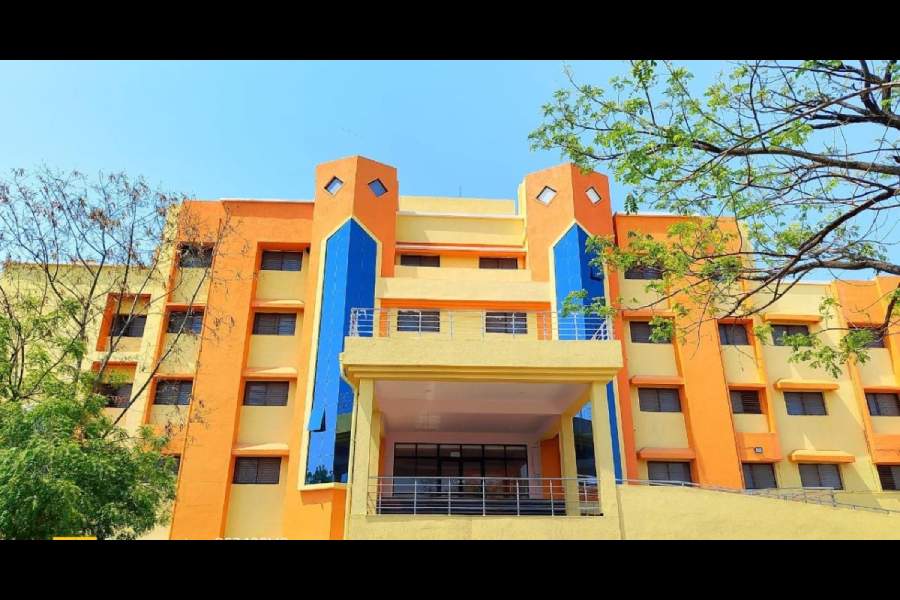
And yes, we do want better campuses too. IEM, for instance, has no playground while MCKV has just a cramped basketball court. B.P. Poddar Institute hires a playground. HIT is an honourable exception with a sprawling 11-acre campus and a huge playground. In 2005, we would like AICTE to make it a norm for these colleges to have a big enough campus.
State-of-the-art campus
Last but not the least, let 2005 be the year when these tech colleges pull up their socks on placement. Some of them don?t even have a proper placement cell. ?In fact, having just a placement cell is no longer enough,? says Prof Mitra of Jadavpur University. ?You need to work in tandem with the industry and have an industry-institute partnership cell for jobs.?
Of course, Prof. Mitra admits that providing jobs
is not the responsibility of the colleges and that the placement rate depends
on the state of the industry. That said, it is also true that since students had
been promised assistance, they have reason to feel aggrieved with low-grade placements.
Which is why campus recruitment needs to be more aggressive at these institutes.
Students will be happy if these changes come along before the next fee hike is
sought.
improvements in the offing
After deliberating for nearly two years, Jadavpur University is finally set to revamp its engineering course next year. Mobile computing is being introduced at the postgraduate level. Environment and communication skill development will be weaved into all disciplines. ?We are trying to bring about a homogeneity in the course. All disciplines are going to be updated and the thrust will be more on information rather than in-depth knowledge,? says Partha Pratim Biswas, head of the department of construction engineering, Jadavpur University.
The system of marking in engineering colleges will also undergo a change from early 2005. Credit Based Semester System (CBSS), mooted by the All India Council of Technical Education (AICTE) will replace the age-old system of awarding marks and percentages. The CBSS will take into account students? performance over the semesters rather than evaluate them on the basis of a sudden death exam at the end of the course. It will also reflect their performance in different courses based on a certain weightage assigned to each. CBSS has been followed at the IITs for many years now. The AICTE will come up with its own model based on their suggestions. At the end of the course, students will be awarded a Cumulative Grade Point Average (CGPA) which is the average of all the points you have earned throughout the course.
|