|
He thought for a while of becoming
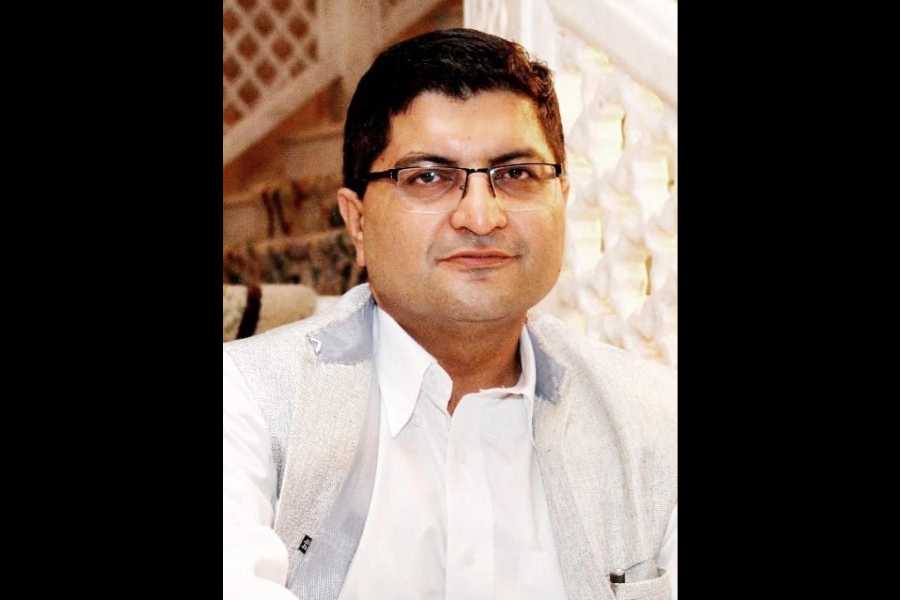
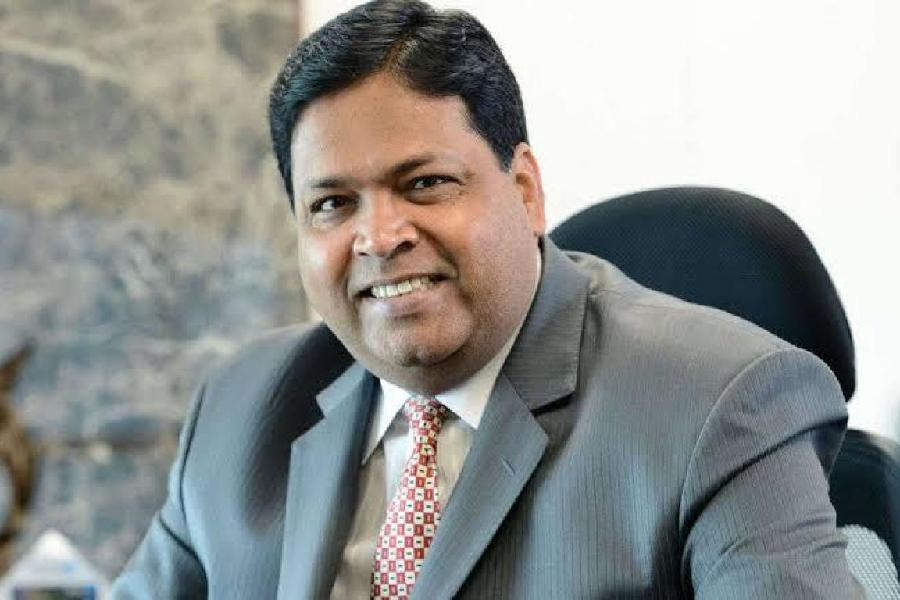
a pilot. But Manish Kumar, managing director of Ritspin
Synthetics, finally settled for the more mundane kapda.
And he has spun for himself a very fine yarn so far.
?After passing out from La Martiniere,
I did my graduation in BCom from St Xavier?s College,? says
Kumar. ?Immediately after that, I did a short diploma in
business management from Harvard Business School.? And business
won the day when it came to a career choice, though flying
was a passion. Radio flying was the main outlet for this
interest. He won the national championship when he was 10,
and still cherishes his models.
?On my return from Harvard in
1991, I joined our family tea business and was put in charge
of export marketing,? continues Kumar.
?But the business had hit a stumbling
block due to the insurgency problem in the Northeast. We
couldn?t even visit the gardens. ?At that time, the Soviet
Union was our biggest market. When it broke up, our business
went into a tailspin. I had already been looking around
for other opportunities and narrowed in on textiles and
chemicals. Eventually, I settled for textiles as there was
tremendous growth potential in this field.?
In 1994, Ritspin was set up with
factories in Madhya Pradesh and Maharashtra. ?I was keen
on West Bengal but there was no raw material here,? continues
Kumar. ?In hindsight, I could still have given it a thought
had the present industrial climate prevailed then.
?The beginning was very tough.
It was a miracle how we managed to complete the project
six months ahead of schedule. It was a mad rush against
time. The land was bought in December 1994 and construction
started in March next year. We had to meet the deadline
to beat the monsoons, otherwise the project would have been
delayed by several months. But there was a problem. The
letter of intent for the long-term loans had not yet come
through. We decided to take a risk and go ahead without
the letter.
?Even before that had been sorted
out, we encountered upon a power shortage. The state government
told us that the 4 MW that we required could not be provided.
So we had to set up a captive power plant, which needed
a Rs 12 crore investment. I had no idea where the money
was going to come from. After a frantic search we got ICICI
to finance the plant.
?Our commercial operations finally
started in April 1997. In two months we hit a severe crisis.
The south-east Asian tigers collapsed and there was a bloodbath
in the textile industry. All the companies suffered heavy
losses for there was hardly any buyer in the export market.
We didn?t make our planned public issue as the climate was
not conducive but we still needed at least Rs 14 crore to
survive.
?Again I didn?t know where the
money was going to come from. Somehow we managed unsecured
loans from the money market and ran our plant. Export was
our thrust area. In the first year it accounted for just
Rs 6 crore out of our total turnover of Rs 66 crore. It
jumped to Rs 70 crore in three years.
?How did we do it? With a focus
on marketing. I spent days on end at the customers? doorsteps,
quite literally. Everywhere there would be a long line of
sellers from India, Thailand and Indonesia. But our advantage
was technology. It let us reduce our workforce by about
25 per cent. In textiles, the less the human touch, the
better the quality. This gave us a headstart.
Ever since, we have specialised
in value-added niche products. For instance, our R&D
cell has come up with an innovation which we call Ritvang.
It is a blend of viscose and polymite. The fabric is considered
to be one of the finest in the world. We also have a collaboration
with Tencel of Australia.
?I am often asked why we have
not looked at the domestic market. The primary reason is,
of course, that profit margins are lower in India. Also,
there are infrastructural problems. ?In the past three years,
we have doubled our turnover. We hope to close this year
at Rs 140 crore and take an even bigger leap next year.
Unless the export market shrinks drastically, Ritspin will
continue to be on a roll.?
Kumar may not be flying his models
too much these days. But he is still flying high.
|