|
In the past, thank heavens my predictions about the
future of Indian tennis have invariably gone awry. From the moonscape, as I have
often described the Indian tennis scene in the past, emerged the great of Indian
tennis.
After Ramanathan Krishnan came Vijay Amritraj, then
Ramesh Krishnan followed by Leander Paes and Mahesh Bhupathi. The common factor
among them was that they had very strong family support.
Paes and Bhupathi took Indian tennis to a new high
and created history by winning Grand Slam doubles and mixed doubles titles.
In the Davis Cup, India?s ratings soared with upset
victories over much higher ranked teams. With not even a handful of players, India
have been kings of Asian tennis and enjoyed a more than respectable presence in
international events. It gave Indian tennis a false sense of well being.
Paes and Bhupathi have kept the flag flying in the
high visibility Grand Slams for many years and are now in their twilight of their
careers. At the same time, Asian standards, both in the men and women?s world
have dramatically shot up.
In recent years, while no Indian man or woman has
even qualified for the men?s or ladies? singles, countries like Thailand, Korea,
Taiwan and China have made an impact at the Grand Slams? ATP and WTA tournaments.
For the first time in Indian history a young Pakistani
? Aqeel Khan ? won our national championships.
In the Davis Cup we may dream of making the elite
group of 16 but in reality it is a mirage. In fact, if Thailand, Korea or Taiwan
participate with their top players, we will be under pressure to win the Asia-Oceania
Group I in the future. The glory days of the Davis Cup belong to the past and
are now deeply buried in Indian tennis history.
Our Davis Cup players, Prakash Amritraj, Harsh Mankad
and Rohan Bopanna (recovering from an injured shoulder) ? leaders of India?s young
brigade ? are now getting long in the tooth and have not been able to break through
and make a significant impact even at the lower levels of the game.
Other promising youngsters, who have been participating
in Futures and Challenger tournaments held in India have also been struggling
to win matches in spite of the advantage of playing on home courts.
Moving from junior level to the senior level is the
most difficult phase in a successful tennis player?s life.
The record books show that it takes approximately
three to four years for juniors to mature and achieve peak levels in fitness and
match play.
So many great talents never make it. Mostly, it is
due to lack of adequate and sustained financial support.
The other very important factor is to be shown the
path by proper coaching, physical training and exposure to high-level competition.
Exposure to competitive pressures alone determines
the true mettle of a player. For this, continuous play at the higher levels of
the game is an absolute must.
All this costs big money.
Currently two of our youngsters who have done reasonably
well at the international level are 18-year-olds Sania Mirza and Karan Rastogi.
Sania won the Wimbledon girls? junior doubles title
in 2003 much to everyone?s surprise, while Karan was ranked the No. 3 junior in
the world after he reached the semi-finals of the Australian Open juniors this
year.
|
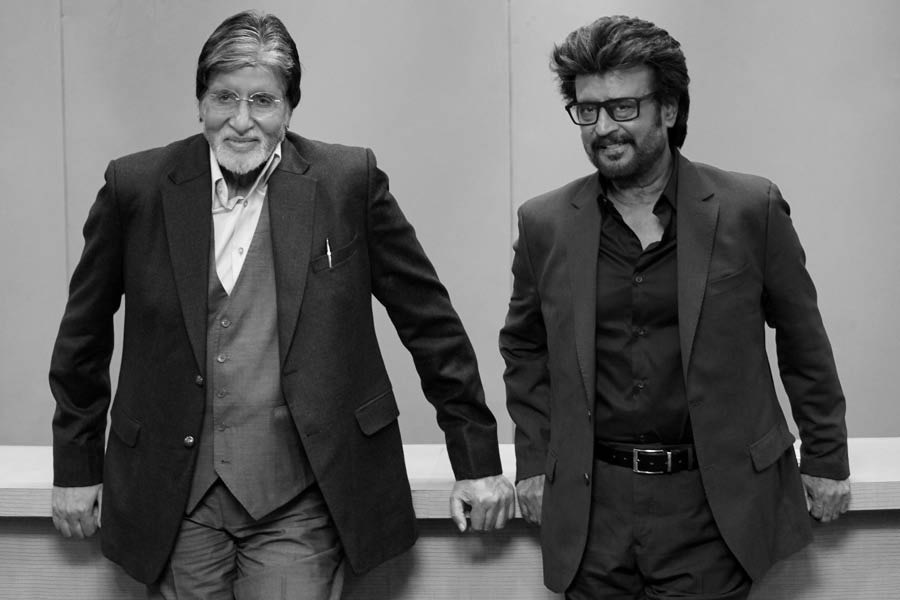
| Paes and Bhupathi now are in the twilight of their
career. |
Sania?s victory in the junior girls? doubles at Wimbledon
was a shot in the arm for Indian tennis. Tennis fans and the press were euphoric.
It seemed like a future champion had popped out of the hat.
On Sania?s young shoulders fell the telling burden
of great expectations. Today, more than a year later, Sania has not been transformed
into an Indian Sharapova. Yet, her perseverance has shown a steady and heartening
improvement.
With a generous sponsor (GVK group) and solid parental
support she has, by participating and winning smaller tournaments, moved to 193
in the women?s ATP rankings. Being a finalist in the Asian Championships has secured
her a direct entry into next year?s Australian Open.
Currently being coached and advised by Bob Brett at
his Sen Remo academy on the Italian Riviera in three sessions annually which include
physical training, she is on the right path.
When I talked to her on the phone, there was passion
and determination in her voice and words.
After having all this, one also needs luck. While
wishing her luck in breaking through to the top 100 one must pay tribute to the
parents for their unstinted support.
Karan happily enjoys as much parental support as Sania.
He was picked by IMG talent scouts after he won the Asian under-14 championships
in Vietnam. For the last four years IMG has supported him by allowing him free
coaching and physical training at Nick Bolletieri?s coaching academy, which is
owned by them.
They strictly monitor his tournament schedule and
he has to report on his performance and physical condition every week. Three or
four visits a year to the academy ensure that Karan stays on track.
Karan was selected by the ITF as a member of the junior
team to participate in eight tournaments, including the French Championships and
Wimbledon.
It is obvious that he is very talented, and is being
well tutored. He has to make the breakthrough at senior levels within a couple
of years or else it will be too late. One can wish him the very best of luck.
There are many talented boys and girls in India who
have been striving to make a breakthrough to the higher levels. The stumbling
blocks are not the lack of talent but meaningful sustained sponsorships, top-level
world-class coaches and facilities and constant exposure to international competition.
All these in ample measure can put India back at the
top of Asian tennis in a few years. They say that history repeats itself. I hope
it does and like in the past a new star emerges from the seemingly barren landscape
of Indian tennis.
|