|
The American voters have decided and decisively. President
Bush will have a second term. They, and especially middle America, have decided
that they like Bush?s clarity, simplicity, single-mindedness and lack of intellectual
depth and sophistication. They preferred the certainties of his convictions to
the complex uncertainties of Kerry.
Many voted against Bush, not because they thought
Kerry was right but because they preferred anyone to Bush. This divided American
electorate will not quietly revert to ordinary daily lives. They resented the
verdict last time. This time they may keep erupting into protest on many divisive
presidential decisions.
With Republicans in control over both Congress and
Senate, the many millions who voted against Bush can express opposition in two
ways: take to the streets in protest, and through the media, many of which were
against Bush. Every major presidential decision will receive opposition. A country
in which people accept election verdicts and get on with their work might, for
the first time, witness polarization on almost every issue. (This is not unfamiliar
to us but our political parties, lacking ideological convictions, are always polarized.
But they reverse their poles depending on whether they are in or out of office.)
Despite an uncertain mandate in his first term, Bush
acted as if he had a clear mandate, not one given to him by a supreme court verdict.
Many actions and consequences of the Bush administration decisions drew wide protest.
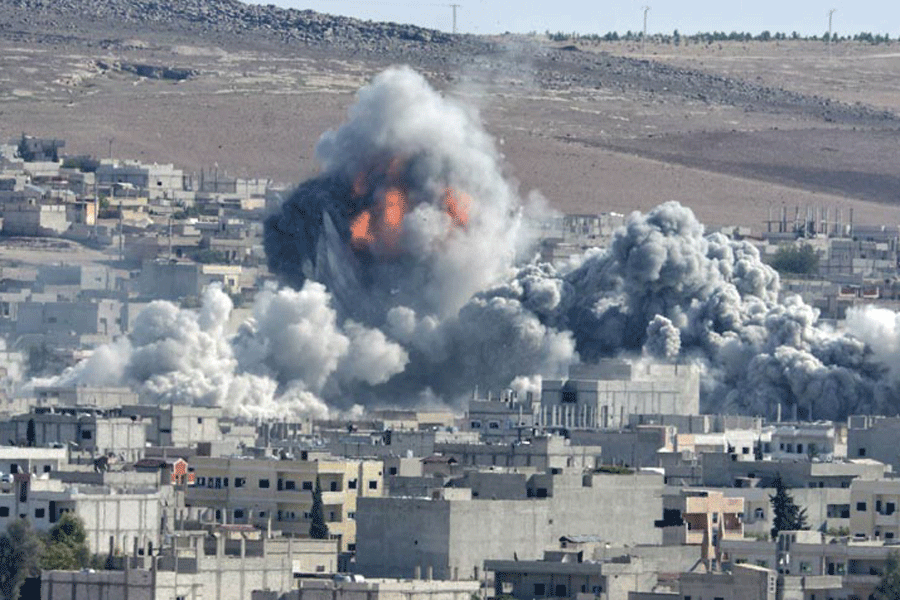
The invasion of Iraq, its poor planning, the deaths of over a thousand American
soldiers, the easy dismissal of the need to build cooperation with the rest of
the world through the United Nations and the consequent loss of goodwill, the
pro-big business and pro-rich policies in relation to the environment, tax rate
reductions for the rich, rising deficits as a consequence of tax rate reductions
and exploding expenditures, rising unemployment and increasing numbers falling
out of health insurance, the loss of personal liberties, the racial and communal
profiling ? the first Bush administration was feared and disliked by many Americans
for many reasons.
He is almost certain to pursue the same course on
issues like support to Ariel Sharon against Palestinian interests, sanctions,
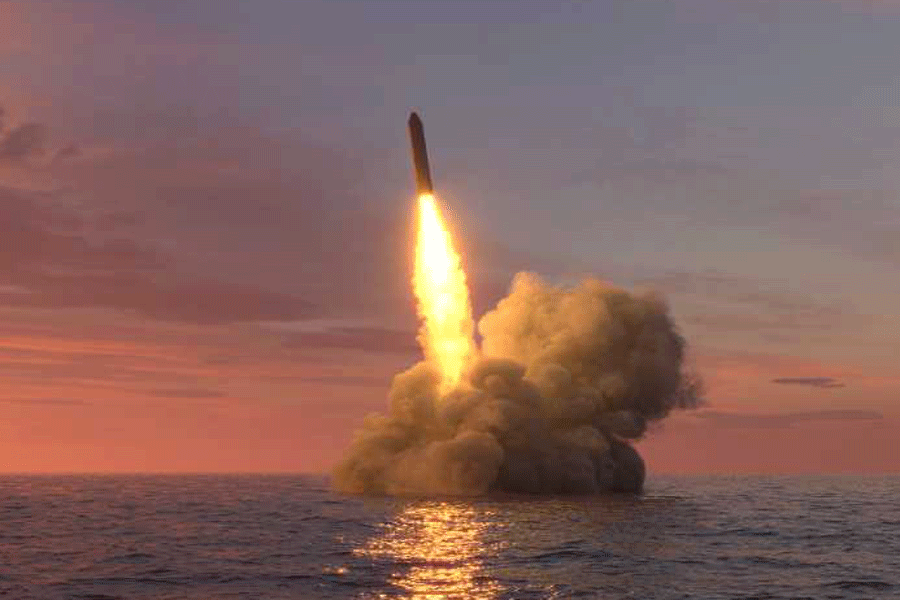
boycott and perhaps military action against Iran and North Korea, reducing the
status and role of the UN, reducing social expenditures, further increasing defence
expenditures. His actions will lead to continuing high oil prices and a weak American
economy with high deficits, a declining dollar, unemployment and rising interest
rates. Does any of this matter to India?
Some change on Palestine policy can be expected. The
root cause of violent and jihadi Islamic fundamentalism is Israeli actions
to make a unified Palestine state impossible. The US might now push (especially
with Arafat?s going) for a settlement on the lines of the Clinton negotiated deal
with Barak. He has to resolve the Palestinian-Israeli conflict which embitters
Muslims everywhere. If not, the terrorist attacks on Israel will increase. They
will extend to other areas as the Islamic diaspora reacts against all perceived
exploiters of their co-religionists.
Pakistan will continue getting American financial
and military aid. The pressure on President Musharraf will simultaneously increase.
Bush will want more pro-active effort to stop terrorism and catch terrorists.
As Musharraf tries to comply, conflict within Pakistan with elements in the army
and Islamic fundamentalist groups will increase. His position is very vulnerable
and the Americans also recognize it. If he loses his position, similar pressure
can be exerted on his successor. But they would prefer to deal with him than with
a new president. His survival is important for India as well because he seems
to have understood that a settlement with India is the only way for the pacification
of the warring groups in Pakistan and economic growth.
Bush will now control both Congress and Senate. He
will soon have to appoint a new chief justice of the supreme court and other judges.
He can influence American policy through these appointments for over twenty more
years. If he picks obvious conservatives he will polarize the country further.
He may also not get the appointments through because he does not have the requisite
Senate majority. The chances are therefore that he will pick people who are nearer
the ideological middle. Similarly the second Bush administration will perforce
have to build bridges with its European allies who are now mostly hostile. Other
divisive issues are getting resolved. Many American states have implemented measures
similar to the Kyoto protocol. Stem cell research has been approved of by the
Republican-led California. Gay marriage is not a wildly popular issue. On the
role of the UN there might be a rethink. While he might continue his opposition
to the world criminal court, there might be some face-saving formula on world
population control policies that he has opposed in his first administration. He
will push for UN restructuring and support a seat for India in the security council.
Iran is the next major Islamic country that Bush might
attack in order to disarm its nuclear capability. It might be more an economic
attack. Bush may not want an Iranian war so soon. Iran?s Islamic ideologues could
put their weight behind a global anti-American movement using every possible economic
(oil) and military (support to terrorist movements) weapon. Unrest in another
major oil-producing country and more unrest in the Islamic world is not in India?s
interest.
Bush will use every means to improve the US?s control
over the major oil-producing regions. This is important for American energy security.
The invasion of Iraq was a way to gain control over the second largest oil reserves
in the world. The effect of this strategy to gain control over major reserves
might well be more stable oil and gas supplies and prices. India can only gain
from this strategy. If Islamic terrorism is contained by American action, it will
also be to our benefit. But the danger is that the short-term consequences of
American action to increase control over global energy supplies will be the opposite:
increased instability in these countries, most of which are dictatorships. India
could also face the wrath of fundamentalist groups, within and from outside, hitting
out at any major non-Islamic country.
Bush in a second term will have to act in reducing
the deficit. He might do so by reducing expenditures on social security and health,
another cause for increasing disaffection in the US. He will encourage the dollar
to fall in value. This may be good for India since the economy is now in the investment
mode and will need massive imports. We can also expect massive foreign investment.
At the lower rupee cost, it will help the Indian consumer because of lower capital
costs and hence lower tariffs. The US economy might begin to show growth and increased
employment because of the increased government defence expenditures. He is unlikely
to be protectionist and India?s BPO exports will be unaffected. The American economy
will be weaker in the long term. But strong American imports will benefit the
world economy. Policies in China and Europe to sustain growth will be the key
to India?s place in the global economy.
Bush is likely to leave India alone on nuclearization.
He will see it as a counterforce to China, a bastion beyond the Arab world and
a check on the Pakistani generals.
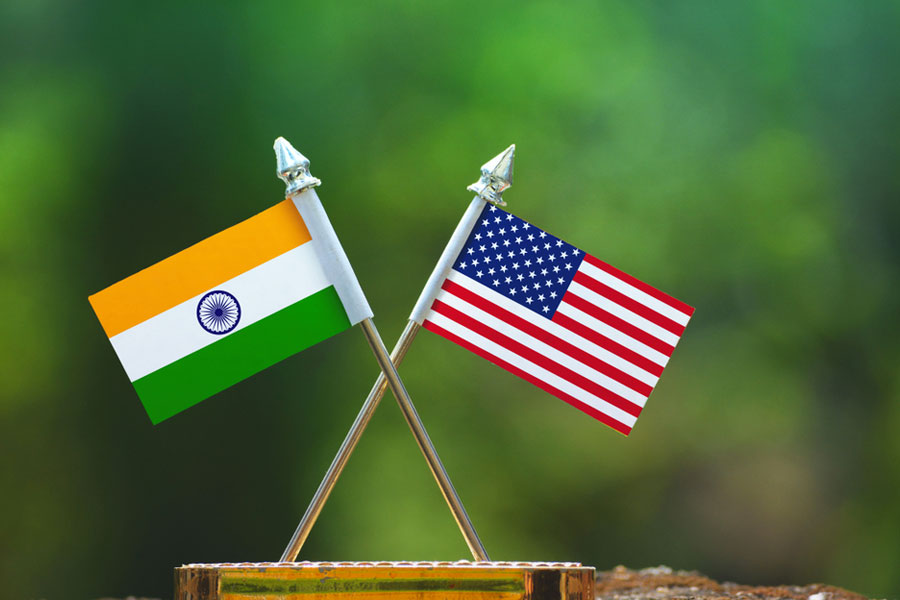
India should be happy with a Bush presidency for four
more years. These are critical years for India?s economy and his policies will
help us. We must be much more on our guard against terrorism. But the economy
and peace with Pakistan must be our focus.
|