|
Muslims make up about 10 per cent of the Chinese population, but months can pass before you see one in south China ? that is, a Chinese who looks like a Muslim. There?s no sign of Ramadan here: no azaan, iftaar, or street-side cooking of delicacies?. Even the Muslim restaurants have nothing different to offer.
A Muslim restaurant can be identified by its name: ?Muslim Restaurant?. The waitresses wear a ghaghra and a long choli kind of outfit, with an embroidered topi. The waiters also wear a version of the kurta-pyjama with the same kind of topi. This may be the ethnic costume of the Hui (Muslim) minority, but the waitresses look distinctly uncomfortable in them.
In most Muslim restaurants, the walls are painted with strange scenes. Hema Malini look-alikes dressed up as tea-pickers smile out of tea gardens. The background music is Oriental. Some restaurants have folk dance shows in which the guests are invited to join.
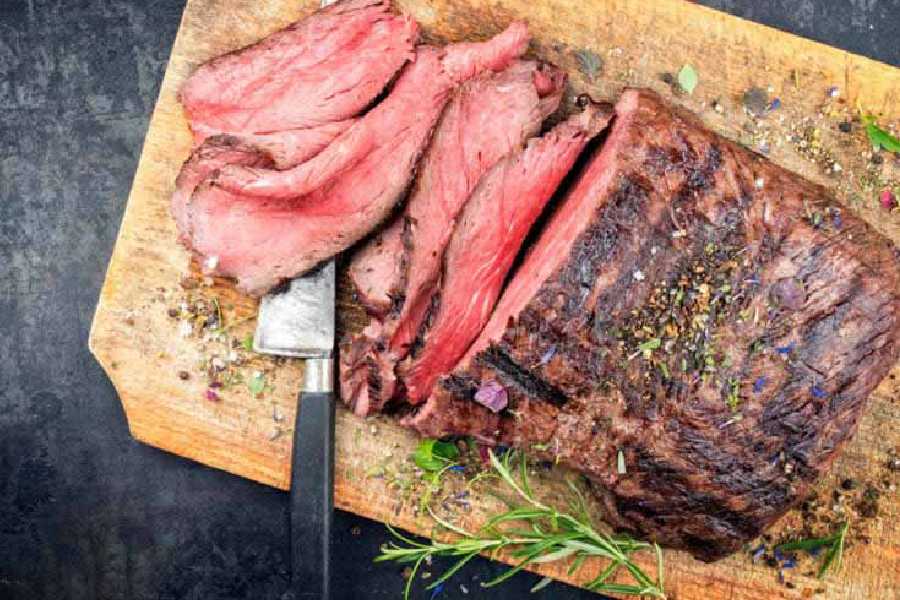
These restaurants give Indians a taste of home. They have the same round soft bread, which Muslims eat here dipped in lamb gravy. Lamb, not easily available in Chinese restaurants, or even markets, except in winter, is a staple meat in Muslim restaurants. Liver, kebabs and kebab-rolls ? rarities elsewhere, are served here.
In the flesh
One reason why lamb is always on the menu in Muslim restaurants is that they don?t serve pork, the staple meat everywhere else in China. This, along with the star-and-crescent sign outside, and sometimes a mosque at the back, are their only obvious religious features.
?Being Chinese and not being able to eat pork has almost made us vegetarian?, grumbled one young Muslim. According to him, this has made the Hui minority smaller in build than the Han majority.
In another more unpleasant reminder of home, BBC reported early this week seven deaths due to violence between Hans and Huis in Henan, apparently after a Hui taxi-driver ran over a Han six-year-old. Perhaps the roots of the clash lay elsewhere, for Chinese Muslims outside their home provinces are so much a part of Chinese society that some of them have even taken Chinese first names in addition to their Muslim names. The youngsters among them do not even know much about their religion.
It?s only in Xinjiang, Ningxia, Yunnan and a few others, that Chinese Muslims seem to observe their faith. In fact Xinjiang, bordering Afghanistan, was home to a separatist movement of Turkish-speaking Uighur Muslims which has been ruthlessly suppressed.
Root cause
Arabs came to China via the Silk Route in the 7th century, and the Chinese emperor was formally invited to embrace Islam. In appreciation, the emperor allowed the construction of the first mosque, which still stands in Guangzhou. The Muslims intermarried and adopted surnames such as Mo, Ma, Ha, Hu, short for Mohammed, Masoud, Hasan, and Husain. In the 15th century, the Muslim Zheng He, said to be China?s greatest navigator, commandeered massive fleets to India, Arabia and Africa.
After the 1949 Liberation, Islam, like other religions, wasn?t much in evidence. Deng?s ?opening up? in 1978, led Chinese Muslims to rediscover their roots in areas where they are in substantial numbers.
But the influence of Marx and Mao resurfaces in the most unlikely forms. Muslim women in China have already established independent mosques, with female imams conducting the proceedings. And, commenting on the Chinese government joining the US?s war against terror, one middle-aged Muslim sighed nostalgically for Chairman Mao, recalling his contempt for the ?paper tiger?.
|