|
|
|
Waste not
|
The population of India, which went past the billion mark a few years ago, is projected to touch around 1.5 billion by 2040, surpassing the population of China at that time. India will thus not only have to find the resources to feed so many more mouths but also save enough to export or store the excess in buffer stock.
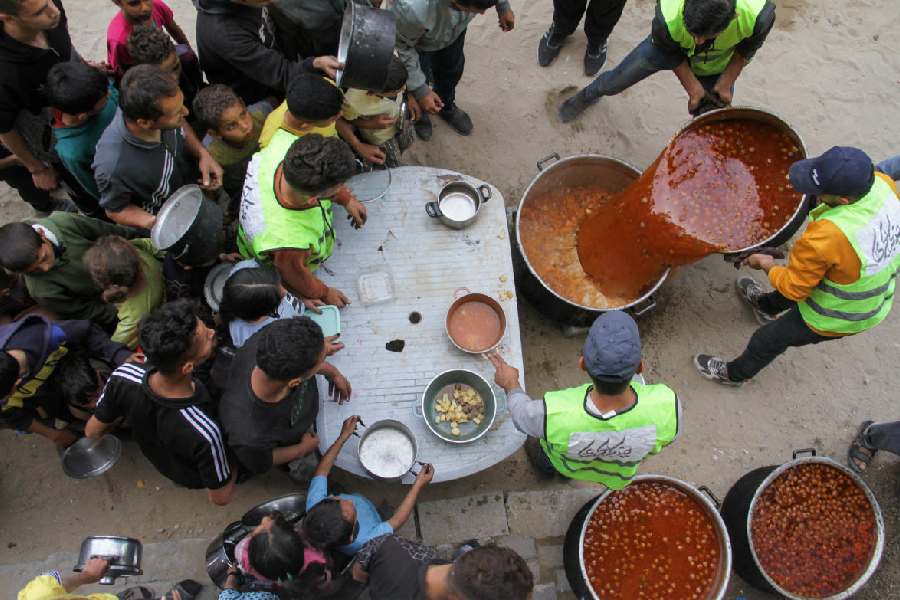
India produces enough foodgrains to be able to feed its population now, yet a large number of people remain unfed or under-fed, especially in the urban slums and rural areas. Take the reports of starvation deaths in the media. There are several reasons for this state of affairs. As is well known, vested interests control the government?s public distribution system. This is a problem that has to be dealt with socially, economically and politically. But that is a separate and complex issue. However, if we manage to save foodgrains using proper scientific and technological methods, it will allow us to increase our buffer stock as well as lead to greater market stability and help channel more to the PDS.
India is now the world?s second largest producer of food. The country produces more than 620 million tonnes of food products annually. It is ranked among the top in the production of milk and in livestock populations. It is the second-largest in terms of fruits and vegetables, and among the first five producers of oil-seeds, sugar and spices.
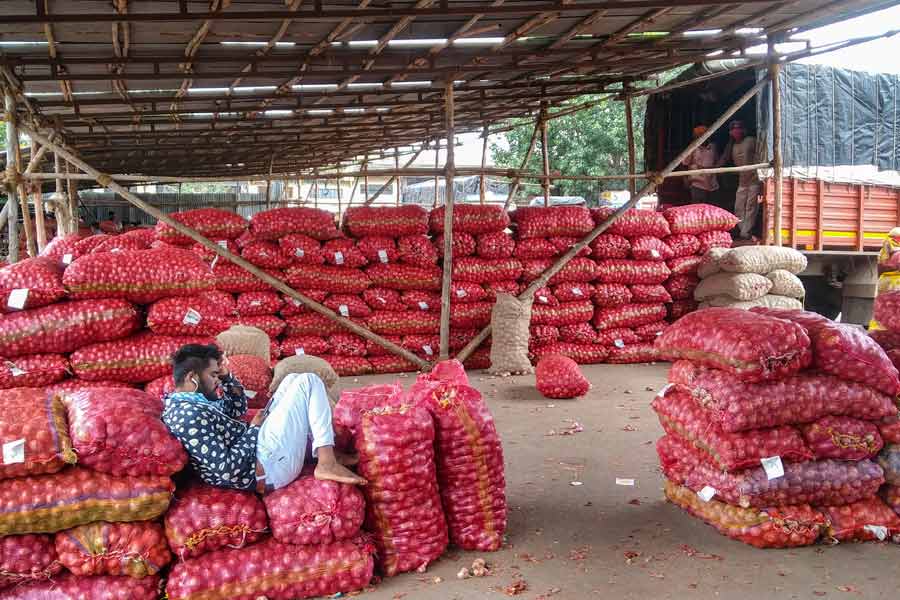
In spite of producing such large amounts, India loses about 25-30 per cent of its total produce because of improper storage conditions, rodent and insect infestation, bacterial and fungal contamination, pesticide or heavy metal contamination and adulteration. It is quite alarming if calculated in terms of GDP lost. Different types of food items require different temperatures, humidity control, special refrigerated transportation arrangements, packaging and so on. Unless we turn our attention to this area urgently to rectify our deficiencies, we will continue to lose a large amount of our produce.
According to experts, India has the potential to be the largest producer of foodgrains. Projections have it that in the next 10 years the total food production in India might double, with agriculture accounting for about 25 per cent of its GDP. If that happens, we will have a huge food surplus, which we will have to preserve and store properly. This underlines the urgent need to set up a sufficient number of modern facilities to store different kinds of food.
Along with this, the food processing industry must be encouraged to come into its own in India. There should be strict guidelines for food processing and preservation so that we can exploit the huge international markets by exporting properly-packaged, canned and stored food items. Also, the quality control criteria must be adhered to in all cases.
We need to follow state-of-the-art methods of food-packaging, canning, refrigeration, thermo-processing and transportation using appropriate vehicles or refrigerated chambers. These vehicles should be so equipped that in the journey over road and water to far-off destinations which may take anywhere between 10-15 days to 2-3 months to reach, the food items remain fresh.
Trained manpower will also be needed to cater to the food processing and storage industries. Investors must be found and given all the facilities they need to induce them to invest. In certain cases, 100 per cent export-oriented food-processing units may be set up. All the benefits of globalization should be exploited in the form of 100 per cent export promotion ventures, joint ventures, foreign collaborations and so on. These have the potential to bring in a lot of investments ? as much as Rs 200 billion or more ? and create a huge number of jobs, especially in the villages. This would even provide a greater impetus to the development of rural India.
However, India still does not seem to be ready to grab this opportunity. For example, in 2000, project proposals amounting to about $ 15 billion were submitted to the government. Of these, the government approved proposals worth about only $ 5 billion, foreign investments accounting for only $ 2 billion. In the process, only about 14 per cent of the employment potential has been realized.
This is especially sad given that there is a lot of interest among investors, both within and outside the country. But, what is lacking is a work culture among the officials processing these proposals. Red tape and corruption are other obstacles. Thus, unless the government introduces a ?one window? policy for getting licences, we might lose out on more foreign investments in the coming years.
Cooperative movements may be started in villages where a specific kind of food item is produced in large quantities, so that the locals can bring their produce to an area where the large storage facilities are located. Not only will this help them get a good price for their produce, but it will also create jobs for more people.
India has a more than 9,000-kilometre long coastline which has remained largely untapped, as has its 3 million hectares of reservoirs and 1.5 million hectares of coastal areas containing brackish water. It has a vast potential for fish farming and other seafood production, its processing, storage and export. Besides, deep-sea fishing has also not been properly exploited. A lot of sweet water fish and sea-food gets spoiled because of improper storage facilities.
Development of food preservation industries should find a place in the overall planning of rural areas. Big industrial houses and the organized sector must enter this area too, with modern gadgets for catching, cleaning, storing and preserving fish. Pisciculture also has a vast potential of employment generation. We can take a lesson from Bangladesh, which exports a variety of scientifically-cleaned, frozen, packaged and stored fishes to the West.
We must also promote research in the area of agro-industries. Plant tissue culture technology has a tremendous scope for developing salt-resistant, insect-resistant and drought-resistant plant varieties suitable to our climate. Development of high protein varieties of cereals, oilseeds and fish through indigenous efforts, by using recombinant DNA technology or other traditional methods, should be given priority in our research ventures. We must also explore round-the-year fishing possibilities, with elite varieties developed in the laboratory and adapted to the open waters.
Eating outside has become very popular in India today, especially among working couples. In time, there will be a large-scale need for processed or cooked meals sold through grocery shops in ready-to-eat containers. Technology for preparing, packaging and storing such cooked food will be in great demand.
At the same time, the government must pay close attention to food quality and safety. India must address this issue not only because our Constitution guarantees food safety, but also because without proper safety assurances we will not be able to enter foreign markets, which have very strict regulations about food quality and safety. While the Bureau of Indian Standards can provide the quality parameters for individual food items and processed foods, the ministry of health, working under the Prevention of Food Adulteration Act, must provide the food safety criteria for the industry.
The food-processing industry remains a largely untapped area which, if properly exploited, can give a boost to our economy, as well as improve employment generation.
|