The Telegraph
 
 
ARCHIVES
Since 1st March, 1999
 
THE TELEGRAPH
 
 
Email This Page
STEM THE RISING TIDE

By a single act of passing a legislation in the state assembly to prevent the flow of water into Haryana and Rajasthan, the Punjab government has put in train events which will have long-term reverberations across India.

Pandit Nehru planted the seeds of a secular India after independence as the lynchpin of India’s unity, communal harmony and social equity. Although events since 1947 have not unfolded as we may have liked them to, India has remained a torchbearer of national unity and vibrant democracy. Nobody could have imagined that nearly sixty years after independence, water would emerge as a potential source of social and communal disharmony in India.

In the list of demands of the common people for bijli, sadak and pani, the last stands way above all the basic needs. The deep discords in various parts of the country now arise from the availability of water, or rather the lack of it. In addition, there are long-standing and unresolved issues related to water, with Bangladesh, Nepal and Pakistan. But these pale into insignificance compared to the disputes between various states such as Punjab, Haryana, Rajasthan, Himachal Pradesh, Karnataka, Tamil Nadu, Assam, West Bengal, Bihar — the list is unending.

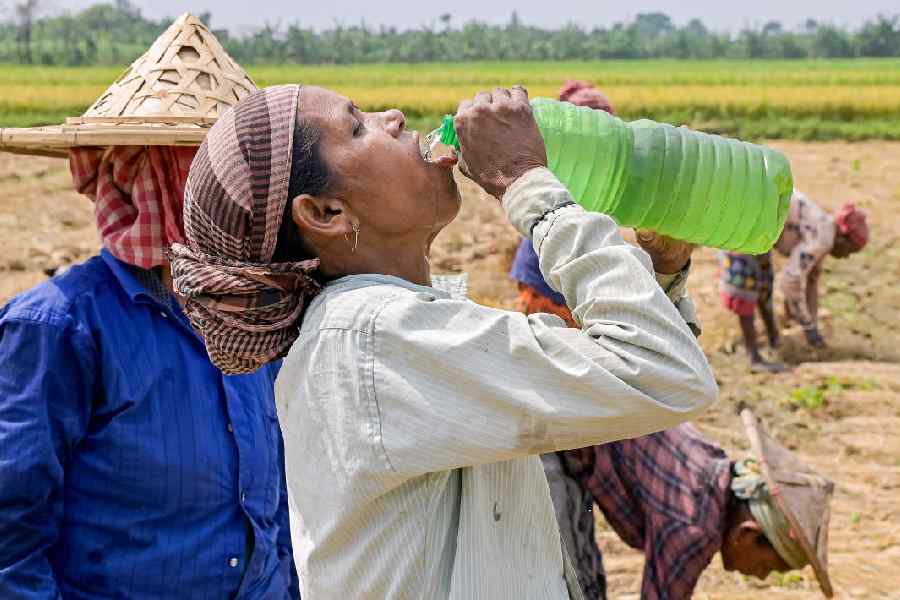
Internationally, the rising shortage of potable water has been recognized as possibly a bigger emerging global crisis than famines and even AIDS. Although water riots and disputes around the world are reported sporadically, these are probably more frequent in India than the media care to report. Here, the access to water poses a challenge to the democratic values we hold so dear.

Grand plan

The dream of interlinking the major rivers and water sources in India is an old one. The sheer size of the task, the cost and the potential ecological and human impact of such undertaking remain undefined and has discouraged progress on the scheme. Recently, a task force under Suresh Prabhu attempted to revive the scheme and began to reassess several factors in the light of India’s changing demography and climate. But the dream remains no less formidable. In the meantime, those opposed to the idea have increased in number, mustering more data to argue why the grand designs of interlinking India’s rivers were doomed to fail.

Not doing anything is no longer an option. In the recent budget, the finance minister allocated funds for projects to revive water harvesting, reclaim natural and man-made catchment structures, step wells and so on — all products of ancient wisdom and practices.

Techniques to replenish ground water are a dying wisdom as well. Due to frequent droughts and overuse of ground water, the water table in the country is rapidly depleting. If sufficient working pumps and electricity were more readily available, the water table would have depleted even faster. With its unabated population growth, India’s per capita water availability will continue to diminish and state-level politicians will be forced to pander to their constituencies to deny available water to neighbouring states.

Water has remained a state subject till now. Given that it is a resource which rightfully belongs to the nation, like other natural resources, and given the present attitude in Punjab and Karnataka, the time is probably right for water to be declared a national, rather than a state subject. After all, the Indian topography did not evolve with the precondition that natural resources would become the property of any one state or community. Riparian rights and laws must reflect contemporary realities to remain meaningful. Only by signalling equitable availability of water as a top national priority, will India be able to convert the highly divisive issue into one which is managed fairly and equitably for the larger good of the nation.

Top
Email This Page