|
The law’s on your side
Women’s rights activist and member of the planning
commission Syeda Hameed has said that some of the existing laws in the country
are not anti-women, and has urged women’s organisations in West Bengal to spread
awareness about these. She pointed out that according to Muslim Law, for instance,
it is the bride’s family that’s supposed to receive meher from the groom’s
side, lamenting the fact that in practice, women have to pay dowry. She was speaking
at a book launch by the West Bengal Commission for Women prior to the second ‘convention
for elimination of discrimination of women’ about to take place shortly.
Telephone tragedy
It began like any other ordinary day for Shabana
Sayyed, a 29-year-old Muslim Maharashtrian woman, who, pregnant with her second
child, was staying for the past few weeks with her parents. But then she made
a phone call. To her husband. And her world came crashing around her. In a fit
of rage Rizwan Sayeed uttered three words. ‘Talaq, talaq, talaq’. And now Shabana,
who has a four-year-old daughter, finds herself divorced and no one can do anything
about it. Legal experts are saying that the triple talaq could not be challenged
in accordance with a verdict of India's apex Supreme Court, which recognised
such divorces. Earlier this year, the Muslim Personal Law Board, the body which
oversees Islamic religious affairs in India, met to consider abolition of the
practice. Women's activists claim the triple talaq has caused a great deal
of harm to women in the community.
Get a job, stay fit
Working women are fitter than homemakers. So says a new study by the University of Pennsylvania, which found that the health benefits that women derive from working in a professional environment are greater than working in the house. This, the study claims, can be linked to the sense of control that comes with economic independence. Nor are these health benefits diminished in any way by longer work hours, says the study.
Of course!
In an attempt to break the myth that only the mentally unstable require counselling and to urge women to seek counselling when they experience stress at a day-to-day level, Calcutta-based NGO, Women’s Sahayog (WS), has started a course on the topic. One of the main objectives is to train women in dealing with gender-related problems. Started by Sujoyeeta Ghosh of WS, the course, soon to be introduced to the city, is open, according to Ghosh, “to anyone interested taking up counselling as a vocation or is interested in social work, or is involved in social/developmental activities.
Neelosree Biswas
Time will tell
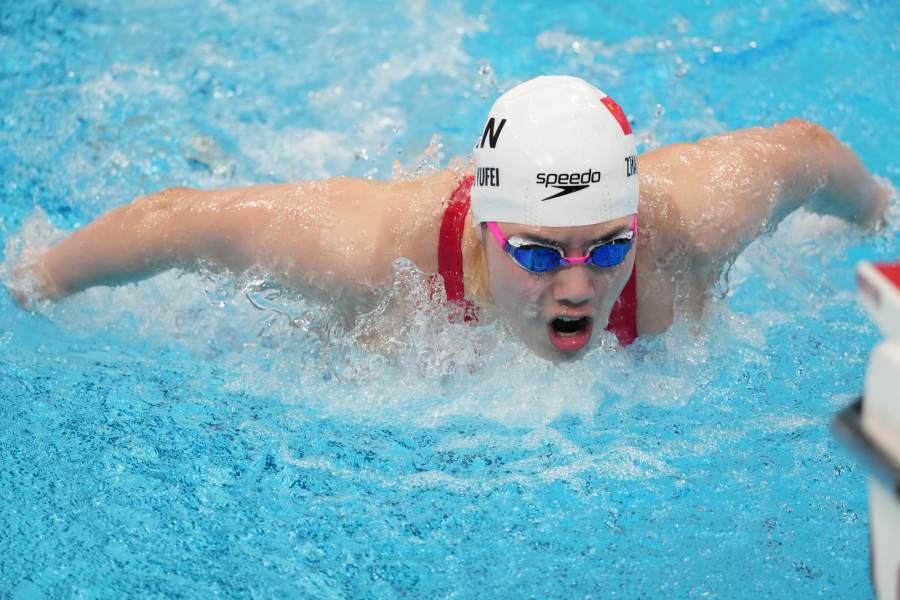
All she needs is a little bit of time to prove herself. According to Sumaira Zahoor of Pakistan, who finished eighth in the 1500 meters at the Asian Games in Busan and finished seventh in the first round heats in Athens during her first stint in the Olympics, time is all that Pakistani women, like herself, need, to prove themselves in sports. “Don’t think we are backward or anything,” she told the media, hungry for comment from a woman, known not so much for her prowess as a runner, but for her courage in wearing tights in spite of her ‘conservative’ background. Not that journalists — mainly from the Western media — were very interested in her sporting accomplishments. Most of the questions were about life in an Islamic society.
Overheard… that a well-known multinational
company known for its morning cereals is promoting ‘serials’ which deal with women’s
issues to be broadcast on Indian television. Interesting pun, that.
|