The Telegraph
 
 
IN TODAY'S PAPER
CITY NEWSLINES
 
 
ARCHIVES
Since 1st March, 1999
 
THE TELEGRAPH
 
 
Email This Page
IS THERE A CHANCE OF RECOVERY?

Around two months ago, twenty-seven-year-old Sandhya Mondol, pregnant with her first child, was admitted to the gynaecology ward of the NRS Medical College and Hospital. After three uneventful days, Mondol was wheeled to the hospital’s labour room where one of the attending doctors slapped her across the face to “induce labour” and make her “cooperate”. The blow made Mondol bleed from her ear. She also suffered temporary deafness. According to the hospital staff, what happened to Mondol was “standard practice” in cases where a woman’s labour was delayed.

Understandably, the incident caused an uproar. The media, along with members of the medical profession and ordinary citizens, condemned the act harshly. The incident reflected the erosion of ethical standards among doctors and the abysmal state of healthcare in West Bengal, they said. However, the incident cannot be understood only in terms of ethics or the failures of an uncaring healthcare system. It is far more complex and involves, among other things, the impact of globalization on birth practices, the effect of medical interventions and, most important, the question of a poor woman’s right to safe and painless labour.

In India, globalization has grafted an uneasy modernity on a traditional social set-up. The effect of this is manifest in the realm of birth, as it is in many other areas. Going to state hospitals for deliveries, and demanding medical attention to speed up labour, are considered as being “modern” by a large section of poor women. These institutions are also supposed to dole out proper ante- and post-natal care (including correct forms of medical intervention to induce labour) and maintain high standards of hygiene at low cost. But the fact remains that most of the poor women are unaware of this. Which is why people like Mondol have to suffer the ignominy of being slapped when they are in labour.

In India, the benefits of technological advance in healthcare have not been equally distributed through society. Cecilia Van Hollen in her book, Birth on the Threshold, says that this inequity has led to the consolidation of certain peculiar cultural beliefs. For example, it is still believed that a woman’s ability to endure labour pain is an indicator of her virtue.

Medical intervention to induce labour have become a standard practice in most societies. This may be done through the administration of oxytocin drugs which are widely used in government hospitals in India. This practice is a product of modernity itself, as is the process of the “biomedicalization of birth”.

If one were to delve into the history of obstetrics, one would see that in the mid-19th century, doctors used analgesics like ether and chloroform to reduce pain during labour. In the Twenties, the American National Twilight Sleep Association insisted on “twilight sleep” — induced by a combination of scopolamine and morphine — for the same purpose. Epidural anaesthesia continues to be used to facilitate labour even today.

However, modernity is not just about technological interventions. It also means being able to exercise a choice about the kind of intervention one wants to induce labour. A society which calls itself “modern” cannot preclude such a right. Sadly, in many countries, including our own, the right to exercise such choices is impeded by a combination of numerous factors — a market-dictated drive for newer, and largely incorrect, forms of medical interventions, skewed power relationships between an authoritative medical establishment and the patients and the lack of awareness on the part of the woman regarding her right to make choices.

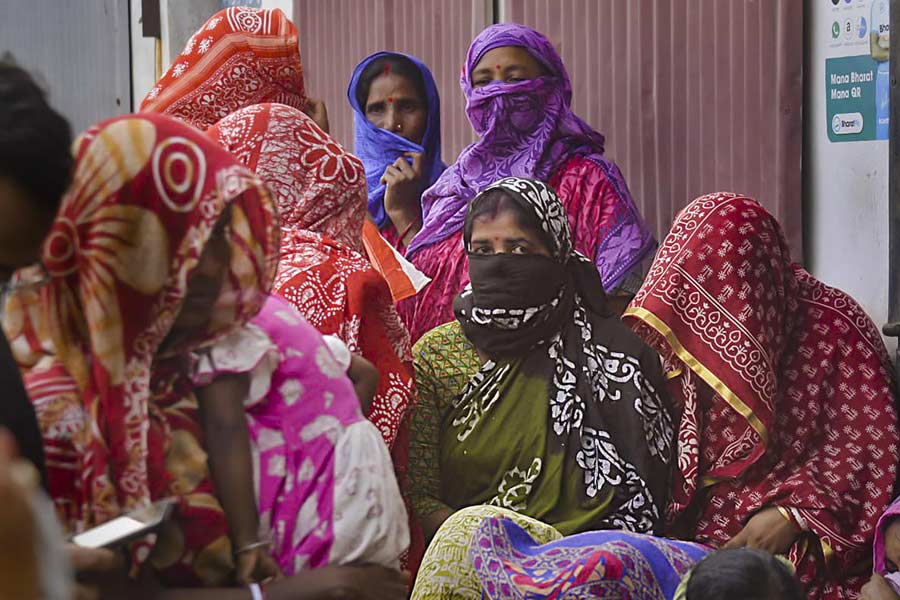
The maternity wards of most government hospitals in West Bengal resemble huge dormitories where women, in different stages of pregnancy, lie next to one another and experience the pain and joy of childbirth. Privacy of the patient is something unheard of here. The picture in Tamil Nadu, a state which has been considered a model in the field of women’s healthcare, is quite similar, writes Hollen.

Apart from overcrowding in government hospitals, Hollen says that poor women in this state often make uninformed choices about drugs to induce labour in their zeal to be “modern”. For example, a particular drug is widely used to increase the intensity of labour pain, but very few have heard of the use of anaesthesia. Women are also unaware that some of the drugs used to induce labour pose risks like uterine rupture.

This scenario is also true of other states in India, including West Bengal. These uninformed choices are often shaped by economic and institutional constraints. For the poor women, buying cheaper drugs which slow down contractions is an easier option than buying expensive analgesics. Government hospitals are anyway overcrowded. Hence, compromising on efficiency and patients’ welfare is often the only solution in the face of a steady influx of women in labour. Add to this the lack of skilled, and more important, empathetic hospital staff.

The plight of poor women is further compounded by the existence of an authoritarian medical establishment. Be it in Tamil Nadu or in West Bengal, pregnant women are often perceived as “subjects” who need to be “managed”. It is common for the hospital staff in government hospitals to scold women for making noises while they are in labour. Such an attitude distances the patients from the staff, fuelling mutual distrust and antipathy.

The exercise of authority by a largely male-dominated medical profession strips women patients of their right to ensure that they are treated properly and given the right kind of medical intervention to induce labour. Or, for that matter, even their right to complain about medical high-handedness.

By coming to a government hospital, a woman, however poor, does not forfeit the rights that accrue to her as a citizen. She cannot be reduced to a pawn at the hands of an uncaring, and often over-mechanized (or under-mechanized as was the case for Mondol) establishment, to be neglected, abused and threatened. Moder- nity has widened and eased access to quality healthcare. It should equally give poor wo- men the freedom to choose and demand such services.

The slap on Mondol’s face is symbolic. It shows the lacunae that exist in the state healthcare system, with its questionable forms of medical intervention and a frightful absence of ethics. It also proves that we need to look into the issue of globalization afresh. This is not to say that we must resist it, but we have to ensure that the choices it gives us are made available to everyone, especially to the poor and to women.

Finally, the incident clearly indicates that the modernization of healthcare services in India cannot be adjudged on the basis of the advances made in the field of medicine. It should be seen in the light of the country’s success in breaking itself free from the continuous deprivation of the poor and women of their basic rights to health.

Top
Email This Page