|
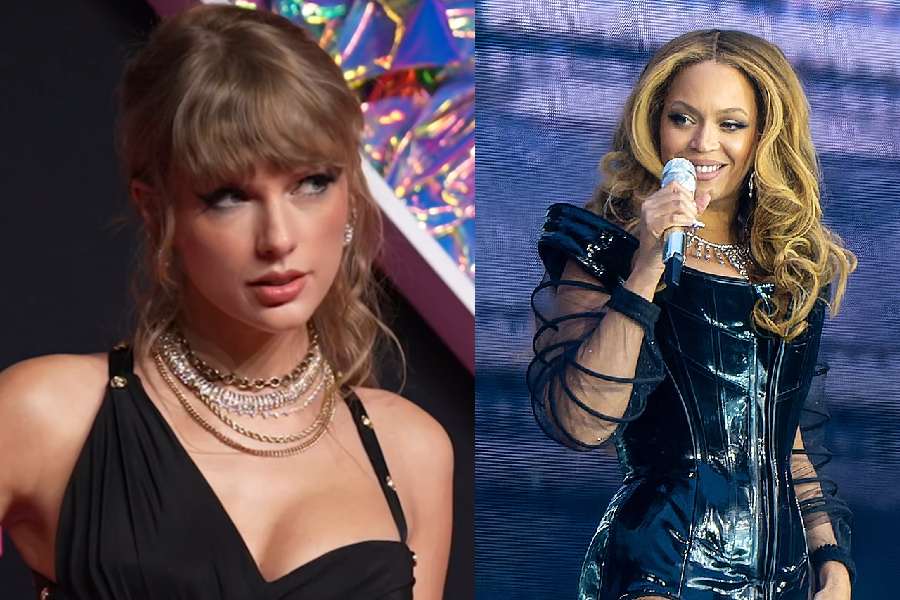
| Beyonce Knowles: Right note |
| |
New York, Aug. 18: Rock bands have long prospered
by living — and selling — images of hard living and brash poses. But sex, drugs
and rock ’’ roll are no longer enough. The definition of cool for some acts now
includes mobile-phone ringtones.
Ringtones, the synthesised melodies programmed to
play when a cell phone rings, have proved to be such a lucrative side business
for cellular phone companies that record labels in the US have decided they want
a piece of that revenue.
Warner Brothers Records in the past few days began
showing commercials on MTV and MTV2 for a set of voice-greeting ringtones recorded
by members of the punk band Green Day, in what music and cellular industry executives
said is the first time a record label has paid to run its own ads for the digital
snippets in the US market.
The commercials, which are part of a broader advertising
campaign to promote the September 21 release of American Idiot, the band’s
first album in four years, are a milestone for an industry where many are looking
to products other than compact discs to steady the shaky revenues of the music
market.
To some artists and music executives, the marketing
of ringtones suggests the subversion of music to marketing ploys. “There is a
sense among some that it bastardises the music, takes away the sincerity and the
original intent of the artist,” said the artist manager Tony Dimitriades, who
represents acts like Tom Petty. “With where we are today, there seems to be a
notion that anything goes and who cares?”
But Tom Whalley, the chairman of the Warner Bros.
label, part of the Warner Music Group, said that advertising the phone tones is
just one part of his label’s shift from mere disc factory to marketer of artists’
lifestyle products. “The ringtone can help connect that fan to the artist. If
it’s done with taste, I don’t think it crosses that line where its commerce over
art.”
Taste is not the first notion that springs to mind
when sampling the Green Day ringtones, which cost up to $2.49 apiece. They include
band members belching and cursing, as well as offering witty ripostes. “Pick up
the phone!” demands Mike Dirnt, the band’s bassist, in one. “It’s your mother.
I know. She’s with me.”
But the ringtones are in keeping with the sneering
image of the punk outfit.
There is also no question that, even if ringtones
do not represent pure artistic ambition, they are resonating with the public.
Last year, cellular phone users worldwide spent $3.1 billion on ringtones, according
to Consect, a mobile market research and consulting firm, with popular choices
including Beyonce’s Crazy in Love.
The US market, which lags Europe’s and Asia’s, rose
to about $150 million in retail sales, up from $45 million the year before. Analysts
expect the market to expand even faster now that handset manufacturers are cranking
out more sophisticated phones that can play multi-channel audio files with pieces
of an actual recording, with sound quality far superior to the tinny synthesised
versions of songs known as monophonic or polyphonic tones. Phones usually have
a screen that can display a list of hundreds of titles, which sell for $1.50 to
$2.50 and usually contain a 30-second clip of the song.
“I think the kids that want them are going to get
them and the kids that don’t will ignore them,” said Dirnt, of Green Day. “Nowadays
you’ve got to be a little more creative. MTV doesn’t play nearly as many videos
as they used to. You move forward with whatever the new medium is.”
The new trend is taking the record companies afield
from their main business too. Two years after Universal Music Group created an
in-house ringtone division, Universal Music Mobile, one-third of its sales come
from non-music tones, including sound effects and jokes from impersonators, like
the one who imitates George W. Bush (in Chinese, for the local market).
Cedric Ponsot, chief executive of Universal Music
Mobile, said he occasionally had trouble persuading artists, including the rock
band U2, to approve selling their music in ringtone form, especially before improvements
in sound quality. He said he tells artists, “If your fans are willing to pay two
to three euros for a ringtone, you should respect that.”
|