TT Epaper LHS
The Telegraph
TT Mobile
 
 
IN TODAY'S PAPER
CITY NEWSLINES
 
 
ARCHIVES
Since 1st March, 1999
 
THE TELEGRAPH
 
CIMA Gallary
 
Email This Page
Letters to Editor

Fire behind the smoke

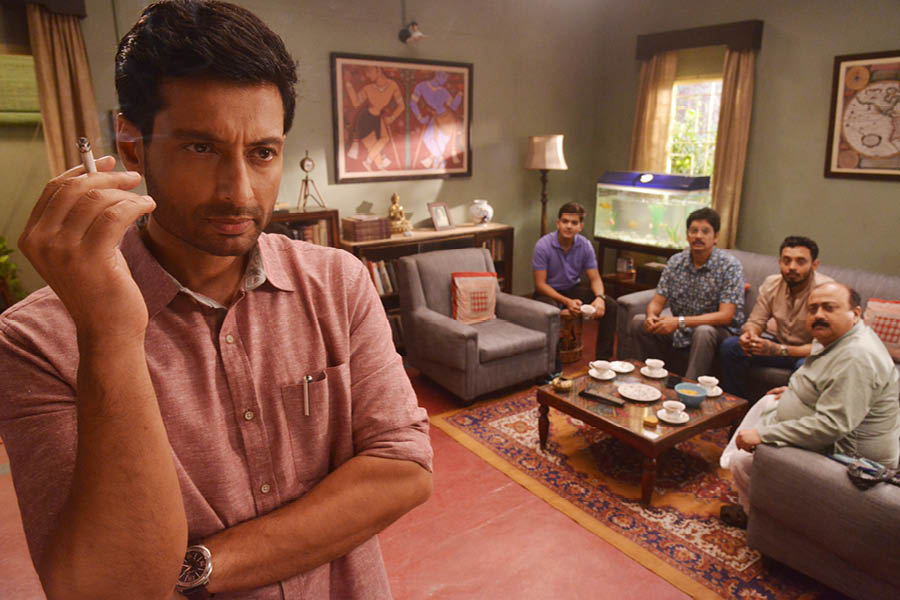
Sir — Left parties in India have always been synonymous with strict codes of discipline and order within their ranks. But the admirable qualities are being threatened by an unlikely adversary these days — cigarettes. The love of the puff has led Nilotpal Basu to light up in the parliament corridors, in direct violation of the smoking-ban in the premises of parliament imposed by his comrade and speaker, Somnath Chatterjee (“Puff-ban contours blur in smoke haze”, July 7). But Basu’s antics speak ill of his responsibilities as an elected representative. For, if politicians are willing to bend the rules, can the masses be far behind? Even after two months of the Supreme Court’s ban on smoking in public places, very little — in terms of spot checks or fines — has been done to stub out the menace. The ill-effects of smoking on health and the environment are well known. But perhaps, it is another one of the perquisites of those who roam the corridors of power.

Yours faithfully,
Alok Sen, Calcutta


Play with words

Sir — Two recent events are likely to have considerable impact on the lives of Indian Muslims. The first one is the government-sponsored conference on minority welfare and education, where conservative Muslim bodies stonewalled any suggestions for reform and regulation of the madrasah system. In the past, madrasahs imparted quality education on subjects other than theology — science, mathematics and astronomy — which took Islamic countries to the forefront of education. Sadly, the madrasahs here are outmoded. The outright refusal of orthodox Muslims to modify the curriculum and introduce contemporary subjects which would enable students to pursue higher studies is clearly unjust. This madrasah system also prevents Muslim children from receiving primary education, made compulsory by the directive principles of the Constitution. Muslim educationalists have a lot to learn from Christian missionaries who have successfully combined theological training with modern education.

In the second development, the All India Muslim Personal Law Board has declared that it has no legal or religious powers to do away with triple talaq by interfering with the shariat (“Income push for Muslim women”, July 5). Muslim personal laws in India are archaic when compared to those in even conservative Islamic societies. Pakistan’s first president, Mohammad Ali Jinnah, left the shariyat out while framing the civil and criminal laws of the country, although it was not completely ignored. With progressive, educated Muslims crying for change, the government can do better than asking a group of orthodox theologians to decide on matters that lie outside their purview.

Yours faithfully,
Raja Sen, Dhanbad


Sir — The new chief of the AIMPLB, Maulana Rabey Nadvi, has done a commendable thing by calling for reforming the shariat to abolish the practice of triple talaq. Personal laws in our country are heavily biased against the interests of women. In any society, it is imperative that reform starts from the bottom, in other words, from the marginalized sections like women. Muslims, as the largest minority community in the country, have been at the receiving end of communal violence and discrimination. This has forced many of them to alienate themselves physically and socially. The result is the increasing tendency to recede into ghettos, both real and mental. Muslims have also started guarding their religious identity more zealously than ever before. These obstacles notwithstanding, it is important for the religious leaders of the community to realize the need to make Muslim personal laws more gender-sensitive. It is no less important that women are included in the law boards to ensure that their opinions are adequately aired.

Yours faithfully,
Ram Puniyani, Mumbai


Sir — Deliberation on the practice of triple talaq in Muslim society was long overdue. This practice is un-Islamic and has been misused by ignorant Muslims. Islam permits divorce only when all genuine efforts for reconciliation fail.

Yours faithfully,
Syed Tanveeruddin, Mysore


Behind closed doors

Sir — The reverence Indians have for the judicial system is not likely to be diluted by the fact that the West Bengal Judicial Services Association has initiated a move against in-camera hearings (“Judges fear framing in in-camera rape cases”, June 17). Did the members of the WBJSA have to jump to the defence of the allegedly errant judge even before the ongoing probe was completed, and raise questions about in-camera trials — an effective measure to combat crimes against women?

Yours faithfully,
Chameli Pal, Batanagar


Sir — Judges have no reason to be afraid of in-camera hearings. After all, there would be other people in the courtroom during such a hearing and the testimony of the witnesses would be recorded as in any other hearing. At all times, the judge would be in charge of the proceeding, in-camera or not.

A rape charge against a sitting judge is an extremely serious matter. But the WBJSA’s claim that judges were feeling “insecure” at the rape charge brought against one judge, is unwarranted. The truth is that in most cases, it is the common people who feel “insecure” when there is no jury and a single judge decides between justice and injustice. Although the Supreme Court has tried to maintain a high standard, ordinary Indians have little faith in the judicial system. Which makes the WBJSA member’s claim that judges are humiliated regularly sound comic. Most of us are scared to make a public comment about the judiciary lest they be booked for “contempt”. Fear must not be misinterpreted as “respect”.

Yours faithfully,
Kunal Saha, Ohio, US


Parting shot

Sir — Recently, a number of letters have appeared in newspapers about the wasteful expenditure during the marriage of Laxmi Mittal’s daughter. The letter writers, I assume, are all educated, middle-class persons. Do they remember the amount spent in marriages in their own families? Didn’t any of them ever give or receive any dowry? Could they not have used this money for the “poor”? Is it not hypocritical to criticize Mittal just because he happens to be a rich industrialist?

Yours faithfully,
P.V. Kulkarni, Haldia

Top
Letters to the editor should be sent to : ttedit@abpmail.com
Email This Page