|
TIED-UP TREATMENT:
The hospital staff, both nurses and ward boys, have a novel way of keeping a “restless
patient” quiet— tie him to the bed. Nurses admit this is the only way out when
they are short of hands. In some hospitals, the nursing staff:patient ratio is
1:70.
CRUEL CUT: In
Calcutta’s state-run hospitals, episiotomy is practised in a crude way, where
doctors, to facilitate smooth delivery, simply use scissors to cut and expand
the vaginal orifice to ensure that the head of the baby comes out smoothly. No
local anaesthetic is used.
SHOCK THERAPY:
In psychiatric wards, a violent patient is often gagged and bound, before 70 to
110 volts of electricity is passed through his body. The patient is not sedated.
Doctors say that it is easier to give patients a few minutes of ECT (electro-convulsive
therapy) than give him a sedative and wait for its effect.
VOCAL ANAESTHESIA:
Doctors in outdoor departments of most hospitals, while draining abscess and removing
the diseased area around the abscess, depend on “vocal anaesthesia” — shouting
at the patient to keep him quiet. Since anaesthetics are not always available,
this keeps the patient mum.
STITCH GLITCH:
In mishap cases requiring multiple stitches, a patient is often stitched up without
any anaesthetic. No medical norm is followed, no explanation is given.
UNKIND THRUST:
Only a dab of paraffin (lubricant) is used on the tip of the catheter before it
is forced into the patients with kidney problems. The medical book prescribes
the use of anaesthetic gel before the insertion of a catheter. The same crude
method is used while inserting Ryles tube into noses of patients.
PAINFUL PIERCE: Most
pathological staff members use a sharp needle to extract bone marrow or cerebrospinal
fluid, piercing the needle through the skin, muscles and between the vertebra
or the bone, with either no or inadequate anaesthetic.
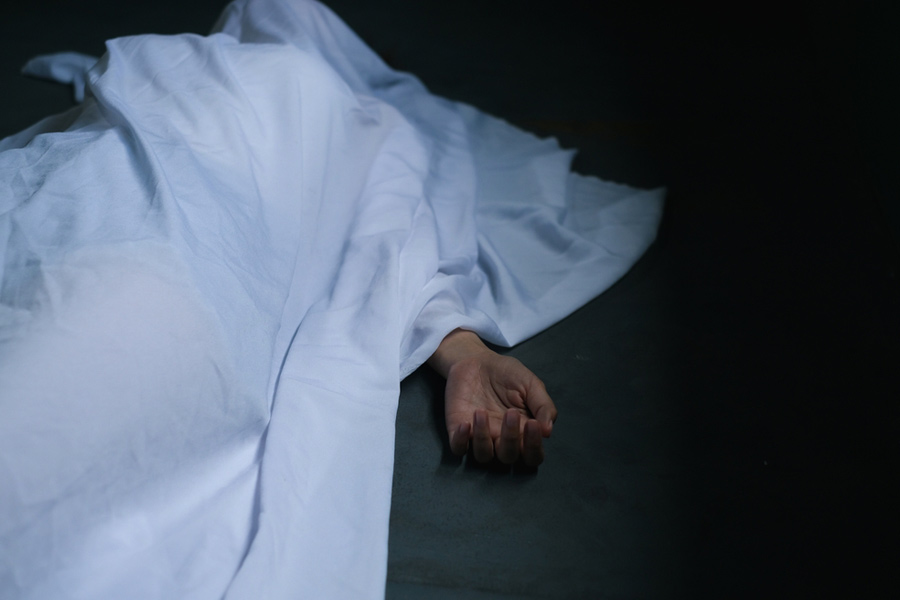
NO DIGNITY FOR DEAD: Healthcare
personnel do not have any means to cover the dead in hospital wards, often leaving
them in the bed or on the floor for hours, until the relatives arrive to claim
the body. Some doctors urge nurses and ward boys to get a partition to block the
body from the view of other patients. But then, again, there aren’t enough partitions.
NAKED NEEDLE:
In most hospitals, intravenous fluid needles and strong-dosage injection needles
are inserted without the application of any local anaesthetic, despite international
medical rules clearly specifying that utmost care must be taken to relieve pain.
JUST JAB: While
extracting fluid accumulated in the lungs or in the abdomen, no pain reliever
is administered. Instead, the needle is shoved in after a dab of spirit is rubbed
on the skin.
STAND AT UNEASE:
Patients in the outdoor departments of most hospitals have to stand for hours,
waiting for their turn to be examined, as the seating arrangements are inadequate.
There’s no consideration for the old and the critically ill.
So, what do those running these medieval shows have
to say?
“We should display a bit of sensitivity and respect
for our patients,” says Abhijit Banerjee, head of the department of cardiology
at RG Kar Medical College and Hospital. “We should understand that a patient is
in pain.”
Indian Medical Association secretary Moloy Patra says
a “bit of compassion” is needed in government hospitals’ handling of patients,
most of whom come from economically-disadvantaged sections.
Director of health services Prabhakar Chatterjee says
while the government is committed to taking healthcare in Bengal to higher standards,
the actions of some healthcare personnel, including doctors and nursing staff,
are working as a deterrent.
“We want to convey the message that we will cleanse
the hospitals of such evil practices,” Chatterjee adds.
|