|
As the principal partner in the National Democratic
Alliance, the Bharatiya Janata Party followed the common NDA agenda and not the
BJP agenda. This must have suited Atal Bihari Vajpayee. A lifelong member of the
Rashtriya Swayamsevak Sangh, a founder of the Jana Sangh and its successor the
BJP, Vajpayee also was trained in the ideology of the RSS. But his intellectual
development was influenced by other factors as well: active participation in politics
and parliament since independence, many friends in other political parties, his
own cultivated tastes, his poetic sensibilities, as well as many years of pondering
the future directions for India.
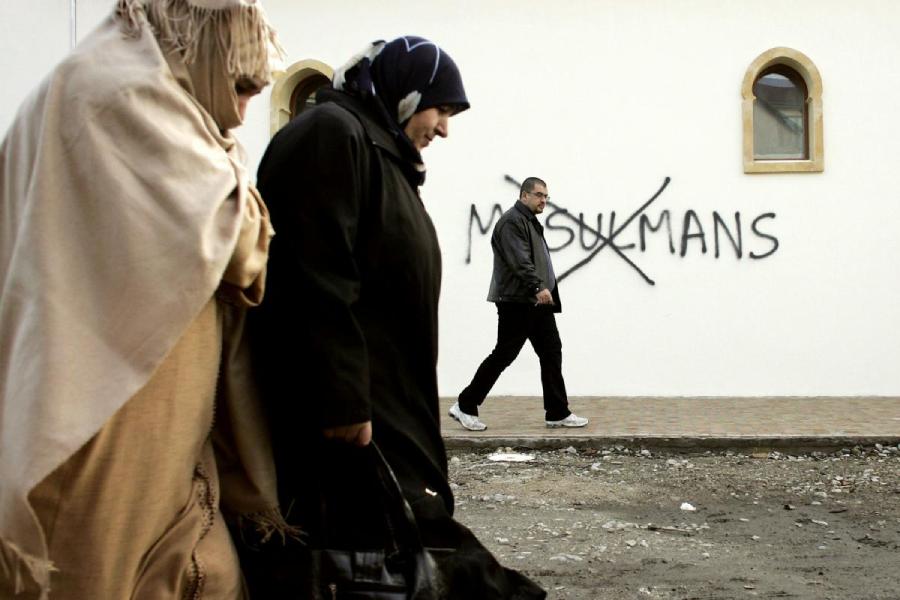
Leading a government that had to shelve the Hindutva
and anti-minorities agenda of the RSS suited him. He recognized that these ideas
could not work in the very pluralistic society of India and the weight of world
public opinion would make them untenable. The divergent influences of his RSS
training and his convictions about what was good for India in the world explain
Vajpayee’s ambivalence on the Gujarat riots and Modi’s accountability.
The RSS, founded in 1924, was profoundly influenced
by the ideas about Hindutva (the essence of being a Hindu) of V.D. Savarkar. Hindutva
comprised a common nation, a common civilization and a common “race” (determined
by a common origin, possessing a common blood). Hindutva is manifested as a fundamental
structure of emotion that is aroused by the memory, written in the blood, of Hindutva
itself. Another criterion used by Savarkar for determining who was a Hindu was
the inheritance of that race whose first discernible source could be traced back
to Vedic-Aryan forefathers. He defined a common civilization as Sanskritic. Savarkar
interpreted history to suit his conclusions.
Golwalkar’s formula for nationhood was based on the
“famous five unities” — country, race, religion, culture and language. All those
who fell outside the five-fold limits of nation could have no place in the national
life (of India), unless they abandoned their differences, and completely merged
themselves in the national race. So minorities must cease to be foreigners; or
they may stay in the country wholly subordinated to the Hindu nation, claiming
nothing, deserving no privileges, far less any preferential treatment — not even
citizens’ rights.
The political ideology of the BJP at the outset was
Gandhian socialism but later changed to “integral humanism”, a corporatist social
and political philosophy enunciated by Deen Dayal Upadhyaya. The ideal social
formation was one regulated by Hindu dharma. That will eliminate all conflicts
and contradictions in society. But it has to be transcendent and receive priority
over the exigencies of the state and civil society.
These confused and impractical ideas about history,
society and politics form the core ideology of the RSS and hence of the BJP. The
ramblings of amateur historians created a version of India as a land of the Hindus
in which everyone else was an interloper. Integral humanism is idealistic but
inadequate as a basis for political action.
The RSS founded a parivar (fraternity) of organizations:
a woman’s wing in 1936; the Jana Sangh as the political party in 1951 (to become
the BJP in 1980); the Vishwa Hindu Parishad in 1964, and other bodies that became
significant in the student movement (Akhil Bharatiya Vidyarthi Parishad), trade
unions (Bharatiya Mazdoor Sangh) and so on. Some had offshoots, for example, the
Bajrang Dal created by the VHP. The RSS was semi-paramilitary in organization,
highly authoritarian, centralized and anti-democratic. Rigorous training was imparted
to recruits, concentrating on the young, (ideally) pre-adolescent boys. Training
was for service to Hinduism and the Hindu nation against foreign influences. It
created many fanatics. However these services were not in evidence from the RSS
during the struggle for independence from the British.
The BJP as the political wing of the RSS depends on
the few million members of the RSS and its extremely disciplined structure for
fighting elections. This cadre mobilizes the voters and protects them from opponents,
does the propaganda, puts up the posters, acts as agents and undertakes much of
the grassroots and administrative work needed to fight and win elections.
The BJP’s emergence as an important national party
owed to the agitation for a temple at Ayodhya. L.K. Advani went on a successful
national rath yatra for the construction of the temple. After the elections
he acquiesced in shelving the temple construction and despite being home minister
did not take any steps to speed it up. The VHP, egged on by the RSS, protested
furiously.
Advani again revived the temple issue for fighting
the 2004 election. This time the response was tepid. Now that it is out of power,
the party is airing Hindutva. For Vajpayee and Advani this ideology was only a
route to power, not a belief that transcended their desire to rule.
The RSS and its parivar put mandir over power.
Their other essential demands were — no special privileges for minorities, swadeshi
meaning protection against foreign incursions and cultural nationalism (including
the focussing on the centrality of Hindutva).
The NDA coalition government could shelve the RSS
demands as not being agreed to by other partners. The RSS and related organizations
resented the Vajpayee government for opening the economy to foreign investment
and imports, postponing the decision on building the temple at Ayodhya as well
as eliminating the mosques in other Hindu holy places (Mathura and Varanasi).
But after the first two years, the RSS sensed that the Vajpayee government was
popular and that the BJP might win in future elections with more influence to
push the RSS agenda. The RSS could wait.
Vajpayee’s persistent efforts for peace with Pakistan,
a faster pace of development, military strength, his idea of a south Asian economic
union, the raising of India’s prestige in the world and its acceptance as an emerging
power in the world, enthused the middle classes. He tried to make development,
not Hindutva, the platform for fighting elections. He changed expectations from
passionate emotions over religion to peace and comfortable living. But his government
lost because it had not understood that the “shine” on India was confined to the
urban upper classes and did not reach the rural masses and the poor.
Yet, out of office, the RSS ideology will be the basis
for BJP agitation and electioneering. This ideology, when taken to the streets
as it will be, will almost certainly lead to riots, violence and deaths. This
will suit the Congress and other opposing parties since there appears to be a
growing desire in the country for peace and development. The BJP will become an
easy election opponent. The BJP has no choices. It cannot cut loose from the RSS.
The RSS is too inbred, fanatical and insulated from reality to accept that the
ideas of Savarkar, Golwalkar and Upadhyaya are passé in the 21st century.
Except for a few states, the BJP may therefore never again govern India. That
gives the Congress party a unique opportunity to remain in power.
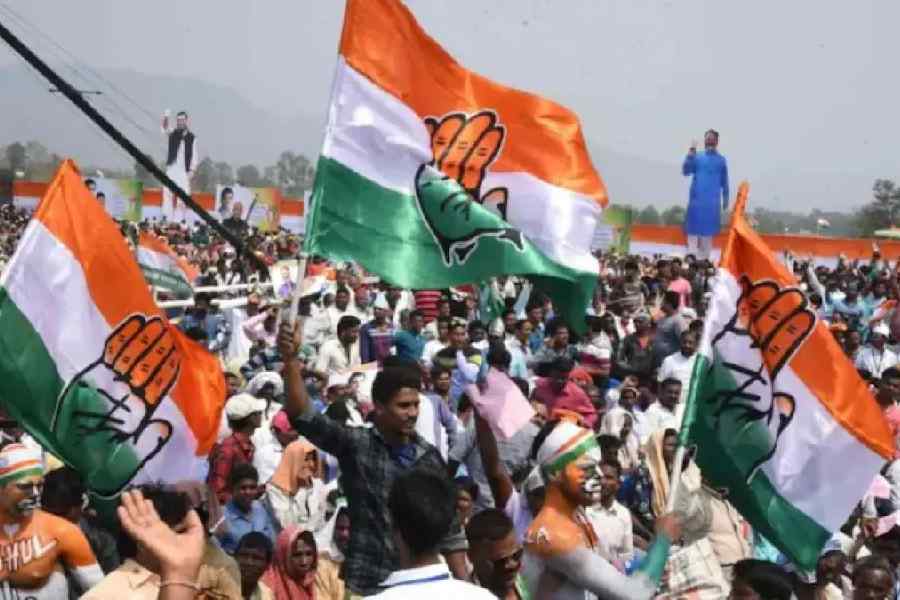
To do so, the Congress must make fundamental changes
in its beliefs. It must build a web of political alliances and learn the coalition
dharma, not constantly try to undermine its partners and supporters. It must not
appear to devalue and marginalize the most qualified and potentially capable prime
minister it has had since Jawaharlal Nehru. It must learn to tolerate regional
partners. It remains to be seen whether the Congress can overcome its arrogance
developed over forty years in power and transform its attitudes.
|