TT Epaper LHS
The Telegraph
TT Mobile
 
 
IN TODAY'S PAPER
CITY NEWSLINES
 
 
ARCHIVES
Since 1st March, 1999
 
THE TELEGRAPH
 
CIMA Gallary
 
Email This Page
ON A SLIPPERY SURFACE

In his new book, Plan of Attack, Bob Woodward claims that the Saudis promised President Bush to raise oil production in order to keep oil prices down in the run-up to the November election. On May 10, Saudi oil minister, Ali al-Naimi declared that the Organization of Petroleum Exporting Countries should raise its production quotas by at least 1.5 million barrels a day, and the price promptly fell by a dollar from its recent high of $40 per barrel. Maybe help is on the way.

Americans pay far less to fill their cars than any other industrialized country, but they are hyper-sensitive to price rises: Bush could be punished at the polls if the price at the pump is still sky-high. So will this happy coincidence of a Saudi call to raise OPEC production and bring the oil price down save him from that fate? Maybe not.

What has actually been happening since last September is that OPEC has repeatedly announced that it will cut production because it fears that over- supply will make the price fall. The market responds by bidding the price of oil up — and then OPEC doesn’t really cut its production after all, so its members get to enjoy both high price and high production.

Sky high

Nice trick, but how does it work? Partly ,it’s just that the OPEC members are cheating on their quotas less than they used to. The steep fall of the US dollar especially upset the big Middle Eastern producers who dominate OPEC, because while they are paid for their oil in dollars, they buy most of their imports from Europe, where the dollar doesn’t go very far any more. They had to jack the dollar price of oil up just to balance their budgets, so they actually managed to cooperate.

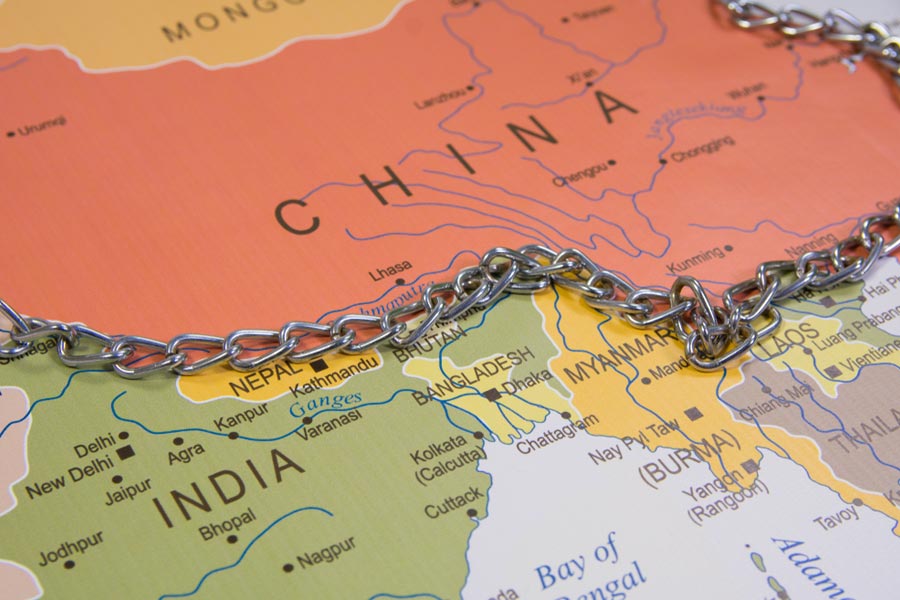
But the trick also depends on China. The United States of America is still the world’s biggest consumer of oil — 20 million barrels a day (around 60 percent of it imported), out of a global production of 65 million b/d — but China is coming up fast. So long as China’s economy continues to grow at 7 or 8 per cent a year, oil imports by the Asian giant will grow fast enough to keep world demand permanently up against the limits of supply. In fact, demand may soon exceed potential supply, and OPEC is not a charity.

So the oil price will stay high no matter what the Saudi oil minister says. That doesn’t just mean angry American voters; it also means that we are sitting on the brink of a global recession. It would probably take an even higher spike in price to push us over the brink, but that is distinctly possible. It could be caused by violence that interrupts Saudi oil exports, for example — the terrorist attacks at Yanbo on foreign oil industry employees on May 1 have already started an exodus from the kingdom — or by a decision by OPEC to demand payment in euros rather than in dollars.

No escape

The recession would start in America, where a massive budget deficit (over $500 billion and rising), an equally big balance of payments deficit, and the soaring cost of the war in Iraq make a collapse of confidence quite likely. Recession in America would quickly spread to China, whose growth is heavily dependent on the US ability to take its exports. And the US and China together accounted for two-thirds of global economic growth last year: if they go, everybody goes.

So the next world recession arrives much sooner than expected and what would make this one different is China, where political stability depends critically on maintaining employment. In a raw capitalist economy with close to a hundred million casual labourers, almost no protection for the unemployed, and a closed political system that lacks legitimacy, large-scale unemployment could easily lead to mass political protests.

China managed to sail through the start-of-the-century recession almost unscathed, but it would not escape an oil-fired recession in late 2004-early 2005. If political upheaval stalls growth in China for a few years, it could be a very long and deep recession. We really do not need another oil shock, but we are closer to it than most people think.

Top
Email This Page