|
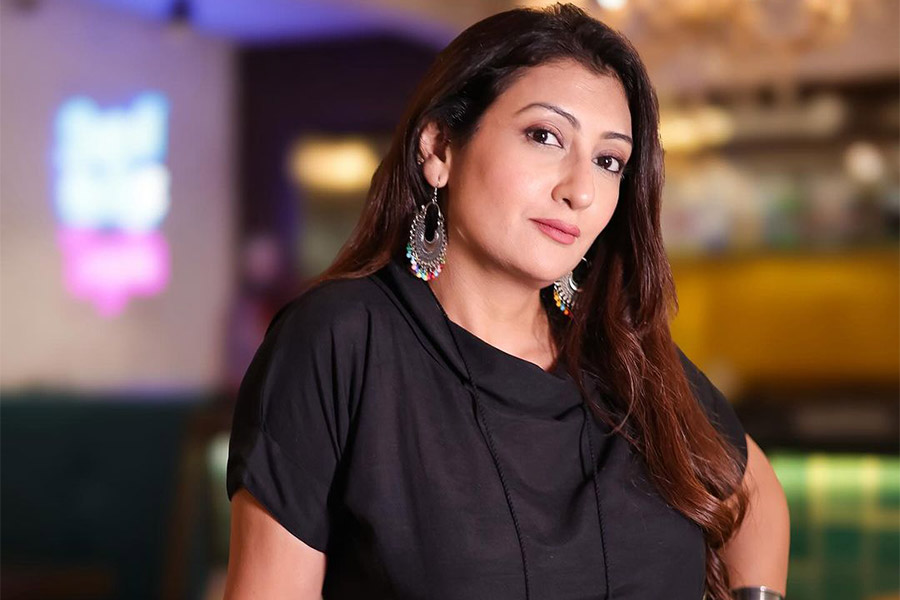
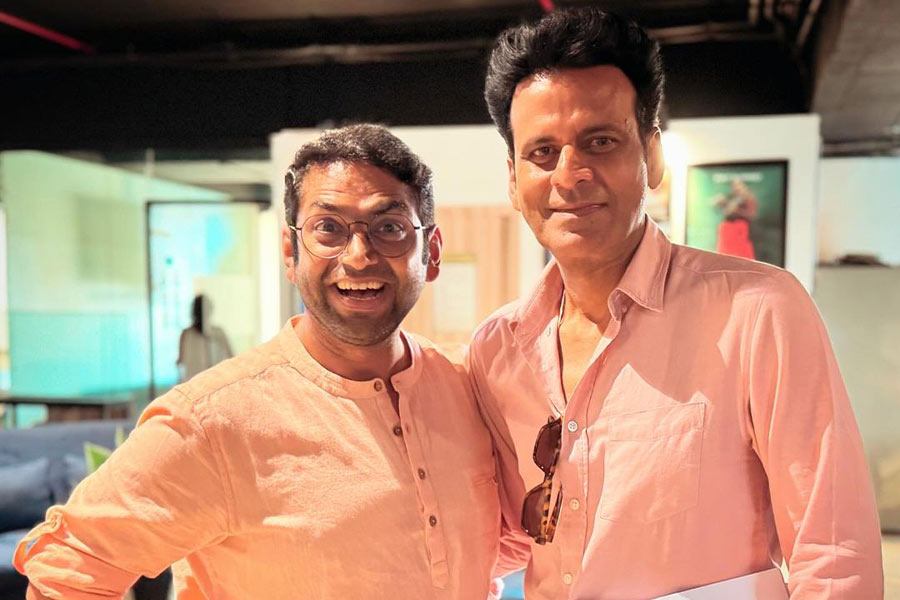
| Sharbari Datta with one of her creations.
Picture by Rashbehari Das |
Designer Sharbari Datta may have everything Indian about her, but that doesn’t stop her from being lauded for being a “worthy citizen” in the Big Apple.
The designer who prides herself on putting the dhoti on the chic list has just got back from the US where she was felicitated by mayor Michael R. Bloomberg, as head of the New York City Council, for “exemplary service” to her community “through unique personal achievement”.
The citation calls Sharbari “an outstanding citizen worthy of esteem” and stars light up in her eyes when she recalls the moment of honour.
“I was completely overwhelmed by the honour bestowed upon me, not just because it came from white-skinned people but because it is an indicator that my art has transcended the barrier of nations,” says Sharbari, back at her Broad Street residence and studio.
She is breaking geographical borders, too, with an exclusive Sharbari Datta store on its way in Santa Clara, targeting the large Indian presence in the area. Sharbari Studio, as it is called, is already selling a limited collection, and by September, should be fully functional.
“It makes sense as NRIs constitute 50 per cent of my clientele. Only it translates down to greater work pressure for me as I have to churn out more and more pieces each day,” she adds.
Around 1,600 people attended the show at the Manhattan Centre on April 17, recounts Sharbari. Both Americans and Asians were present as Aryan Vaid walked the ramp in her creation and she took the stage to be felicitated.
The transition — “a long journey of more than a decade” — from showcasing designs at small exhibitions to watching her work find such a large canvas, has been “overwhelming”, too.
Finding artistic interest was also reassuring for the ethnic designer. “As an artist it was very encouraging and satisfying to answer questions related to mythical and tantric motifs and Indian folk art coming from Americans. My clothes bear testament to Indian craftsmanship and mythology, so they aroused a keen cultural interest,” she beams.
Talent “often goes unrecognised and unrewarded”, as the citation puts it, but Sharbari has been luckier on this front. “I’ve never really had to look for buyers or promote myself. Recognition has come to me on its own and I am glad it happened that way,” she says.
But none of the awards she has accumulated over the years can be spotted in her drawing room. “It is embarrassing to blow one’s own trumpet… I’d rather people see my work for themselves and appreciate it,” she smiles.
While Sharbari’s scale of work may have changed dramatically, her style of working has not. “I still cut the cloth myself, draw my own free-hand designs and instruct my karigars to adhere strictly to my preferences for colour and embroidery. I work with a particular inspiration in mind for every piece. So each and every item is unique. It is impossible to find two exactly similar pieces under the Sharbari label,” she stresses.
Working on Bangalore silk, raw silk, Assam muga, tussar, Bhagalpuri silk and garad, the men’s wear specialist uses aadi, zardozi, kantha, satin stitch and herringbone to amazing effect on Jodhpuris, sherwanis, kurtas and dhotis. As a “tribute to male vanity”, she also designs jewellery for men, occasionally.
“I believe in creating trends, not merely following them, so I’ll have to work a little harder than the others to keep my originality intact. As long as there is this artistic inspiration from deep within, I shall continue to design for the new-age man,” Sharbari signs off.
|