|
| Muslim women speak up at Thanjavur |
As I was just about the only commentator in the media to have correctly predicted J. Jayalalithaa’s massive win in the state assembly elections of 2001, perhaps I have earned the right to predict the outcome of the forthcoming Lok Sabha elections in Tamil Nadu. Three years ago, I predicted 200 out of 234 seats for Jayalalithaa; she actually won 196. This time, I predict she will lose all 39 Lok Sabha seats (plus the Pondicherry seat). Perhaps my margin of error would be as it was in 2001.
It is not that the Tamil Nadu voter is fickle. It is that the Tamil Nadu polity is so structured that the Dravidian party that puts together the larger coalition wins, and the party that puts together a rainbow coalition wins overwhelmingly. About 70-75 per cent of the Tamil vote is pledged irrevocably to the two major Dravidian parties. However, that support is almost evenly divided, so any one Dravidian party cannot hope for more than 35 per cent voter support, give or take a couple of percentage points. To cross the magic figure of 51 per cent — and that too in each constituency, not just state-wide — the coalition partner(s) makes the difference between victory and defeat. Hence the fact that for the last three decades, all Lok Sabha elections since 1971 and all but the freak 1989 state assembly elections have been fought between alliances on either side of the Dravidian divide. And thus the rule of thumb: the larger coalition wins the larger share of seats — and the rainbow coalition sweeps the board.
In 2001, it was the AIADMK that had the rainbow coalition comprising the Congress; G.K. Moopanar’s Tamil Maanila Congress (TMC — Tamil State Congress); the Pattali Makkal Katchi (PMK — Depressed People’s Party); the two Communist parties; the Muslim-based Indian National League; and the non-political but influential Dravidar Kazhagam, parent body of both the Dravida Munnetra Kazhagam (DMK — Dravidian Progressive Association) and the All-India Anna Dravida Munnetra Kazhagam (AIADMK, “Anna” being the reverence paid to the founder of the political wing of the Dravidian movement, C.N. Annadurai).
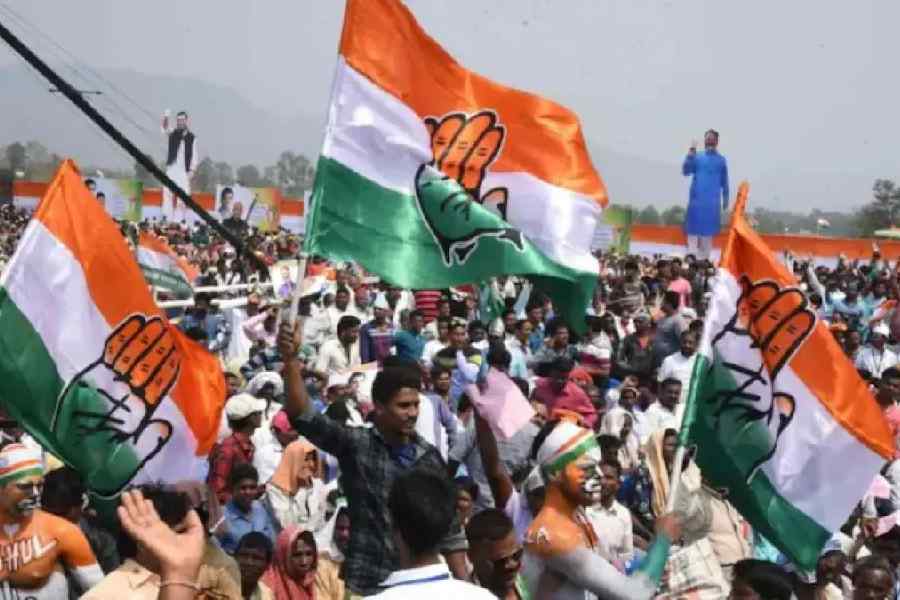
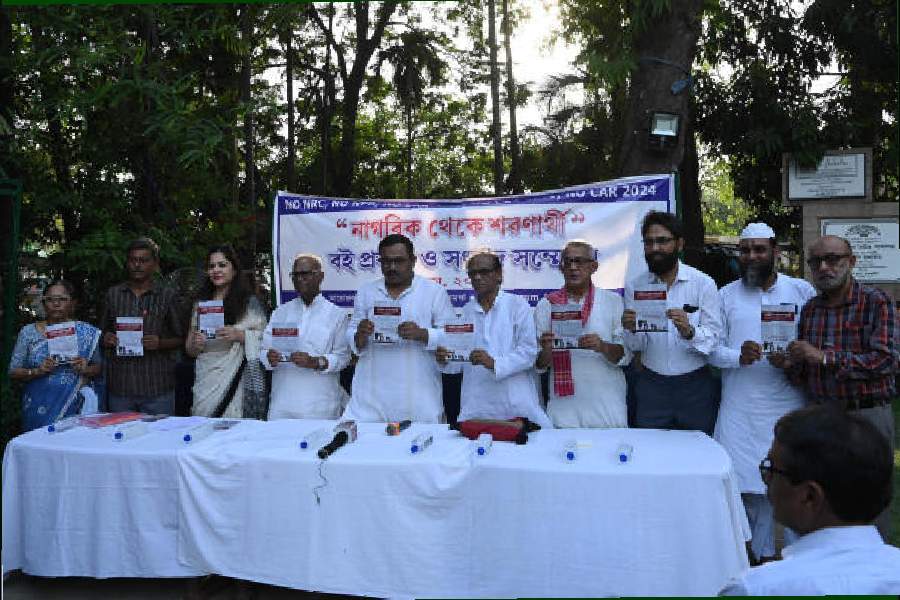
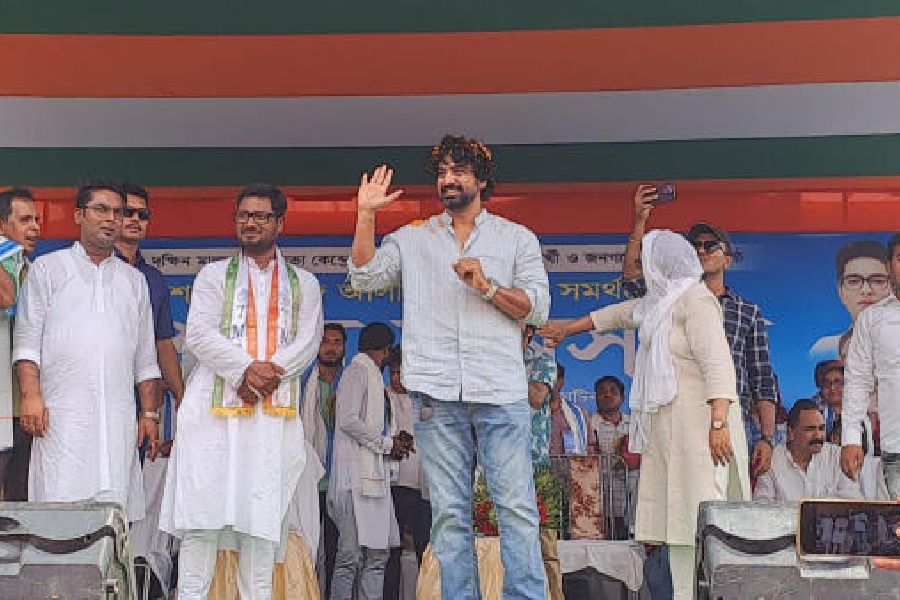
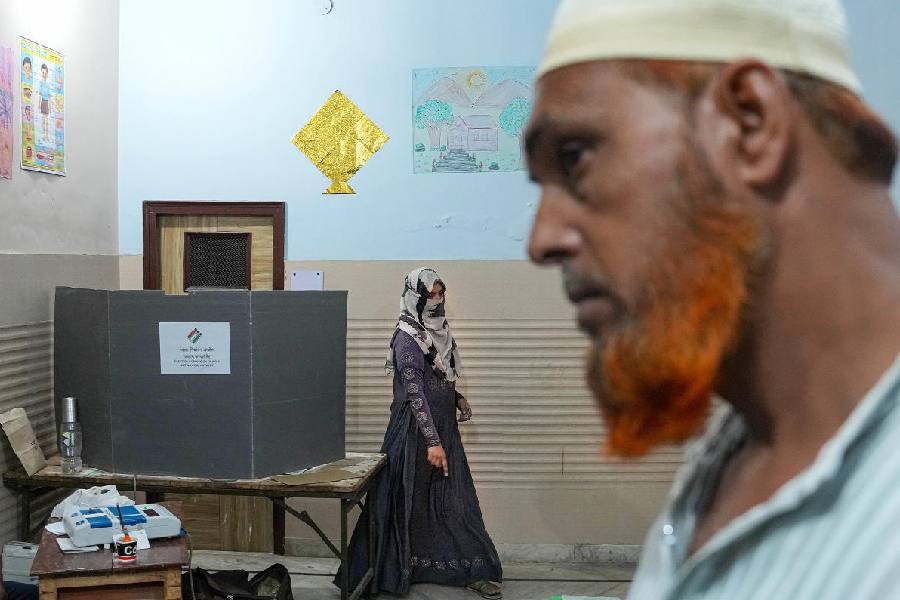
Yet another influential political organization which is not in itself a political party, the Tamil Muslim Munnetra Kazhagam (TMMK — Tamil Muslim progressive association), has just switched allegiance from its 1999 partner, the AIADMK, to the DMK-led alliance in 2004. This was announced at the largest-ever meeting of Muslim minorities in Tamil Nadu at Thanjavur, a meeting also unique for being the first in which Muslim women constituted more than half the audience of two lakh.
In 2004, it is the DMK that has put together the rainbow coalition comprising the Congress, the PMK, the two Communist parties and the Indian Union Muslim League. Besides, Vaiko’s Marumalarchi Dravida Munnetra Kazhagam (MDMK — Renaissance DMK), which fought the 2001 state assembly elections separately, is also part of the DMK-led coalition. Moreover, the DK has extended its unstinted support. In 1999, the TMC fielded a third front in association with two small but growing Dalit parties. None of the TMC-led third front candidates won any seats but they did eat into the DMK vote. Now, the TMC has merged with the Congress and it is a united Congress that is in alliance with the DMK.
For the reader bewildered by this array of unfamiliar initials, let me just say that all the partners of the AIADMK in 2001 are now with the DMK. And that all the partners of the DMK in 2001 are still with the DMK — bar the minuscule Bharatiya Janata Party, whose voterbase in the state is about as large as the Brahmin community, some 2-3 per cent. There is a third front of the two Dalit parties but their influence is limited and largely confined to the two constituencies their leaders are fighting. Thus, the alliance that won Jayalalithaa her massive 2001 victory is now, in 2004, the alliance behind the DMK.
Jayalalithaa does not appear to understand either the arithmetic or politics of this sea-change. The reasons are two-fold: one, specific; the other, more general. The specific reason is that virtually this same alliance pitted itself against the AIADMK in a byelection in Sattankulam in February 2003 — and Jayalalithaa won hands down. The byelection was caused by the sudden death of a member elected on a TMC ticket who had refused to join the TMC on its August 2002 merger with the Congress. His wife was put up as the AIADMK candidate and the sympathy vote went in her favour. Moreover, Jayalalithaa deployed virtually her whole cabinet in the assembly segment. The rival Congress candidate failed to rise to the occasion and the recently-merged Congress failed to put its act together. Jayalalithaa hopes to repeat state-wide in 2004, her bye-election win of 2003.
She would have been more realistic but for the more general second reason — which is her arrogance. Even in 1991, she believed — and said so publicly, whatever offence it might give her Congress alliance partners of the day — that her alliance’s clean sweep of the Lok Sabha seats had nothing to do with Rajiv Gandhi’s assassination in Tamil Nadu in the middle of the campaign before Tamil Nadu went to the polls. Unsurprisingly, she, therefore, believes that every Lok Sabha seat won by her alliance in 1999 was entirely her doing, and that, even more so, her massive win in the state assembly elections was a Jaya vote, not an alliance victory. It is the contempt in which she holds her allies, and her conviction that they owe their all to her but that she owes them nothing, that has brought the AIADMK to this pretty pass that every 2001 partner-party has switched to the other principal and it is only yesterday’s enemy, the BJP (whose government she brought down in 1999, thus precipitating a mid-term poll), which has now switched alliances to be in lonely tandem with her. Yet, so arrogant is her attitude to her lately-found knights errant that the Tamil Nadu unit of the BJP has simply distanced itself from the terms of the alliance, saying that it is a BJP central command decision, not theirs. Jayalalithaa retaliated by not being present when Lal Krishna Advani set out from Kanyakumari on his latest yatra.
It was an unpuncturable ego, a messianic belief in his ordained destiny, which persuaded Adolf Hitler to invade the Soviet Union in 1941 and thus sign the death warrant of his Nazi regime. A similar unpuncturable ego animates Jayalalithaa and has led her to this imminent demise of her eminence. It is either delicious irony or the chief election commissioner has a wicked sense of humour that the Lok Sabha election in Tamil Nadu has been scheduled for May 10. That is the third anniversary, to the precise day, of the state having presented Jayalalithaa with her giant 2001 victory. On the same day three years on, she will go down to an equally massive defeat.
There is, however, one small hope for her. After her relatively poor showing in the 1999 Lok Sabha polls, in which her alliance won a minority of the seats, Jayalalithaa added a second “a” to the end of her name in the belief that this would bring her good luck. It did. Perhaps the answer to her present problem lies in adding a third “a”!
|