|
Roadshow rowdies
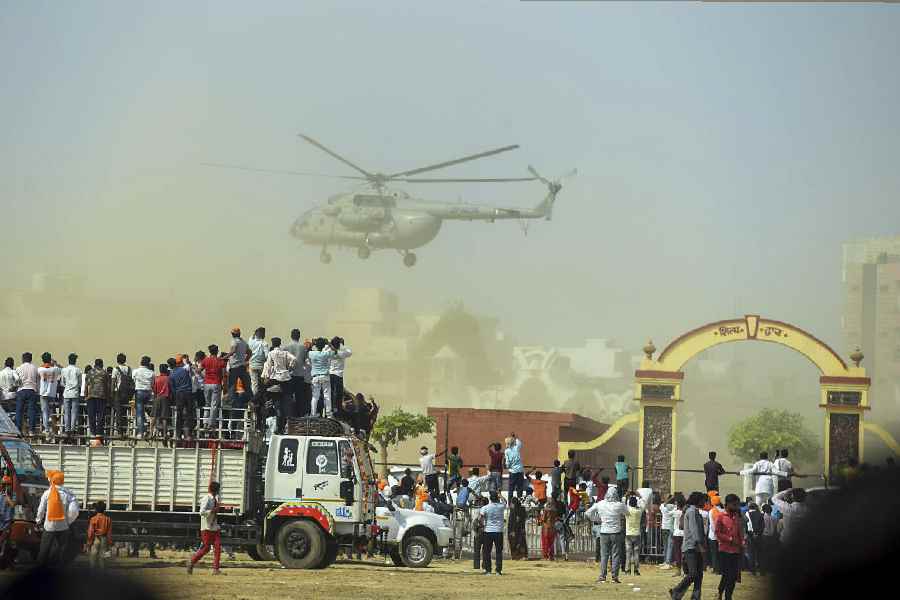
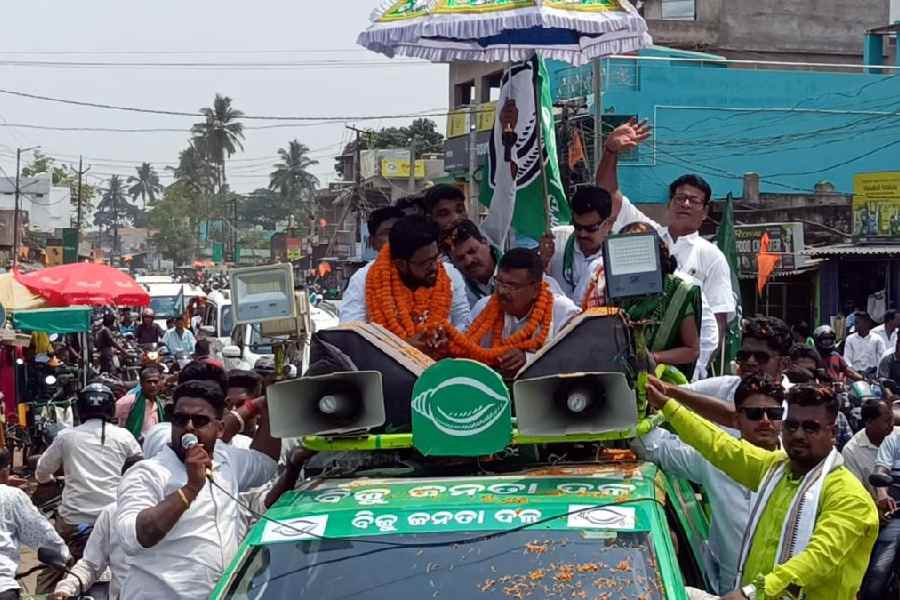
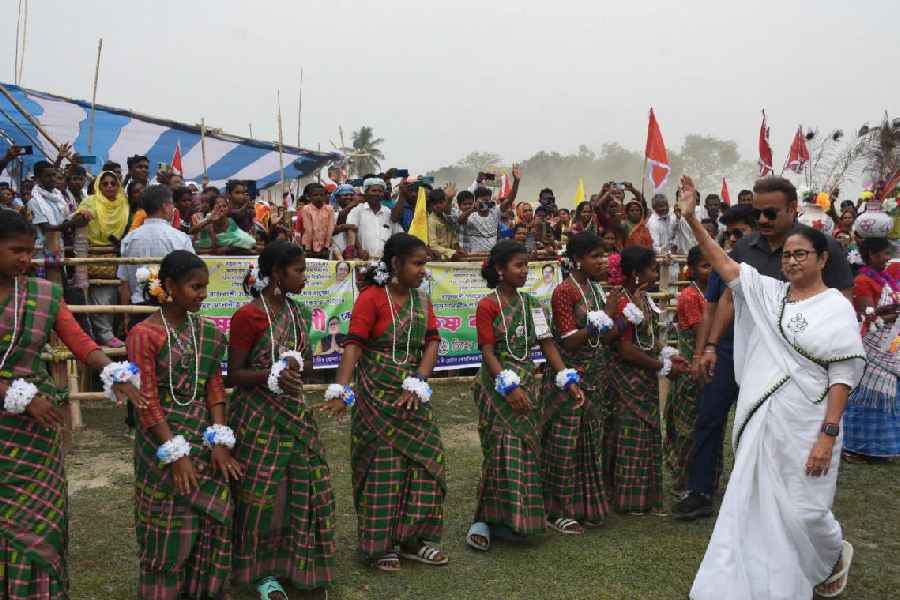
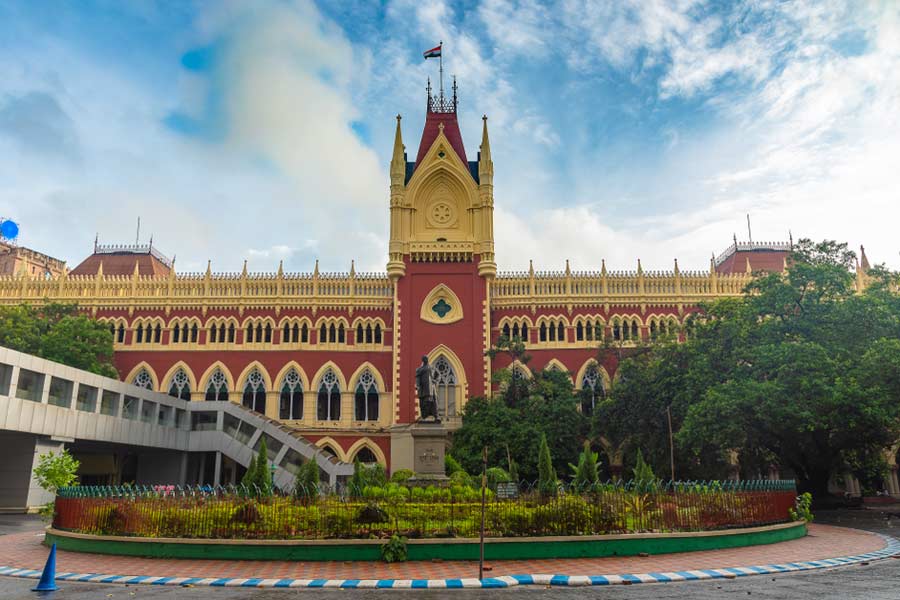
Sir — To Bengalis, the word tandava has a non-religious connotation, as a milder, home-grown equivalent of bacchanalia. It is likely, therefore, that a Bengali’s reading of the “SC bar on public tandava” (March 11) will be slightly different from that of a person from another state. The political scenario in West Bengal is also behind this. For, the biggest perpetrators of “public tandava” in the state are the political parties, some of whom have openly defied the Calcutta high court’s ban on political processions on working days. It does not take much foresight to see that despite Justice A.R. Lakshmanan’s orders against “carrying weapons, using loud speakers, crackers and coloured powder, obstructing traffic, and raising objectionable, illegal or provocative slogans”, these will continue to be free and frequent indulgences of the political parties, more so with the elections around the corner. No matter how unruly members of a religious sect are, they still cannot hold a candle to the tandava performed by their political brethren.
Yours faithfully,
Binapani Dutta, Howrah
Opinion matters
Sir — The worst suspicions have come true. There is an alarming antipathy towards anything political among Indian voters (“Resounding aye for None”, March 5). The fact that as many as 77 per cent of the respondents in the TNS Mode-The Telegraph survey approved of the “None of the above” option bears testimony to this.
Pratap Bhanu Mehta does have a point in saying that elections are not just about expressing one’s dissatisfaction with the status quo but also about electing an alternative government. But can he really blame the Indian voter for being reluctant to exercise his franchise, given that he is left to choose mostly from thieves, criminals and corrupt individuals?
It is really sad that the average Indian voter, especially the youth, are growing increasingly cynical and are losing the confidence they had previously vested in specific parties and their candidates. Obviously, such political alienation does not augur well for the world’s largest democracy. It is about time that our politicians sit up and take serious note of the voters’ malaise and undertake some serious damage control exercise. Besides restoring faith in the voters, this will also help prevent the elections from becoming a mere farce in the eyes of the people.
Yours faithfully,
Priyanka Aich, Calcutta
Sir — The purpose of an election is to elect representatives who are considered by the electorate to best look after their interests. The formation of a government is the secondary, though mandatory, outcome of the process. Indians are disenchanted with the legislature and the executive, and to a certain extent, even with the judiciary. The increasingly popular way of expressing frustration with and mistrust of the system is to abstain from election. To equate the overwhelming public support to the introduction of the “None of the above” option with middle-class “unease”, as Nivedita Menon does, is to be soft towards our inept and corrupt political structure and downplay the agency of an individual citizen. An opportunity to register our uneasiness through the “None of the above” option could change the way our political leaders perform.
Yours faithfully,
Swagato Sarkar, Oxford
Sir — The novel proposal of the chief election commissioner, T.S. Krishnamurthy, of introducing the “None of the above” option in the electronic voting machines ought to be welcomed by every citizen with a conscience (“EC opens option to elect none”, Feb 29). The CEC has already set an example by coming down heavily upon political advertisements. With the latest proposal, political parties have been given clear hints that there can be no forced choice this time.
That the proposal of the Election Commission has not gone down well with the political parties is understandable. The people’s faith in politicians and the political process is fast eroding, despite attempts by bureaucrats to convince us that India is “shining”. If Krishnamurthy’s courage and sincerity is emulated by others, there is a chance that India may actually shine.
Yours faithfully,
Ullas Pradhan, Cuttack
Sir — Since the Election Commission is not inflexible to changes, it should address a few other areas too. For instance, names on the voters’ lists of persons who have been long dead. Also, change in a voter’s address should not be incorporated at the very last minute before the elections.
Yours faithfully,
Shiv Shanker Almal, Calcutta
Sir — The one good thing about the presence of the “None of the above” option in the coming elections is that it will ensure maximum participation from the masses in the electoral process. Low turnout, particularly in the urban areas, at the polling booths has been one of the biggest problems of the Indian democracy in recent times. The phenomenon has been attributed to the absence of honest and well-meaning candidates to choose from. It can be expected that once the “None of the above” option in available to the voters, they will come out in larger numbers, if only to express their inability to elect any of the contestants.
Yours faithfully,
Govind Das Dujari, Calcutta
Sir — What if the majority of voters exercise the “None of the above” option in these elections? A government will still have to be formed, but will it not be a defeat for democracy?
Yours faithfully,
Surya Kanta Hazra, Calcutta
|