|
|
A pedestrian walks past a movie poster in Mumbai. (Reuters)
|
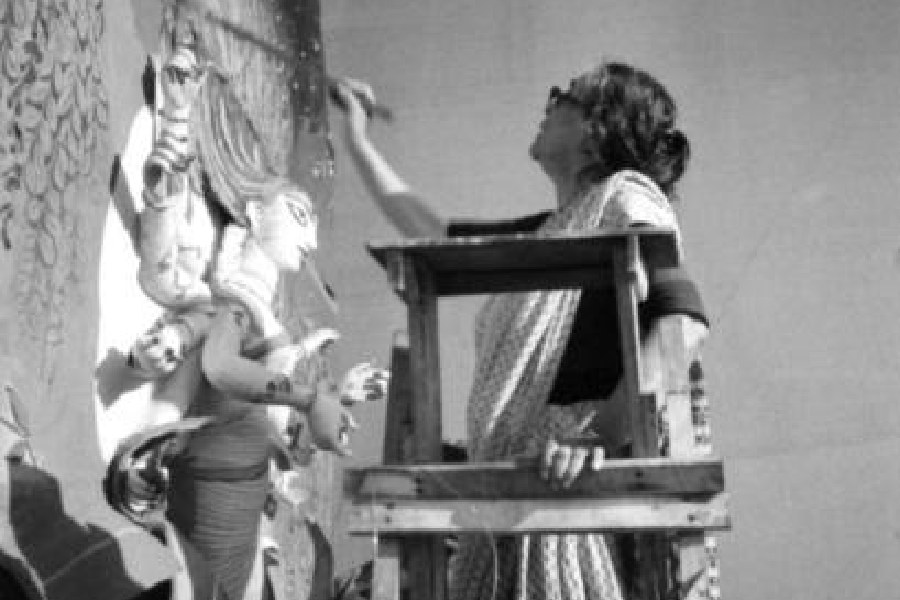
Mumbai, Feb. 29 (Reuters): Off a corner of a crowded lane in the city, a painter bends over a huge canvas and carefully outlines the lips of a larger-than-life image of a hardline Hindu leader.
Stacked against a wall in a tiny shed packed with jars of paint, the poster vies for attention with a gigantic hoarding of a Bollywood actress draped in tinsel.
“We hardly make any cinema banners any more because filmmakers now prefer computerised posters,” says Balkrishna, the owner of a little studio in India’s “city of dreams”. “Nobody wants hand-painted hoardings any more.”
“Also, publicity has changed in the past 10 years because of advertising on television which is seen all over,” he said, sitting in the dusty studio, surrounded by piles of canvases and paint cans.
The advent of high technology and economic liberalisation have taken a toll on billboard artists, who are struggling to compete with slick digital posters.
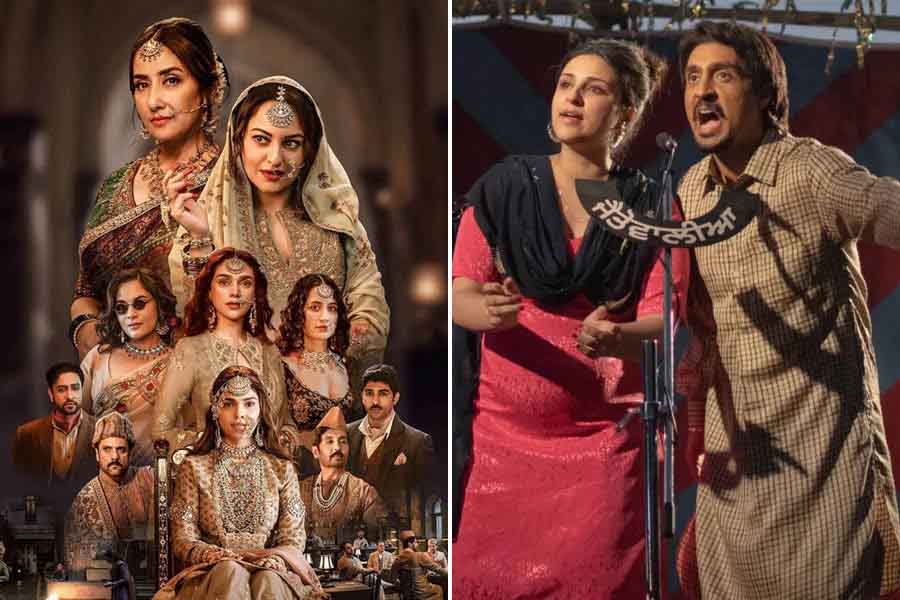
Bollywood’s extravagant hand-painted movie posters may be high fashion in the retro-crazy West, but at home the art is rapidly fading into oblivion.
Some years ago, the skylines of cities like Delhi and Mumbai were dotted with giant billboards with brightly coloured images of stars from Bollywood blockbusters every time a new film was released.
Dozens of billboard artists cranked out thousands of posters each year, with jumbo-sized heroes wrapped around pouting actresses.
But as business from Bollywood dries up, the billboard artists hope an approaching general election will boost demand for political posters.
One of the country’s best known painters, M.F. Husain, a silver-haired iconoclast whose works now sell for a fortune on the international market, began his career as a billboard artist.
Today, there are barely a handful of poster painters left, and most of them struggle to find business.
“Hand-painted posters had their time and place in an era which depended primarily on manual techniques,” said Neville Tuli, chairman of Osian’s, an auction house that specialises in film art and memorabilia.
“Today, film posters are digital extravaganzas put together with studied sophistication.”
Posters have a special place in the country’s nearly century-old movie industry, which makes around 1,000 films a year.
Apart from their impact on the box office, some films are permanently etched in the minds of fans because of their posters, copies of which now sell on the Internet for as much as $100 each.
Billboard painters say they were painting posters for 25 years for Sholay — one of the biggest blockbusters that broke many box-office records in the movie-mad country.
“But today, apart from India, everybody else loves Indian movie paintings. They say, ‘Don’t make them according to our taste, use your own style, make it red and yellow’,” said Balkrishna, one of the few surviving Bollywood billboard painters.
“We made a huge poster of Devdas which was put up at an exhibition on Bollywood cinema in London’s Victoria & Albert Museum.”
Today, prints of old films such as Mother India, a 1950s classic that tells of a family’s struggle to survive the rapacity of a money lender, have a huge market, particularly in the West.
Demand for posters has also spurted after composer Andrew Lloyd Webber introduced London’s West End to Bollywood drama with the musical Bombay Dreams and popular Hindi films such as the Oscar-nominated Lagaan made a splash in the rest of the world.
|