|
 |
 |
| Bridging boundaries: Scenes from the Kolkata
Karnival |
December saw Calcutta’s very own international-style
street carnival, with 1,000-plus people taking to the streets from Esplanade to
Victoria Memorial. Estimates put the number of spectators on the streets close
to 100,000. Performers and artistes were British, French, Brazilian, American,
Trinidadian and, of course, Indian.
The Kolkata Karnival has made it — it will feature
in the next edition of Soca News, the world’s only international carnival magazine.
Carnival involves many varied experiences for those
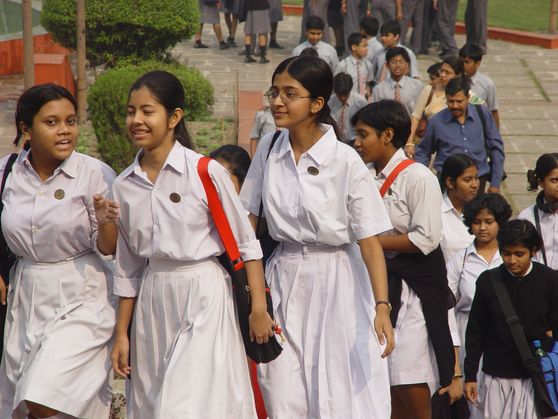
involved. It can be an inspiration to a class of 11-year-olds given the chance
to learn about their own history in a fresh and dramatic way. About how the people
of India have moved all around the world and with this have influenced and changed
those places in which they settled.
The story of Kolkata Karnival told just this, how
the Indian people who arrived in Trinidad to work on the sugar plantations introduced
new skills, art and music to the development of carnival.
The children themselves can then bring this to life
as they learn new crafts and artistic skills while working on their costumes.
The carnival can enliven their maths lessons as they are challenged to work out
how much cloth a costume will need and how to cut the cloth to use it most efficiently.
New types of music and dance open their minds to the world at large.
Along the way, the children make new international
friendships as they discuss and exchange ideas with children working on similar
projects in London, Trinidad and elsewhere. And finally after months of work,
laughter and some frustration, the class joins the international carnival community.
Their carnival performance winds its way along the
streets, waving to the mayor, waving to friends and family and for just one day
they bring a different sort of noise, one packed with passion to the people of
Calcutta.
The carnival is alive with the spirit of international
collaboration. The shola artist who, for years, had plied his craft in
a small West Bengal village, respected amongst his peers and sought out as a master
of his craft but who now takes calls on his mobile phone from New York.
This is Ashis Bagchi, who was able to spend six weeks
working with carnival artistes in London as they prepared for the Thames Festival
and other carnivals around the UK. Once back in Calcutta, he was joined at the
carnival mass camp by Carl Gabriel, a world-renowned carnival artiste specialising
in the production of dramatic centrepieces with a foundation of wire framing.
Carl’s art is one that has been influenced by African and Indian immigrants arriving
in Trinidad over hundreds of years.
A carnival is much more than the celebration that
we remember taking place on the streets. For the schoolchildren involved, it can
be an educational experience. For the artistes involved, the carnival can bridge
international boundaries as they collaborate and work together with others as
talented and creative as themselves. For corporates and sponsors, the carnival
is a forum for them to demonstrate their community support, to work towards educational
and development goals and finally for them to showcase their brands. There are
few mass participation artistic ventures that can connect with so many people,
at so many levels and in so many ways as a carnival.
So, Calcutta now has its very own carnival and can
be listed among the great street celebrations of the world — Trinidad, Rio and
Notting Hill. But what next, how does it move forward? Are the people and authorities
of Calcutta ready to take carnival to their hearts?
I’d like to think they are. The sponsors who participated
last year have expressed their satisfaction with the results. The schools that
took part are anxiously awaiting the chance to include 2004’s carnival on their
curriculum. Artists stand ready to work and develop ideas. Those who travelled
from overseas for Kolkata Karnival left full of praise and enthusiasm to do it
again. We now need to set up a structure and raise funds to take the carnival
forward.
When living in Calcutta, we often spend time discussing
and worrying that the perception of the city does not match the reality. The city
has a hard-to-define personality and atmosphere that, though sometimes a challenge,
makes living here a very positive experience.
Calcutta is on the regeneration roadway with new business
and infrastructure investments being announced weekly. The carnival has worked
in many cities around the world as part of a regeneration strategy. The international
exposure a good carnival brings cannot be bought through advertising or marketing.
The worldwide carnival circuit attracts thousands of visitors and performers,
all of whom add to local economic growth.
With time, passion and commitment I think the Kolkata
Karnival can be hugely successful. The carnival’s brand of music and dance brings
a wonderful new kind of disorder to the streets, one that can be built on a foundation
of the arts and education.
I am hopeful that this is something that the people
of Calcutta want to see, want to develop and want to enjoy — their own unique
carnival that will become a must-see event around the world. Let’s do it!
(Paul Walsh is the deputy head of mission of the
British Deputy High Commission in Calcutta)
|