|
|
A group of Iraqis look at the damaged house of a local leader in the village of Aamriya, near Falluja. (Reuters)
|
Baghdad, Feb. 16 (Reuters): It does not take much to ignite anti-American anger in Iraq — just a car accident with the US military is enough to deepen suspicions over the occupation.
When a five-tonne US military truck called Cowboy Up crushed a civilian car on a crowded highway and killed two passengers today, furious Iraqis immediately assumed the worst.
“Those Americans meant to kill those poor people. They do these kinds of things,” said engineer Ahmed Hussein, standing in a large crowd of Iraqis. The commanding US officer on the scene, who asked not to be identified, said the mangled white car that was sliced in half swerved into the truck’s lane as a convoy passed.
Iraqi witnesses who were driving on the other side of the highway said the American vehicle crashed into the car at high speed and made no attempt to stop or slow down. Whatever the case, the anti-American fury was palpable in the eyes of Iraqis who moved closer to the car and then stopped when an American soldier clutching his automatic weapon told them to “get back”.
The tension among US soldiers is palpable. Some 375 US soldiers have been killed in action in Iraq since the March invasion. A guerrilla attack is always a possibility. US army investigators arrived on the scene and took pictures of the corpses, which soldiers had covered with a rug and a cloth. Iraqis tried to see the faces of the dead because they had driven onto the highway from the neighbourhood. But all they could see was the hand of one of the dead with a wedding ring on a finger. An investigation by the military seemed like stalling to frustrated Iraqis, who could not understand why the Americans had ignored their requests for the identity cards of the deceased so their relatives could be notified. It is the kind of misunderstanding that has fuelled deep mistrust of US troops since they toppled Iraqi dictator Saddam Hussein in April and promised to deliver freedom and security. A language barrier between occupiers and occupied only deepens misunderstanding and suspicion.
“Iraqi life is cheap to the Americans in this occupation. Why didn’t they try to stop? They kill Iraqis and then when people shoot at them they are branded terrorists,” said Jalal Shifee, an engineer. He paused between sentences as an American soldier holding a pistol who called the crowd “stupid” threatened to arrest people who stepped off a sidewalk to get closer to the scene. “I stand here looking at the corpses of fellow Iraqis and Muslims and I wonder why these occupiers could not just let the car pass? Why? They are the occupiers so why should we stop for US convoys,” said Jalal Shifee.
The US-backed police, which arrived on the scene later, is viewed with disdain by many Iraqis. Some see them as tainted by a background serving Saddam, some see them as “collaborators” working for unloved occupiers.
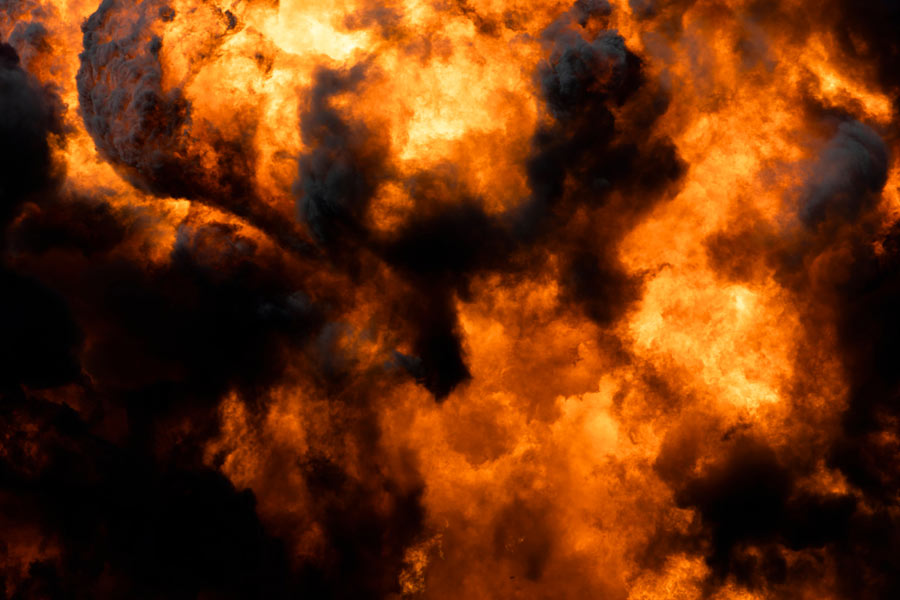
Elsewhere in Iraq today, two US soldiers were killed in roadside bomb blasts and at least one child died in a grenade explosion near a school, the US military said. In Baghdad, Iraq’s US-installed governing council began a debate on the thorny issue of how to manage the handover of power from US occupation forces to Iraqis.
|