|
|
|
All smiles
|
That costly mistake of 1999 has finally paid off. Today Sonia Gandhi seems to realize that proper alliance formation is the only way forward for her party. The dynastic limitation may still come in the way of her completely giving up her claim to prime ministership — if she gives up her claim to leadership, then the dynasty is over.
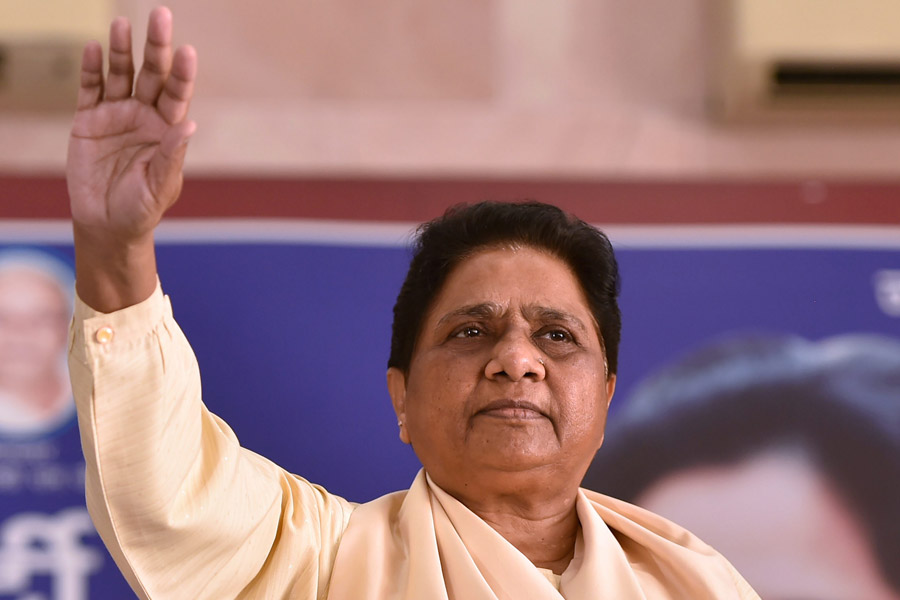
However, today she is willing to sacrifice pride at the altar of political expediency and walk on foot to her neighbour’s, Ram Vilas Paswan’s, house to solicit his party’s support. She thinks nothing of spending two hours over dinner with Mayavati to solicit an alliance with the Bahujan Samaj Party. And she refers to the leader of the Nationalist Congress Party as “Sharad Pawarji” and seeks an appointment with him to seal a partnership. The Sonia Gandhi who had refused to come on the telephone for Mulayam Singh’s ambassador to Delhi’s power circuit, Amar Singh, now calls him up to wish him on his birthday.
The imperiousness is gone. It has been replaced with a new recognition of the political reality of the dwindling fortunes of the Congress. Sonia Gandhi today realizes that Ram Vilas Paswan represents that marginal Dalit vote in Bihar which can provide the victory margin to the secular parties; that an electoral arrangement with Mayavati can transform the fortunes of the Congress in north India; that Sharad Pawar is a political force to reckon with in Maharashtra; and that Amar Singh is a factor in dealing with Mulayam Singh Yadav.
From the way the Congress is wooing all the available parties, it seems that the party is aware of the imperative to put arrangements in place to fight the National Democratic Alliance. This is not something that the Congress did in 1999.
However, compared to the Bharatiya Janata Party, the Congress faces an uphill task in alliance formation. There are two crucial differences between the BJP and the Congress which have a crucial bearing on their attempts at forging alliances.
The BJP is essentially a regional party. It has virtually no presence in south India and in the north-eastern states. It may have got a few parliamentary seats because of its local alliances as in Andhra Pradesh for example, or it may induce wholesale defections, as in Arunachal Pradesh, to claim even a government of its own. But basically, it is a north Indian party. The Congress, on the other hand, is an all-India party although on a decline. Its constituents, over time, have gone out of the party to set up separate caste- and community-based political entities.
These characteristics of the two parties have direct consequences for their ability to form alliances. For the BJP, alliances are complementary. It can form them opportunistically to create tactical consensus.
The Congress, by contrast, is a hegemonistic party. Its fortunes may be declining, yet it finds it difficult to form political alliances because they are invariably with political parties that are in competition with it for the same vote bank. Thus the Congress and Mayavati’s BSP compete with each other for the Dalit or scheduled caste vote in north India. The Congress competes with the Samajwadi Party for the Muslim vote in Uttar Pradesh. And in Maharashtra, the Congress and the NCP vie for the same traditional vote.
Alliance formation for the Congress, therefore, is a far more difficult task because it forces the party to engage its competitors. It is not an exercise, as it is for the BJP, in finding complementary partners.
This factor gives the BJP flexibility in moulding and remoulding the NDA to suit tactical political requirements. Nine NDA partners, for example, have left the alliance in the past five years. They are: Ram Vilas Paswan’s Lok Janshakti Party, the National Conference, Ajit Singh’s Rashtriya Lok Dal, the JMM, the BSP, which became a supporting party of the alliance after Mayavati became the chief minister of Uttar Pradesh, the DMK, the Marumalarchi Dravida Munnetra Kazhagam, the Pattali Makkal Katchi and Om Prakash Chautala’s Indian National Lok Dal.
That the BJP’s alliances are tactical and flexible is evident from the way it jettisoned Ram Vilas Paswan’s Lok Janshakti Party one day and went with the Dalit politics of Mayavati the next. With Mayavati also the parting of ways was quick.
The latest ally to leave is the Indian National Lok Dal of Om Prakash Chautala. There is a high anti-incumbency sentiment against Chautala’s government in Haryana, so the BJP has decided to try to forge links with Bansi Lal’s Haryana Vikas Party or go it alone.
The “efficiency” of the BJP in roping in partners is nowhere more evident than in the case of an old Ramakrishna Hegde acolyte, Ramesh Jigjinagi, a Dalit leader in Karnataka. Looking around for political shelter after Hegde’s demise, Jigjinagi received two phone calls from the Congress, but a visit from the state BJP president, Ananth Kumar.
He not only fixed appointments for him with L.K. Advani and Atal Bihari Vajpayee for the very next day but even had air-tickets waiting for Jigjinagi for the first flight to Delhi.
The flight was delayed due to fog. However, Advani rescheduled his day to accommodate Jigjinagi. Meanwhile, the prime minister had left for a public meeting in Mumbai. Lo and behold, Jigjinagi was flown to Mumbai and finally met Vajpayee aboard his special flight. Within 24-hours, the BJP president, M. Venkaiah Naidu, flew to Bangalore to welcome Jigjinagi into the party. Overwhelmed by the speed of events, the poor man wanted to consult his constituents and flew to Belgaum. The BJP had arranged for him to be welcomed by a crowd of 1,500 people, all holding red roses. Before he knew what had hit him, Ramesh Jigjinagi was in the BJP!
|