|
As long as a man can kill his
daughters because of poverty and deprivation, India can
hardly be described as shining
While the stock market booms,
while the foreign exchange reserves soar and while India
flexes its economic muscle across the globe, an unemployed
man threw five of his daughters from a sixty-foot high bridge.
The man was unemployed because the factory in which he worked
had been burnt down in the post-Godhra pogrom in Gujarat.
He eked out a living as an autorickshaw driver but found
it impossible to buy medicines for his ailing daughter and
went cumulatively into debt. He took what can only be described
as an insane step. But the reasons that drove him to take
the insane step are more significant than the act itself.
An individual’s despair and madness, and the reasons thereof
are revealing of the nation’s priorities and attitudes.
It is no point making an argument that this is a stray individual
act which need not be given too much importance. The fact
of the matter is that poverty is an essential component
of India’s collective entity and consciousness. India will
not be able to call itself a modern and progressive nation
till acts like the one being described are not eradicated.
Economic indicators are not an index of civilization. Thus
India will not be shining as long as poverty and man-made
deprivation continues to stalk lives in India.
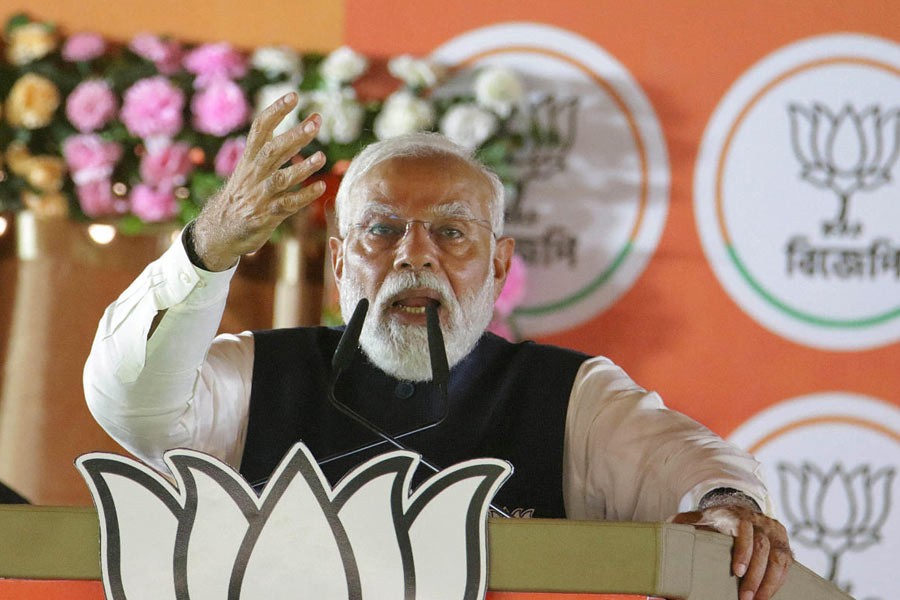
The prime minister, Mr Atal Bihari Vajpayee, has made “proud to be an Indian” into a heart-winning slogan. To make this slogan into a fact of life, Mr Vajpayee has to add a new dimension to his policies and direct the latter to the removal of poverty. He has already announced that if the National Democratic Alliance is voted back to power, he will concentrate on poverty alleviation. While this is a welcome change in direction, Mr Vajpayee’s announcement had a touch of electioneering to it since he saw poverty as a product of Congress rule. Poverty and deprivation are too embedded in Indian society and too serious as problems to be made the stuff of electioneering. Successive governments and all political parties have used the platform of poverty removal to garner votes. If Mr Vajpayee is sincere about what he has said, he should offer more concrete fare and suggest how he proposes to get to the root of this problem. There is another aspect of the issue which Mr Vajpayee should consider. The man who threw his daughters to their death had been a victim of deprivation because of anti-Muslim violence in Gujarat. This particular instance of deprivation — like many others in India — is man-made, a direct outcome of communal sentiments. This should not be difficult to remove provided Mr Vajpayee takes steps to blunt the Hindutva edge of his party.
A different aspect of India’s social reality is hidden in the incident being discussed here. The man who killed his daughters has a son whom he did not attempt to kill. There was thus a method in his madness. He obviously felt that his daughters were more of a burden to him than a male child. The incident underlined the inherent bias against women in Indian society cutting across social groups.
One incident held the darker sides of Indian society as if in a microcosm: man-made deprivation, gender bias and so on. India does not shine on these problems.
|