|
The new year, 2004, will witness
the fourth consecutive general elections in which Atal Bihari
Vajpayee will lead the Bharatiya Janata Party and its allies
into battle. No former Indian prime minister, save for Indira,
the original Mrs Gandhi, has done so. Of course, there were
three Lok Sabha polls in quick succession between 1996 and
1999. But this will be a poll with a difference, in more
ways than one.
The National Democratic Alliance
will have completed, or almost completed, a full term in
office. The unlikely gaggle of two dozen allies, sans
a few that have jumped ship, has held together. The
all-important foreign policy issue of the last polls was
Kargil, a short war that worked in the ruling coalition’s
favour. This time, it appears the peace pipe will replace
the Kalashnikov and the diplomatic acumen of the prime minister
will be the leitmotif of the alliance.
“First in war and first in peace”
can go down well with the electorate. Foreign policy issues
have deep domestic implications. The NDA will stress the
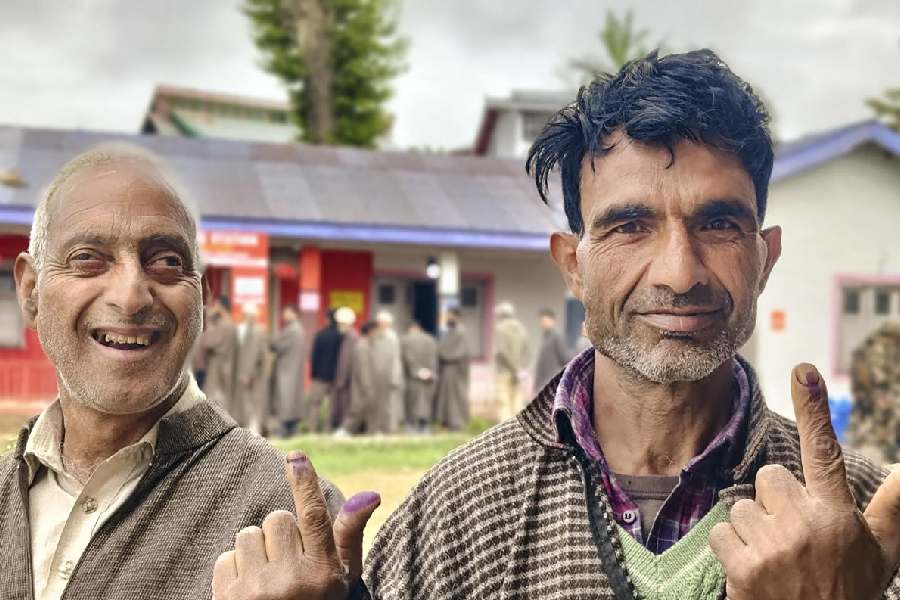
holding of the first free, fair and open elections in Jammu
and Kashmir since 1977. The ceasefire on the border and
the start of a dialogue with the Hurriyat will showcase
the claim that the BJP in power is pragmatic and willing
to go further than previous regimes were, in the search
for peace.
Note also that this is the first
government to parley on Indian soil with the leading secessionist
rebels of them all, Thuingaleng Muivah and Isak Swu of the
National Socialist Council of Nagalim. The gains via
cooperation with Bhutan, vis-á-vis the United
Liberation Front of Asom and other secessionist groups in
the North-east, also indicate a deep engagement with the
region.
Yet it is domestic issues which
will dominate. Here, the contrast with the earlier poll
campaigns of the BJP is striking. Even in Uttar Pradesh
in early 2002, not to mention Gujarat, Hindutva was
very much in the forefront. True, these were states where
allies hardly mattered and the party could pull in the combined
forces of the sadhus, sants and mahants
who are so critical to its mobilization strategies. But
in late 2003, Hindutva, though never absent, was in the
background of the poll campaigns in the four Hindi-belt
states.
This will set the keynote for
2004. All parties, even ideologically aligned formations
like the BJP, do change tack with the wind. The appeal to
the Ram temple has waned with the times in north India as
caste-based identities have become far more deep-rooted,
especially so in the valley of the Ganges.
Over time, the realization that
allies will not play ball on the issue has also made the
chief proponent of the issue, L.K. Advani, speak the language
of compromise and negotiation, arbitration and settlement,
that he once associated with his allegedly “pseudo-secular”
opponents.
Attendant on this is the core
shift in the polity that is working in the party’s favour.
Memories of the Gandhi family in office and of its undoubted
achievements hold little appeal for a whole new generation
of Indians. Indira Gandhi was assassinated almost two decades
ago; Rajiv Gandhi bowed out of office in late 1989. Even
P.V. Narasimha Rao’s premiership came to an end eight long
years ago.
With time, there is a new polity
in place, in which the Congress seems to be the party of
yesteryear, unable to reinvent itself. It is not able to
speak out for the under classes strongly enough to woo them
away from smaller, rival formations. Nor is the vocal and
growing middle class enamoured of what the party old guard
stands for. This crisis of direction, indeed of identity,
of the Congress has been central to Vajpayee’s own strategy.
Without in any way giving way
on its core ideology, the BJP has stolen the clothes of
its rivals. Where Indira Gandhi had Pokhran 1974, Vajpayee
has his May 1998. Kargil supplants the Bangladesh war in
national memory, a process aided by 24-hour television channels.
Nor have the non-Congress parties
been spared. The logic of federalism underlined the BJP’s
opposition to the Congress demand to dismiss the Karunanidhi
ministry in Tamil Nadu in 1997. Most striking of all have
been the adoption of reservation and the expansion of the
list of other backward classes in 1999, which even brought
the Jats into the ambit of positive discrimination. The
same Arun Shourie who breathed fire against V.P. Singh in
1990 now is party to wider reservations.
On a positive note, and this is
for the polity as a whole, it will not be the rhetoric of
a Mandal or a mandir that will dominate the headlines.
Rather, the rulers will point to the achievements in governance,
especially the up-turn in the economy.
Yet it would be a repeat of the
historic weakness of the polity over 50 years were there
to be no serious, determined critique of Vajpayee on what
looks destined to be a home run for the NDA. The positional
and logistical factors all favour the NDA. Its alliances
have held, by and large, and there are replacements available
where some like the Dravida Munnetra Kazhagam are on the
way out.
But the polity requires a check
for at least three reasons. When it suits the party, and
even Vajpayee can do little at such times, it can and will
play the Hindutva card. It did so in Gujarat and not so
long ago during the rath yatra of 1990. Such actions
will not only multiply insecurity for all, but they will
also undermine the rule of law, a development that will
have long-term negative consequences. The need for a strong
and principled opposition to such actions is more acute
than ever before. In the absence of such a rearguard action
from within the political class, one has to make do with
the brave and determined efforts of the judiciary, the press
and citizens’ groups.
Second, the BJP, despite its federalist
posturing, is very much a centralizing force. The appeal
of Article 356, for instance, will grow once the party gets
ahead of the Congress in the Rajya Sabha which will happen
in August of the new year. How far the regional groups within
the NDA will be able to resist such trends will be worth
watching.
Third and finally, there are a
variety of ways in which the retreat of the government from
regulatory functions has to be supplemented and accompanied
by an expansion in welfare and livelihood functions. It
is extraordinary that save for the president, A.P.J. Abdul
Kalam, no figure of note, at least not from the Congress,
has focussed on the decline in job generation and the increase
in joblessness. Only a strong opposition can keep the government
on its toes and push for strong public action.
The year, 2004, will probably
see the NDA move from strength to dominance. How its complexion
will change will play a larger role in determining the future
course of action of the BJP. The latter in turn will be
on test to see whether its moderation is a posture or a
genuine change of heart.
|