|
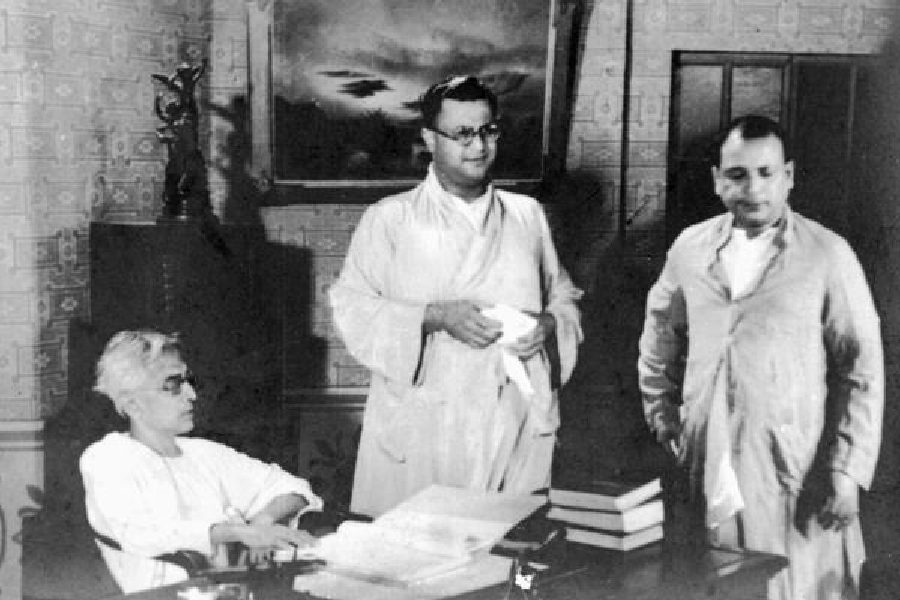
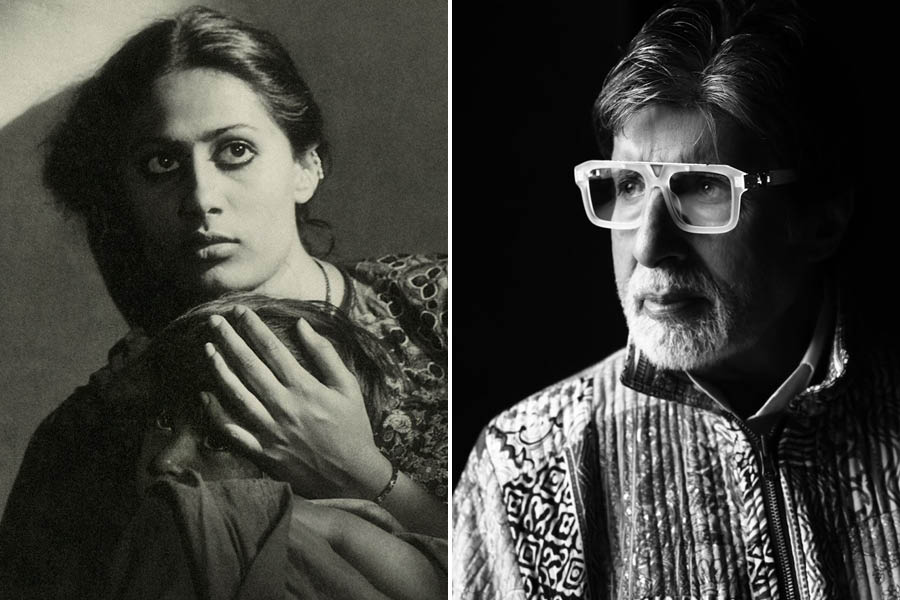
| The 1977 “refusnik”:
Naipaul |
 |
 |
 |
| The 2003 acceptors:
Wilkinson, Henman and Clapton |
London, Dec. 31: The author V.S. Naipaul rejected an honour from the Queen in 1977 but his objection, unlike that of many other celebrities, could not have been to the system because he later accepted a higher accolade.
As the latest honours list was published today in London — all 31 members of England’s victorious World Cup rugby squad have received gongs — the debate intensified about whether the system needs to be reformed and the way in which successful candidates are selected.
Naipaul rejected the CBE (Commander of the British Empire) in 1977, probably because he felt this did not do justice to his standing as Britain’s foremost man of letters.
He was made to wait another 13 years, though, before he was offered a knighthood — which Sir Vidia, as he became, was happy to accept.
The sculptor, Anish Kapoor, offered a lower honour, also successfully held out for a higher one, a CBE.
In the new year honours list, Asians have more or less been ignored. Among well-known Asians, there is no recognisable name save perhaps that of Dr Khalid Hameed, who has been given a CBE in his capacity as chairman of the Commonwealth Youth Exchange Council.
Hameed, who was born in Lucknow in 1941, is better known, however, as chief executive of the Cromwell Hospital in London (where well-heeled patients generally have to pay upfront before being lifted on to the operating table).
To be sure, there are a few worthy but unknown Asian names who have been given either OBEs (Order of the British Empire) or MBEs (Member of the British Empire), mostly for work in race or community relations.
What cannot be known at this stage are the identities of people who were asked whether they would accept an honour — this routine process is carried out in confidence — and wrote back to say they would not.
The Sunday Times recently uncovered a list of 300 distinguished “refusniks”, with the result that it is now almost more elitist to be on the list of people who have rejected an honour than be among those who have accepted one.
The Telegraph was the first to reveal, for example, that Naipaul’s biographer, the author Patrick French, turned down an OBE because he could not accept anything with the word “empire” in it.
On today’s list, there are hundreds of people who are only too grateful to be given a CBE, an OBE or an MBE. The decision to honour the entire rugby squad was rushed through by Tony Blair, who rightly judged it would be an extremely popular move.
The team coach, Clive Woodward, is knighted, while Jonny Wilkinson, who scored the winning drop kick, is promoted from MBE, which he already had, to OBE.
By contrast, the footballers who won the World Cup in 1966 had to wait, in some cases, for 30 years, before being honoured.
Although many think journalists should not accept honours since this may compromise their ability to criticise the government which gives them their gong, the former legendary Sunday Times editor, Harold Evans, who now lives in New York, has been made a knight on today’s list.
Tim Henman, the British tennis number one who has never managed to win Wimbledon, has been given an OBE, apparently to add “interest” to the list.
A CBE goes to the musician Eric Clapton, while Chris Tarrant, who presents Who Wants to be a Millionaire? (the parent version of Kaun Banega Crorepati?), receives an OBE. Joan Plowright, widow of Lord (Laurence) Olivier, becomes a Dame at the age of 74.
One commentator, Stephen Glover, wrote today in the Daily Mail: “I have no quarrels with this list. Nonetheless, the honours system is in crisis after years of abuse, and the government knows it. It surely makes no sense to have honours referring proudly to the British Empire, which is now dust and ashes.”
With the exception of Hameed, there are no senior Muslims on today’s list. It could be they were either excluded for fear they would reject the honour, or, as seems more likely, they were left off in the knowledge that few would endorse the system in the year Britain went to war against Iraq.
|