TT Epaper LHS
The Telegraph
TT Mobile
 
 
IN TODAY'S PAPER
CITY NEWSLINES
 
 
ARCHIVES
Since 1st March, 1999
 
THE TELEGRAPH
 
CIMA Gallary
 
Email This Page
YEAR OF PRIDE

This year is the year of the feel-good factor emanating from solid economic achievements. It sets the ground for early polls next year

Patriotism and national pride are not always and necessarily the same thing. The former, as has been noted often enough, can be a cover for a multitude of sins. Patriotism has more rhetoric than substance. National pride, on the other hand, expresses itself in a quiet dignity which requires no tom-toming since it is based on solid achievement. In the year that is coming to a close, most Indians have had good cause to feel proud of their country, and this pride and confidence are based on tangible achievements which have been registered without any fanfare and have been recognized in the right and relevant quarters. These achievements are all related to the realm of the economy, a sphere that underpins accomplishments in all other fields. During the course of the year, the myth about the Hindu rate of growth was decisively punctured. Estimates suggest that the rate of growth could well be around eight per cent, with some luck even more than that. India is thus poised to sit at the high table and to partake of the best wine and cheese that is passed around in that elevated circle. It brings to an end decades of sitting below the salt and of being described as the world’s perpetual economic laggard, running but never quite making it. Other macroeconomic indicators have fortified the growth rate: industrial production is up, the granaries are full, the bourses are buoyant and the foreign exchange reserves have touched unprecedented heights. These are not mean achievements for a country which a little over ten years ago was on the brink of defaulting on international interest payments, had to mortgage its gold to raise money and was under the danger of being written off as a third-world basket case. It would be an egregious error, of course, to see these features as the products of 2003. Their origins go back to the Nineties when the process of liberalization started but they have become prominent in the course of this year.

The most significant impact of these economic developments has been visible in consumer behaviour. It is suffused with optimism. This feel-good factor has spread by some ineffable osmosis to other fields of public life and activity. There is a global acceptance that India has begun to flex its economic muscle and the process is akin to a giant, long asleep, beginning to stretch itself. The Indian economy’s point of departure from a planned and state-driven economy to the free market is India’s point of arrival. The idea of India is now based on substantive economic achievements whose worth and impact cannot be ignored.

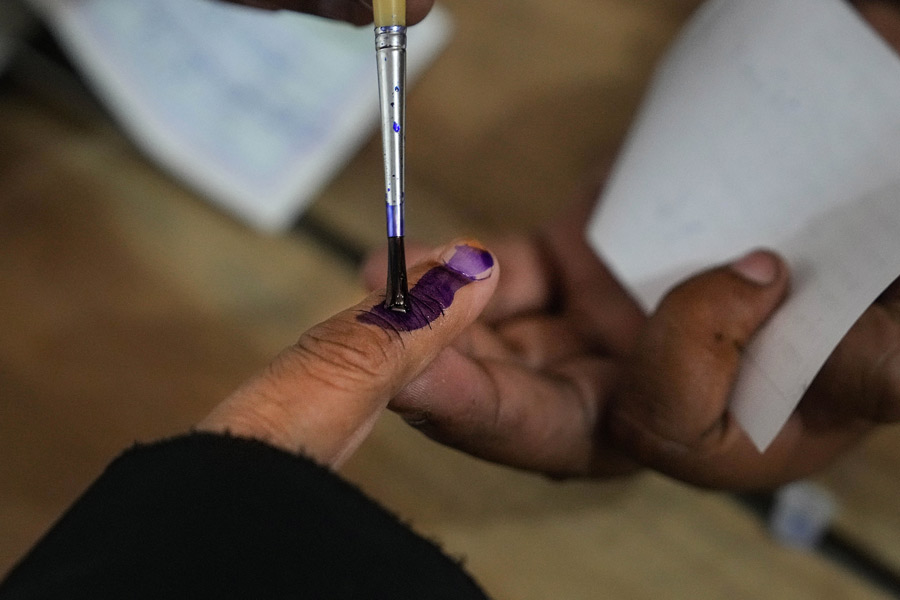
The unintended beneficiary of this process has been the Bharatiya Janata Party under the leadership of Mr Atal Bihari Vajpayee. The latter has subtly but successfully identified his party with the sense of pride, confidence and optimism that has touched the minds of Indians. This identification found expression in the voting pattern of the people in the states that went to the polls recently. The Indian voter has shown his preference for success and order. He has voted for achievement over ideology. This year’s pride will be reflected in next year’s votes. This might well spell polls early next year, polls that will determine India’s future for the next five years.

Top
Email This Page