|
 |
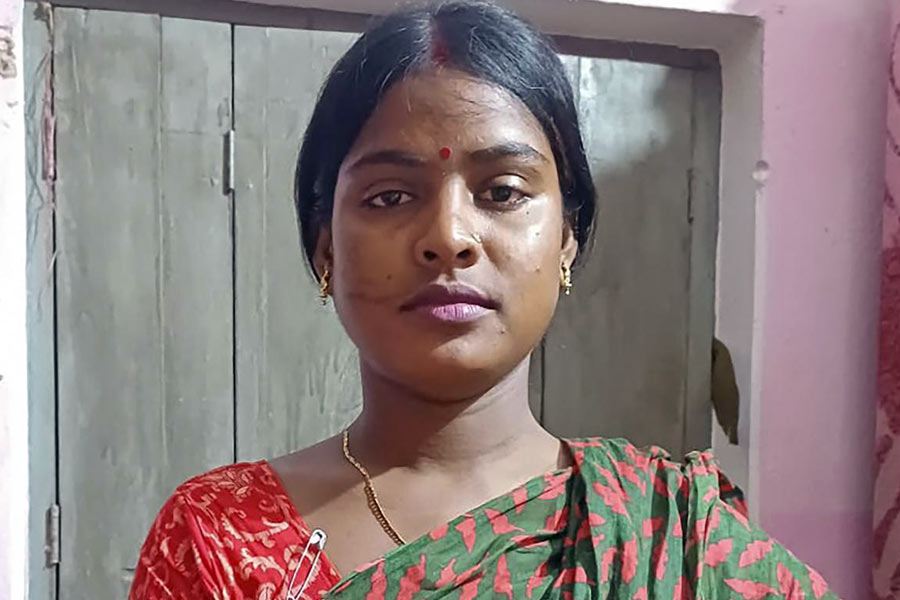
| Minoti Barbara (top
left) and Anita Chetia (above) Pictures by Biju Boro
|
Picture this: Sipping tea with
homemade pithas in a cosy living room and choosing
from a lavish spread of mekhela chadors and salwar
kameezes. Getting tips from the homely designer and
casual haggling are part of the package.
All this is becoming a part of
life now. Almost every locality in Guwahati boasts of a
“neighbourhood designer”. These designers, mostly housewives
operating from home, set up their own looms with a few weavers,
sewing machines and dyeing units. Most importantly, their
skill is publicised by word of mouth, especially at weddings
and other functions.
Attending a workshop with some
Japanese tourists in 1993 was an eye-opener for one of these
new designers, Anita Chetia. “The tourists criticised the
Assamese people for not being able to harness the golden
thread of Assam -- the famous muga silk,” says Chetia.
“I always took care to dress up
tastefully and used to design my own clothes,” she says.
Eyes gleaming with pride, she adds, “Once a lady called
me at a wedding. I walked towards her but could not recognise
her. The lady then said that she had, in fact, identified
my clothes and not me.”
This inspired Chetia and she started
off with two looms and an initial investment of Rs 10,000.
“I took a risk but I told myself that even if my clothes
did not sell, I could at least wear them myself. But it
was a sellout and my salwar kameezes made out of
mekhala chador material have been equally popular.”
With 17 employees, Chetia is today
a successful entrepreneur. She participates in the trade
fairs regularly. She is also the vice-president of North
East Women Entrepreneurs Association. “I feel proud that
I am economically independent now,” she says.
Like her, Anjali Das of Ganesh
Nagar area of Basistha specialises in embroidery work and
had been doing it since 1978. “I do embroidery on mekhala
chadors, sofa set covers, table clothes, sarees and
salwar kameezes. I feel very happy that I have my
own source of income,” says Das.
For Anjana Goswami, the illuminating
moment was when she discovered an old chador of her
mother-in-law some 17 years back. “I was inspired to weave
similar designs. With a loan of Rs 2,000 from my husband,
I got eight such clothes made out of akhi thread,”
she says. But they were sold out and she got more orders.
Gradually, Goswami expanded her
business and now has four looms at home. She also makes
gamochas, cotton mekhala chadors and dupattas
with different designs. “I am also undergoing training on
vegetable dyes at the weavers centre. I intend to experiment
with vegetable dyes which also has health benefits,” she
says.
Goswami is justifiably proud of
her achievements and says, “I could repay the loan I had
taken from my husband. I also file my own income tax returns
and have got my looms insured. My designs have been bought
by Assamese non-resident Indians too.”
Though not a graduate from any
reputed fashion schools, these neighbourhood designers are
giving some of the well-known fashion designers a run for
their money. “I am making wall paintings of these old designs
and hope to show them to some of the leading designers of
the country,” says Goswami.
Fashion designer Meghna Rai Medhi
welcomes this trend. “People are learning about fashion
and they should be encouraged. Going to a fashion school
is important but it is not imperative if one has talent
and skill. Though many of them are not aware of the technicalities,
their final product turns out to be quite uncommon and appealing.
I don't see this trend as a threat to us designers.
in fact, we can join hands and work together,” adds Medhi.
Noted danseuse Garima Hazarika
has a passion for collecting traditional tribal designs.
“We have seven looms at Mitali Sangha, our organisation.
I take care of the designs and colours here and we make
Assamese cushion covers, table mats, dupattas and
salwar kameezes. I also improvise designs for jewellery,”
Hazarika says.
The wedding season is the peak
time for these neighbourhood designers. Tultul Bora is “booked”
from June to December, designing wedding trousseaus. “I
have even bought old and torn chadors and mekhalas
for their design. People prefer to come to us as we can
match various hues with different designs at a reasonable
price,” says Bora.
Chetia adds, “I have designed
wedding trousseaus for the entire family at times. I have
also designed exotic kurtas for the groom.” Most of these
neighbourhood designers admit they did not have the slightest
inkling about being so successful. “I never thought that
I would be able to start my own business. Initially I used
to do embroidery on kanjivaram cloth and gradually
shifted to paat. I took a loan of Rs 3 lakh from
the State Bank of India,” says Bora.
Minoti Barbara, who operates with
her three sewing machines from her residence on Zoo-Narengi
road, says, “I started off by designing casualwear, specially
designer baby frocks. College girls throng my place and
I suggest designs and colours according to their constitution.”
Leena Mahanta started off with
two looms and an investment of Rs 10,000 in a bid to help
the Bodo women in her neighbourhood in Birubari. “I try
to create of fusion of contemporary designs with e traditional
assamese designs. People from all over Assam and even designers
come to me to collect the textiles,” says Mahanta.
Affordability is one of the main
factors why people throng these neighbourhood designers.
“If my customers have a limited budget, I also allow them
to pay in instalments,” says Mahanta.
Most of these women feel proud
that they are making good use of their time. “Instead of
whiling away time in idle banter, I feel happy to contribute
to the family income and take care of my household at the
same time,” sums up Anjali Das.
|