|
Six weeks have gone by since the
offer of the Indian prime minister, Atal Bihari Vajpayee,
to resume the dialogue with Pakistan. It has got a reticently
positive response from Pakistan. The media, as usual, proceeded
to be enthusiastic about break-throughs and new beginnings.
It is worthwhile undertaking a reality check on what has
happened since Vajpayee’s offer of a dialogue and the response
of the Pakistani president, Pervez Musharraf, welcoming
the offer.
The international community has
generally welcomed the initiative. Whatever the governments
of India and Pakistan may say, a certain amount of tactful
but insistent pressure from the United States of America,
the precedent of pre-emptive intrusive action in the US
invasion of Iraq and public pronouncements by US officials
that south Asia is nuclearly the most dangerous area in
the world, impelled the Vajpayee initiative and the Pakistani
response. While Pakistan has had no hesitation in accepting
the reality of this pressure, the government of India continues
to pretend that there was no such pressure. We seem to have
a pathological aversion towards acknowledging the impact
of realpolitik in inter-state relations.
It is good to see the US being
sensitive to Indian complexes. There have been repeated
assurances by US officials that they do not envisage playing
a mediatory role. The government of Pakistan initially gave
its game away by converting dialogue into a publicity exercise.
The Pakistani prime minister, Mir Zafrullah Khan Jamali,
suggested an early summit with Vajpayee despite the unfortunate
experience that both the countries had gone through at Lahore
in February 1999 and at Agra in July 2001.
India’s response that the dialogue
should be a structured and gradual process bestowed practicality
to the initiative. Jamali announced Pakistan’s willingness
to expand bilateral trade within the framework of the South
Asian Association for Regional Cooperation, to restore bilateral
civil aviation contacts and restore diplomatic relations
at the level of high commissioners. Each one of these offers
was a repetition of what India had offered Pakistan in order
to restore normalcy in bilateral relations last October
and November, as India decided to pull back its armed forces
from its forward deployment positions.
Both countries have now designated
high commissioners to each other’s capitals. Shiv Shanker
Menon, our ambassador to China, is to proceed to Islamabad,
and Aziz Ahmed Khan, former Pakistani ambassador to the
taliban government in Afghanistan and now a spokesman of
the Pakistan foreign office, have been designated high commissioners.
Being personally acquainted with
both these diplomats, I am clear that the choice has been
not only appropriate but careful and measured. These are
individuals of temperament who will be nodal points in structuring
bilateral relations at this sensitive and critical juncture.
Both are sober, non-political and practical officers. Knowledgeable
about the foreign policies of their countries, and firmly
committed to their national interests, they are known for
their patience, tact and practical approach in negotiations.
It was obvious that there was
some differences of opinion within the Pakistani establishment
as to who should come as the Pakistan high commissioner.
The names mentioned were Maleeha Lodhi and Riaz Ahmed Khan.
Lodhi and Riaz Ahmed Khan have a record of assertive anti-Indianism
in recent years. Jamali, in fact, publicly announced Riaz
Ahmed Khan’s name, which was later contradicted by the government
of Pakistan. Musharraf’s final choice is Aziz Ahmed Khan,
who is no less firm about Pakistani policies. But he has
two advantages. He has served in New Delhi as deputy high
commissioner and director general, south Asia, in the Pakistan
foreign office. Secondly, he is not confrontationist in
his style of diplomacy when compared to some of his predecessors
in New Delhi.
So one can draw the conclusion
that Pakistan wants the process of dialogue to continue
without controversies in its initial stages.
India has responded to the suggestion
about re-activating trade relations with a sense of detachment,
stating that these relations can evolve, depending on Pakistan’s
attitudes, for the present. It is obvious that Pakistan
still has reticences about full-scale trade relations. The
bus service between Lahore and Amritsar has been restored
but neither side has yet given clear indications about restoring
the train services — the Samjhauta Express.
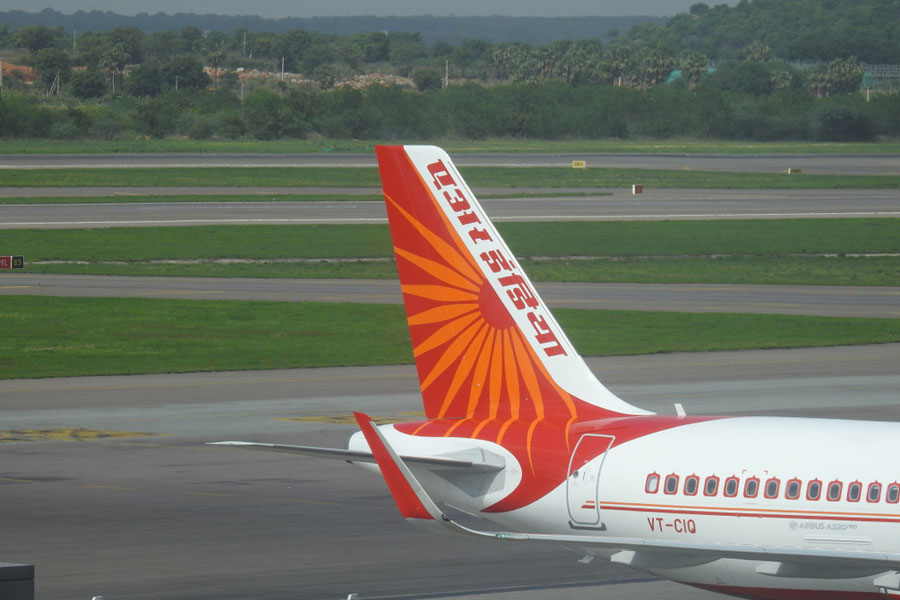
As far as restoring civil aviation
links go, Pakistan has only agreed to restoration of flights
between India and Pakistan (perhaps Delhi-Lahore, Delhi-Karachi
and Bombay-Karachi). While India has suggested in addition
the restoring of overflight facilities, Pakistan is procrastinating
over a decision on the matter. Could it be that Pakistan
wants to exploit the fact that lack of overflight facilities
costs India much more than it does Pakistan — and it is
an argument of Pakistanis that after all it was India which
started this punitive action.
Track-II diplomacy has been revived
as a result of non-governmental initiatives. A Pakistani
parliamentary delegation visited India in May. Indian members
of parliament and academics have visited Pakistan over the
last six weeks. Pugwash organized a conference on south
Asian security, Indo-Pakistan relations and the Kashmir
issue, in Geneva in the middle of May. There were representatives
from the thinktanks of India and Pakistan, as well as some
Western academics at this conference. Interestingly, the
Pakistan delegation was a high level one with the former
foreign minister, Abdul Sattar, as participant.
More interesting was the presence
of serving officers from the Pakistani army and the Pakistan
foreign office at this conference. Pakistan’s high commissioner-designate
to India, Aziz Ahmed Khan, was at this conference. It is
noteworthy that in these Track II discussions, the Kashmir
problem was not projected head on as a controversial issue.
The approach was to acknowledge the importance of the issue
and to discuss possible options for a solution. Perhaps
a good sign; though one did not see any dilution of the
basic stance on Jammu and Kashmir, on the part of India
and Pakistan, even at these non-official discussions.
Prospects of meaningful and substantive
moves towards resolving India-Pakistan disputes have been
put in doubt in a statement made by Musharraf in the last
week of May that whenever India-Pakistan summit takes place,
it will be between Jamali and Vajpayee. The rationale given
by Musharraf is that he does not want to be a roadblock
in negotiations. As far as India’s perceptions go, this
detachment from talks by Musharraf indicates his keeping
his options open about pulling back from the negotiations
and disowning Jamali as Junejo was disowned by General Zia-ul-Haq.
Everybody knows that Musharraf
is the ultimate deciding authority in Pakistan. In fact,
it is he who should have called Vajpayee and not Jamali.
As long as Musharraf remains executive president, his pretending
to delegate the negotiating authority to Jamali to establish
Pakistan’s democratic credentials, is at best a cosmetic
gesture and at worst it only increases India’s apprehensions
about Musharraf’s real intentions.
Vajpayee in his discussions with
the US deputy secretary of state, Richard Armitage, with
the German chancellor, Gerhard Schroeder, and with the US
president, George Bush, has underlined that a dialogue can
move on to substantive issues when Pakistan stops supporting
cross-border terrorism. Infiltration and violence continue
in Jammu and Kashmir. Externally sponsored separatist militants
are politically becoming incrementally defensive with the
growing credibility of the Mufti government supported by
the Congress.
The Hurriyat is in disarray, which
may make the jihadis across the border more desperate.
There is a need to be alert about this, as they can disrupt
the process of a dialogue. Bush promised to speak to Musharraf
when the latter visits Washington in June to be more purposeful
in stopping cross-border terrorism. He gave this assurance
to Vajpayee at St. Petersburg on May 31. Anticipating pressure
from the US, Musharraf has taken some concrete steps to
curb jihadis in his country. The Jamait-e-Islami has expelled
the Hizbul Mujaheddin from its offices. The Jaish-e-Mohammed
and the Lashkar-e-Toiba have been subjected to official
restraint over the last three weeks. Militants like Masood
Azhar have been prevented from their public activities.
One hopes that this is the beginning of Pakistan dissociating
itself from these terrorist organizations, though one is
not very optimistic.
There are indications that middle
level officials from both countries may commence discussions
on the agenda for official level dialogue. Meanwhile, some
further steps to buttress the process could be taken by
both the governments. Full civil aviation facilities should
be restored, the train service between the two countries
should be revived, sports and cultural contacts could be
re-initiated. The hot lines between the prime ministers,
the foreign secretaries and the directors-general, military
operations, could be fully re-activated. The confidence
building measures agreed upon between 1989 and 1996 should
be brought back into operation. Most important, both parties
could take the major decision of convening the joint experts
group on nuclear risk reduction, agreed upon in Lahore in
February 1999.
The path ahead will have hurdles,
will have disruptions. India and Pakistan should make haste
slowly but in the interim should not hesitate to take substantive
steps to underpin the process of a dialogue.
|